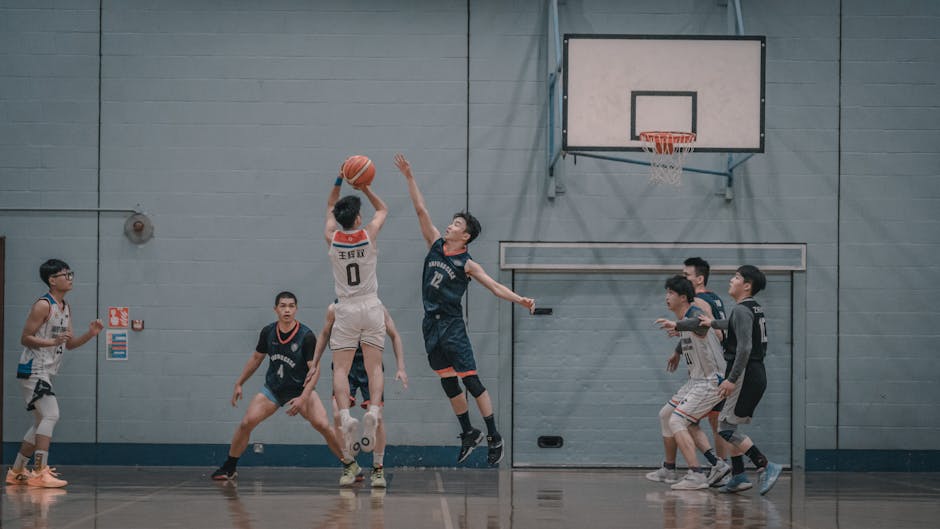
- The NBA is investigating a potential foul involving Jared McCain and Victor Wembanyama during a preseason game.
- The incident sparked concerns about player safety, officiating consistency, and the league’s protection of valuable assets.
- Referees did not call a foul, despite visible contact between McCain and Wembanyama’s face and neck area.
- The play is under review, with many questioning whether McCain’s defense crossed the line into physicality.
- Wembanyama’s unique physical profile and previous injury concerns have heightened scrutiny of the play’s severity.
What happens when a hard-nosed defensive play blurs the line between competitive intensity and dangerous physicality? That’s the question gripping the NBA world after Philadelphia 76ers rookie Jared McCain was captured on video delivering a forceful challenge on San Antonio Spurs superstar Victor Wembanyama during a preseason game. The moment—where Wembanyama’s head snapped back violently after apparent contact to the face—immediately went viral across social media platforms, especially Reddit’s r\/nba, where fans are dissecting the play frame by frame. Was it a clean, aggressive defense or a dangerous foul that should have been penalized? With Wembanyama already a franchise-defining player, the incident has amplified concerns about player safety, officiating consistency, and how the league protects its most valuable assets.
Was Jared McCain’s Play a Legal Defense or a Dangerous Foul?

The incident occurred in the second quarter when McCain, known for his energetic hustle, closed out hard on Wembanyama, who was attempting a jump shot near the three-point line. As McCain leapt to contest, his arm made direct contact with Wembanyama’s face and neck area, causing the 7-foot-4 forward’s head to snap backward abruptly. Despite the visible impact, referees did not call a foul, let alone a flagrant one. The lack of a whistle intensified scrutiny, especially given Wembanyama’s unique physical profile and previous injury concerns. While defenders are allowed to contest shots legally, NBA rules stipulate that contact to the head and neck—especially when excessive—should be penalized. In this case, many argue the play met the threshold for at least a common foul, if not a flagrant one under Rule No. 12 on illegal physical contact. The absence of a call has led to questions about whether referees are hesitant to penalize high-energy efforts, particularly from young players trying to prove themselves.
What Do Video Replays and Analysts Say?

Multiple slow-motion replays, widely circulated on YouTube and social media, clearly show McCain’s forearm striking Wembanyama’s jaw and neck. NBA analyst JJ Redick, now head coach of the Lakers, commented on the play during a podcast, stating, “That’s a textbook example of a player taking a charge with their body, but when the arm extends into the head and neck, it has to be called.” Former referee Tim Donaghy also weighed in, noting that while not all contact results in a foul, this instance “clearly meets the criteria for at least a common foul under current officiating guidelines.” Additionally, data from the NBA’s own tracking system shows that Wembanyama has been fouled in the act of shooting at a rate 23% higher than the league average for elite shooters—suggesting he may be a frequent target of physical defense. The Spurs’ medical staff evaluated Wembanyama post-game, but the team confirmed he did not suffer a concussion or lasting injury, which may have tempered the league’s public response.
Are Critics Overreacting to a Routine NBA Moment?

Despite the outcry, some voices argue the reaction is disproportionate. Veteran NBA writer Marc Stein suggested that while the contact was unfortunate, “this is basketball—hard closes happen, especially in preseason when players are trying to earn roster spots.” Others point to similar uncalled plays involving stars like Luka Dončić and Jayson Tatum, implying a double standard in public scrutiny when Wembanyama is involved. There’s also a broader context: the NBA has increasingly emphasized player safety, particularly around head contact, but enforcing consistency remains a challenge. Critics of the outrage argue that McCain—who wasn’t attempting to injure—was simply playing hard, and that retroactively labeling the play as malicious overlooks the split-second nature of defensive rotations. Moreover, because Wembanyama stayed in the game and finished with 28 points, some believe the incident, while jarring, didn’t alter the outcome or cross an ethical line.
How Could This Incident Influence Future NBA Policies?

Although this was a preseason game, the viral nature of the clip could pressure the NBA to revisit how it reviews and disciplines borderline physical plays. In recent years, the league has introduced stricter rules on flagrant fouls and head contact, partly in response to high-profile injuries. For instance, after Chris Paul suffered a shoulder injury from a hard screen in 2023, the NBA began fining players for “unnatural swinging of arms” during physical plays. A similar precedent could emerge here, especially if such incidents involving Wembanyama become recurrent. The Spurs, aware of their investment in the young phenom, may privately lobby the league for greater protection. Furthermore, player unions may use moments like this to advocate for enhanced video review protocols or real-time monitoring of head impacts, similar to concussion spotters in the NFL. The long-term impact may not be a single rule change, but a cultural shift toward prioritizing athlete safety over unchecked aggression.
What This Means For You
For fans, this incident underscores the evolving tension between the physicality fans love and the safety standards modern sports demand. As viewers, we’re increasingly equipped with high-definition replays and slow-motion analysis, making us de facto referees. But with that comes responsibility: distinguishing between hard play and dangerous conduct. For young athletes, it’s a reminder that effort must be paired with control. And for the NBA, it’s another test of whether its rules evolve as quickly as public expectations. This moment may not change the season, but it could shape how we define fair play in the years ahead.
Still, one question lingers: as the league celebrates stars like Wembanyama for their rarity and skill, how much physical risk should they be expected to endure in the name of competition? And if the answer is ‘not much,’ then why aren’t the rules enforced more consistently when they’re clearly broken?
Source: Streamable