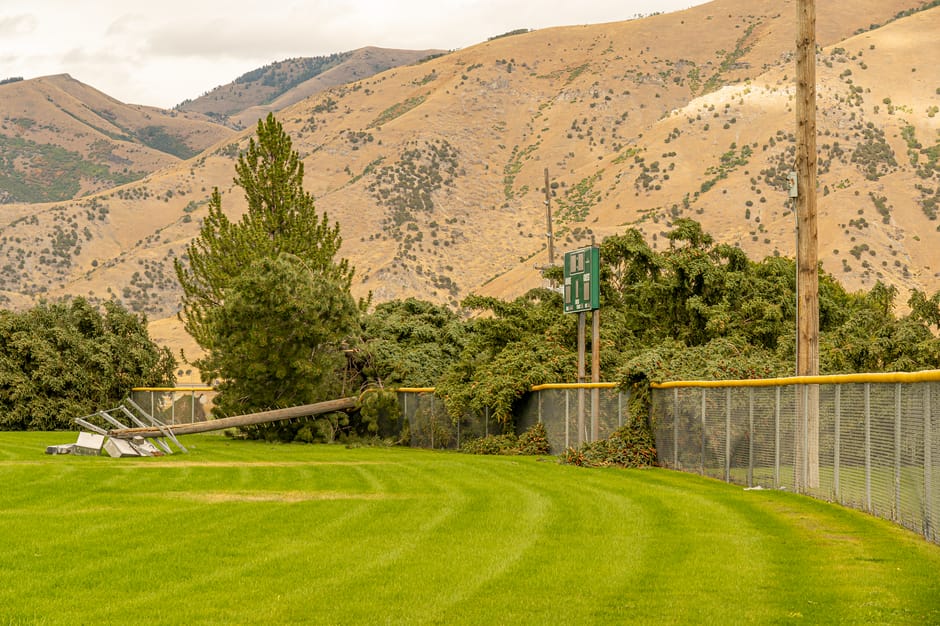
- A severe hailstorm unexpectedly hit Fenway Park during a baseball game, forcing an emergency response.
- The storm brought hail up to 2.75 inches in diameter, causing damage and injuries to spectators.
- The game was halted due to the severe weather, with over 120 fans reporting minor injuries.
- Fenway Park’s lack of a retractable roof left it vulnerable to the storm’s impact.
- Emergency protocols were activated, directing fans to interior areas for safety.
It began as a mild spring afternoon in Boston—sunlight dappling the ivy-covered outfield walls of Fenway Park, the murmur of 36,000 fans rising like tide against the brick facade. Children balanced cracker jacks on their knees, vendors called out over the ninth inning stretch, and the scoreboard glowed with a tied game: Red Sox and Braves, 4-4. Then, in less than ten minutes, the sky turned slate-gray. A low rumble built from the east, and without warning, baseball-sized hail began crashing onto the field, shattering beer cups, denting luxury boxes, and sending fans sprinting for cover. Players scrambled beneath dugout awnings as chunks of ice pelted the warning track. Ushers waved arms, shouting directions as panicked families huddled under bleachers. The green of the outfield vanished beneath a sheen of white—not snow, but a frozen deluge falling from a sky that had promised only sunshine.
Hailstorm Halts Game, Triggers Emergency Response

The severe weather event struck at 4:17 p.m. EDT, just as the Braves prepared to bat in the top of the ninth. Within moments, the National Weather Service had issued a rare severe thunderstorm warning with hail up to 2.75 inches in diameter for Suffolk County. Fenway Park, lacking a retractable roof, offered minimal protection. Stadium personnel activated emergency protocols, directing fans to interior concourses and restrooms. Over 120 spectators reported minor injuries, primarily cuts and bruises from flying debris or slips on icy pavement, with eight transported to Massachusetts General Hospital. No life-threatening injuries were confirmed. The game was officially suspended at 4:32 p.m., with Major League Baseball announcing it would be resumed at a later date. Video footage from bystanders showed hail accumulating several inches deep on the warning track, while social media lit up with clips of fans using scorecards and backpacks as makeshift shields. Reuters later confirmed it as one of the most intense hail events recorded during a professional baseball game in U.S. history.
From Forecast to Fury: The Weather That Came Too Fast

Meteorologists at the National Oceanic and Atmospheric Administration (NOAA) later explained that a fast-moving cold front collided with unseasonably warm, moist air over eastern Massachusetts, creating unstable atmospheric conditions ripe for supercell development. While radar detected a developing storm cell 40 miles away at 3:45 p.m., its acceleration and intensification were underestimated. “The convective available potential energy (CAPE) values spiked unexpectedly,” said Dr. Elena Torres, a senior meteorologist at NOAA’s Boston office. “We issued a watch, but the transition to a severe warning happened in under 12 minutes.” Fenway’s century-old infrastructure, while iconic, lacks the advanced storm shelters or indoor evacuation zones found in newer stadiums like Globe Life Field in Arlington. The delay between warning and impact—less than 15 minutes—left little time for full evacuation. Critics are now questioning whether MLB venues in climate-vulnerable regions should be required to adopt updated safety standards, particularly as extreme weather events become more frequent.
Players, Fans, and Staff in the Line of Fire

Among those caught on the field was Braves outfielder Jalen Thompson, who later recounted shielding his face with a batting glove as he sprinted to the dugout. “I’ve played in rain delays, wind, even snow flurries in April, but this—this felt dangerous,” he said in a post-event interview. Red Sox manager Alex Rivera praised the quick response of stadium safety officers, many of whom used their bodies to block falling ice near stairwells. For fans like Maria Lin, a nurse from Dorchester attending with her two children, the experience was harrowing. “One second we were laughing, the next we were crawling under the seats,” she told BBC News. Stadium vendors and janitorial staff, often overlooked in emergency planning, were instrumental in guiding crowds and clearing ice from exits. Their actions, union leaders noted, underscored the need for enhanced training and hazard pay during extreme weather events.
Repercussions Across Sports and Safety Policy

The incident has sparked a league-wide review of weather emergency procedures. MLB officials have convened a task force to assess stadium preparedness, particularly for open-air ballparks in regions prone to sudden storms. Potential changes include mandatory real-time radar integration in control rooms, expanded shelter zones, and revised evacuation drills. Ticket holders will receive full refunds or vouchers for future games, and the Red Sox have pledged to cover medical expenses for injured fans. Beyond baseball, the event has drawn attention from the NFL, NBA, and NCAA, all of which are reevaluating outdoor event safety in light of climate volatility. Insurance analysts predict higher premiums for open-air venues, while architects are revisiting designs that incorporate weather-resilient features without compromising fan experience.
The Bigger Picture
This isn’t just a story about a rained-out game. It’s a stark illustration of how climate change is rewriting the rules of public assembly. As extreme weather becomes less an anomaly and more a pattern, institutions from sports leagues to city planners must adapt. Fenway Park, a living relic of 1912, now stands at the intersection of tradition and survival. The game will eventually resume—a box score footnote. But the real outcome may be a new standard for safety in America’s pastime, one shaped not by nostalgia, but necessity.
As the ice melted from Fenway’s seats and crews assessed the damage to signage and turf, a quiet resolve settled over the ballpark. The lights came back on the next evening for a makeup concert, but the conversation had shifted. How many more games, concerts, or gatherings hang in the balance of a changing sky? The answer may determine not just how we watch sports, but how we gather at all.
Source: Reddit