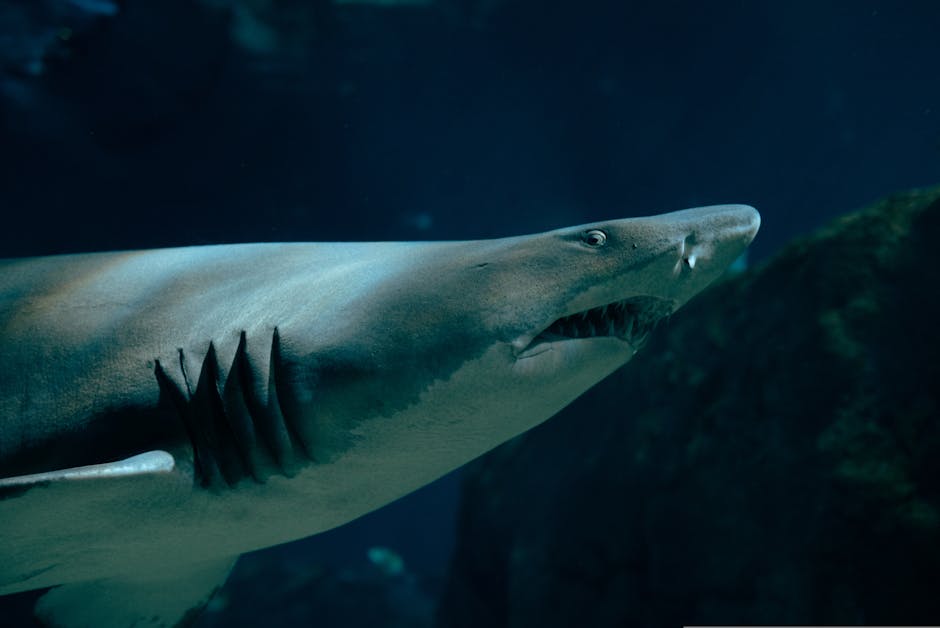
- A fatal shark attack occurred near Kennedy Shoal in Far North Queensland, claiming a man’s life.
- The victim was swimming with a group when he was bitten, likely by a great white or tiger shark.
- Authorities confirmed the incident occurred approximately 30 kilometers offshore from Innisfail.
- Emergency services responded quickly, airlifting the victim to a local hospital but were unable to save him.
- Beaches in the vicinity were closed, and shark nets were deployed in the area.
Just before noon on a sun-dappled Sunday, the tranquil surface of the Coral Sea shattered with panic. Near Kennedy Shoal, a submerged reef off the coast of Far North Queensland known for its vibrant marine life and strong currents, swimmers spotted a dark shape lunging from the depths. A man, believed to be in his 50s, was seen thrashing in the water, blood clouding the turquoise around him. Lifeguards and fellow beachgoers launched a desperate rescue, dragging the victim through churning waves to the shore. Despite rapid medical response, he succumbed to his injuries within minutes. The silence that followed was heavy—the kind that settles over a community when nature asserts its unforgiving power.
Attack Near Kennedy Shoal Confirmed by Authorities

Queensland police confirmed the fatal incident occurred near Kennedy Shoal, approximately 30 kilometers offshore from the coastal town of Innisfail. The man was reportedly swimming with a group when he was bitten, likely by a great white or tiger shark, though no species has been officially confirmed. Emergency services were notified within minutes, and a rescue helicopter airlifted the victim to a local hospital, where he was pronounced dead. Marine rescue units conducted aerial sweeps of the area for several hours, deploying shark nets and temporary exclusion zones. Beaches in the immediate vicinity were closed, and signage warning of shark activity was erected. This marks the first fatal shark attack in Queensland since 2022, and only the third in the past decade, underscoring the rarity—but visceral impact—of such events.
History of Human-Shark Conflict in Australian Waters

Australia records more shark attacks than any other country, with over 1,000 documented incidents since the 1790s and 227 fatalities, according to the International Shark Attack File. The rise in encounters since the mid-20th century correlates with growing coastal populations, increased water recreation, and conservation efforts that have helped recover shark populations after decades of culling. Programs like Western Australia’s controversial drumline initiative and Queensland’s Shark Control Program, which uses baited hooks and nets, have drawn criticism from environmentalists for harming non-target species. While shark attacks remain statistically rare—fewer than 20 unprovoked attacks are reported globally each year—Australia accounts for roughly one-quarter of them. This has fueled an ongoing debate between public safety and marine conservation.
The People Caught in the Crossfire

Behind this tragedy are not just grieving families but a network of stakeholders deeply invested in coastal safety and ecological balance. Local lifeguards, who responded within minutes, embody a decades-long commitment to water safety in high-risk zones. Scientists from the Commonwealth Scientific and Industrial Research Organisation have been working on non-lethal shark deterrents, including electronic pulse emitters and drone surveillance. Meanwhile, Indigenous communities, for whom the sea holds cultural and spiritual significance, often advocate for coexistence strategies rooted in traditional knowledge. Tourism operators, too, face a delicate balance: promoting the region’s natural beauty while managing inherent risks. Each group carries its own vision of safety, shaped by experience, ethics, and economic concern.
Immediate and Long-Term Consequences

The attack has immediate implications for public confidence in coastal recreation. Local authorities are under pressure to review shark mitigation strategies, including the use of real-time detection systems and emergency alert networks. Some communities may push for expanded culling operations, despite scientific consensus that such methods are ineffective and ecologically damaging. For marine biologists, the incident underscores the need for better public education about shark behavior—most attacks are cases of mistaken identity, not predation. Families of victims often become vocal advocates for change, as seen after the 2011 death of Chris Boyd in Western Australia, which led to a temporary increase in shark monitoring funding. The emotional toll on first responders and witnesses also lingers, often overlooked in policy discussions.
The Bigger Picture
This event is not merely an isolated tragedy but a reflection of broader tensions between humans and the natural world. As climate change alters ocean temperatures and migratory patterns, shark habitats are shifting closer to populated coasts. Urban development continues to encroach on marine environments, increasing the likelihood of encounters. Around the globe, from Reunion Island to Cape Town, communities grapple with similar dilemmas. Australia’s experience offers both caution and insight: fear must be tempered with science, and safety must not come at the cost of ecological integrity. The ocean, vast and ancient, does not conform to human boundaries—learning to navigate that reality is an ongoing challenge.
As the investigation into the attack concludes, questions will remain about how to coexist with apex predators in a changing world. Will this incident prompt innovation in non-lethal monitoring, or a retreat into outdated, destructive practices? The answer lies not just with policymakers, but with a public willing to confront both fear and facts. In the quiet waters near Kennedy Shoal, the sea carries no malice—only the indifferent pulse of nature, as enduring as it is dangerous.
Source: Al Jazeera