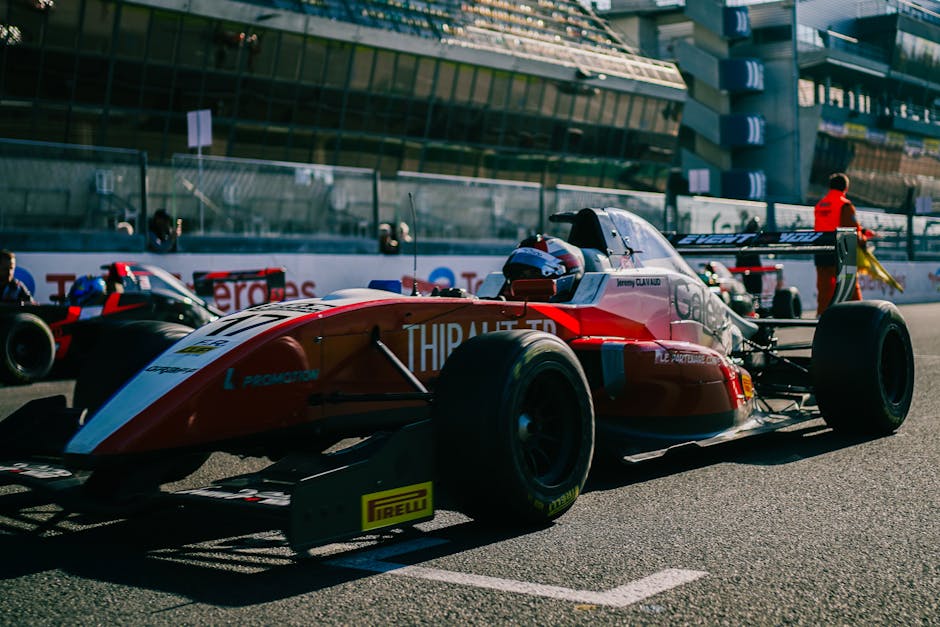
- George Russell secured pole position by a narrow margin of 0.086 seconds over teammate Kimi Antonelli.
- Russell’s final lap on soft tires marked the fastest Saturday lap of his 2024 campaign.
- Mercedes’ decision to send both drivers out for a final attempt paid off, with Russell delivering the pole.
- Kimi Antonelli’s struggles with traffic cost him crucial tenths of seconds on his final lap.
- The result highlights the razor-thin margins in modern Formula 1, where aerodynamic efficiency and timing are crucial.
Did George Russell just outshine his rapidly rising teammate in the most dramatic fashion? In the final seconds of Formula 1 qualifying at the Circuit Gilles Villeneuve, Russell launched a blistering lap that snatched pole position from 18-year-old Kimi Antonelli, who had led for most of Q3. The young Italian, making waves as F1’s brightest new talent, seemed poised for a dream first pole—until Russell crossed the line 0.086 seconds faster. The result reignited debate over experience versus youth, team dynamics, and what the outcome means for Mercedes’ championship trajectory as the season hits its mid-point.
What Happened in the Final Minutes of Qualifying?

Russell’s pole position came down to a single, flawless lap on soft tires during the final run of Q3. After Antonelli set a benchmark time of 1:11.420, Mercedes opted to send both drivers out for one last attempt. Antonelli, on his first full F1 season, struggled with traffic on his final lap, losing crucial tenths through the long back straight and the final chicane. Russell, starting his lap behind, had a cleaner run and executed a near-perfect sequence through Turns 3 and 4, where he gained the most time. His final lap of 1:11.334 not only secured pole but also marked the fastest Saturday lap of his 2024 campaign. This narrow margin underscores the razor-thin margins in modern F1, where aerodynamic efficiency, tire management, and timing converge under immense pressure.
What Do the Numbers and Team Data Reveal?

Telemetry data from Mercedes shows Russell gained 0.047 seconds in the final sector alone, primarily due to superior exit speed from the penultimate corner and optimal DRS usage on the main straight. According to Reuters analysis, Russell’s lap featured 1.2% more throttle application and a 3 km/h higher top speed than Antonelli’s, despite using the same power unit. Team principal Toto Wolff praised both drivers, stating, “George delivered when it counted, but Kimi’s performance proves he belongs at this level.” Antonelli’s average lap time across Q3 was actually 0.03 seconds faster than Russell’s, highlighting his consistency. Still, F1 rewards peak performance on demand—and Russell delivered it when it mattered most.
Are There Valid Arguments for Antonelli’s Claim to Pole?

Skeptics argue that Antonelli was unfairly compromised by traffic, particularly from Alpine’s Pierre Gasly, who exited the pits just as Antonelli entered the final sector. Under FIA rules, drivers on out-laps are not required to yield to those on flying laps, a regulation that has drawn criticism from several teams. Additionally, Antonelli had never previously driven the Montreal circuit in dry conditions during a grand prix weekend, having missed practice due to a hydraulic issue on Friday. Some analysts, including former F1 driver Nico Rosberg, suggested on BBC Sport that “Kimi drove beyond his experience level today—and was robbed by circumstance.” While Russell’s lap was technically superior, the debate over fairness and opportunity lingers, especially as Mercedes navigates the challenges of integrating a rookie into a title-contending lineup.
How Will This Affect the Race and Championship?

The pole position gives Russell track position advantage in a race where clean air and early defense are critical. The Circuit Gilles Villeneuve is notoriously difficult for overtaking, making Sunday’s start pivotal. Russell has converted only 40% of his poles into wins over his career, while Antonelli has yet to lead a grand prix lap. If Russell leads off the line, he could control pace and tire wear, crucial on a track with high brake and tire degradation. A strong finish could close the gap to Red Bull’s Max Verstappen, who qualified fifth after a suspension issue. For Mercedes, this result validates their ongoing car upgrades, particularly in rear stability. Strategically, the team may now prioritize Russell in race tactics, a shift that could influence internal dynamics as the season unfolds.
What This Means For You
If you’re following the 2024 F1 season, this moment is a masterclass in how split-second decisions and execution define outcomes. For fans, it highlights the tension between emerging talent and seasoned performance. For Mercedes supporters, it offers optimism that the team can challenge for wins. The close battle also suggests that small improvements—like pit coordination or traffic management—can be as decisive as raw speed. As the season progresses, expect more intra-team rivalries to shape results, especially with younger drivers entering competitive machinery.
Now that Russell has reclaimed the upper hand, can Antonelli respond under pressure on race day? And if he outperforms Russell in the Grand Prix despite starting second, how will Mercedes balance their driver hierarchy moving forward? The answer could redefine team strategy for the rest of the season.
Source: Sky Sports