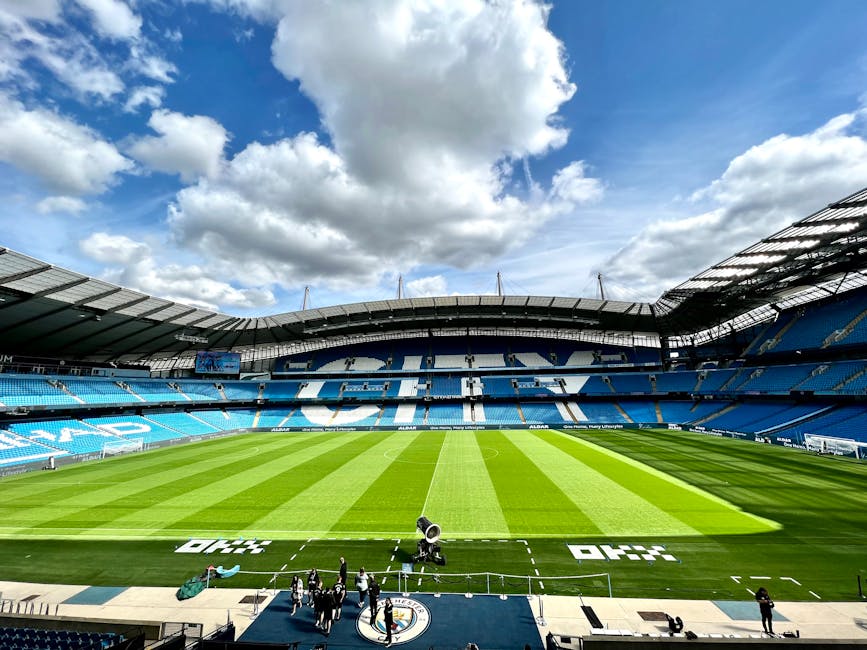
- Pep Guardiola considers managing England in the future, a move that could shift international football leadership.
- Guardiola’s decade-long reign at Manchester City ends this season, leaving uncertainty about his next move.
- He plans to take a sabbatical after leaving City, fueling speculation about his potential next role.
- Guardiola’s legacy at Manchester City includes 15 major trophies and a significant impact on English football’s tactical landscape.
- The 55-year-old tactician’s influence extended beyond silverware, transforming City into a dominant force in European football.
Manchester City’s Pep Guardiola has publicly acknowledged the possibility of managing the England national team in the future, signaling a potential shift in international football leadership. With his decade-long reign at City ending this season, Guardiola confirmed he has no concrete plans beyond a sabbatical, leaving room for speculation about his next move. While he remains committed to seeing out the final days of his City tenure, the 55-year-old tactician emphasized his growing interest in international management, making an England role a distinct, if distant, possibility.
Guardiola’s Legacy at Manchester City

Under Pep Guardiola’s leadership, Manchester City has transformed into one of the most dominant forces in European football, amassing 15 major trophies since his arrival in 2016. These include six Premier League titles, four League Cups, an FA Cup, and the historic continental treble in 2022–23 — the first English club to achieve the feat in over two decades. During his tenure, City recorded a 71.5% win rate across all competitions, with over 400 victories and more than 1,000 goals scored. Financially, the club’s value has surged from approximately £800 million to over £5 billion, according to Deloitte’s Football Money League. Guardiola’s influence extended beyond silverware, revolutionizing English football’s tactical landscape with his possession-based, high-pressing philosophy — a model now emulated across the Premier League.
Key Players in the Transition

As Guardiola prepares to step away, the roles of several key figures come into focus. Manchester City’s football operations, led by sporting director Txiki Begiristain and CEO Ferran Soriano, will oversee the search for a successor, with internal candidates like Juanma Lillo and external names such as Julian Nagelsmann in early discussion. Meanwhile, the Football Association is reportedly evaluating long-term managerial options, with Gareth Southgate’s contract expiring after Euro 2024. Guardiola, already named ambassador for the City Football Group, will maintain ties to the organization while exploring future opportunities. His close relationship with England assistant coach and former City player David Silva could also serve as a bridge into the national team setup, should interest become mutual.
Trade-Offs of a National Team Role

Taking the England job would present both strategic advantages and significant challenges for Guardiola. On one hand, international management offers a lighter schedule, reduced media scrutiny during domestic campaigns, and the prestige of leading a global football nation with a deep talent pool — exemplified by England’s run to the Euro 2020 final and strong showing at the 2022 World Cup. However, national team roles limit tactical development due to fewer training sessions and a compressed tournament calendar. Guardiola, known for his meticulous preparation and data-driven approach, may find the four-month gap between international windows disruptive. Additionally, managing public and media expectations in England — where football carries cultural weight beyond sport — could test even his composure, particularly during high-stakes tournaments.
Why the Timing Favors a Shift

The current moment marks a rare confluence of opportunity and transition in international football. With several major nations, including England, Germany, and Spain, likely to appoint new managers within the next two years, experienced leaders like Guardiola are in demand. His timing aligns with the post-Qatar World Cup cycle, where federations are reevaluating long-term strategies. Moreover, Guardiola’s stated desire for rest — coupled with his expressed interest in international football — makes a 2025 or 2026 return plausible. The 2026 World Cup, jointly hosted by the U.S., Canada, and Mexico, adds further allure, offering a global stage without the weekly grind of club football.
Where We Go From Here
Looking ahead, three scenarios emerge for Guardiola’s future. First, he may remain on sabbatical through 2025, only to accept the England role if Southgate departs and the FA offers a flexible, long-term project. Second, he could surprise by joining another elite club — such as Barcelona or Bayern Munich — should an immediate challenge arise. Third, he might decline all offers, focusing on ambassadorial duties and media ventures, particularly with City Football Group’s expanding global footprint. Each path reflects different facets of his legacy: ambition, loyalty, or reinvention.
Bottom line — while Pep Guardiola insists he seeks rest, his openness to managing England underscores a potential seismic shift in international football, where tactical innovation meets national expectation on the world stage.
Source: The Guardian