- The Pentagon released three declassified UFO videos captured by US Navy fighter jets in June 2019.
- The videos show unidentified aerial phenomena (UAP) with unexplained flight patterns and speeds.
- The release is part of the Pentagon’s effort to increase transparency on UAP sightings.
- The footage is labeled as Unidentified Aerial Phenomena (UAP) recordings, not as evidence of extraterrestrial life.
- The release aims to stimulate global interest and encourage further research into UAP sightings.
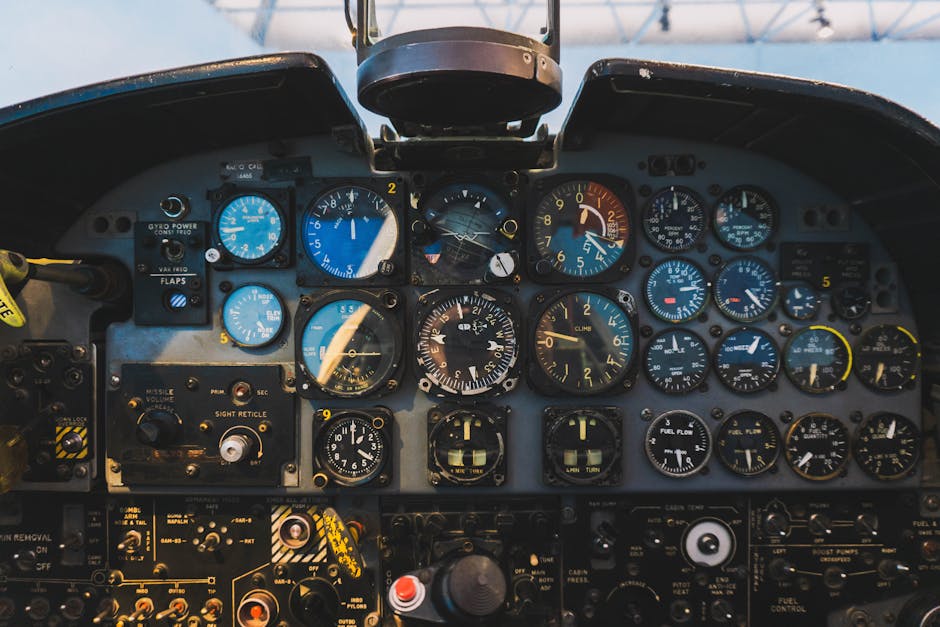
Over the Gulf of Alaska, at 29,000 feet, the horizon blurs into a seamless curve of steel-gray sea and slate sky. Inside the cockpit of an F-18 Super Hornet, a pilot’s breath is steady, clipped — a contrast to the sudden flicker on the targeting screen. A speck, no larger than a pixel, darts across the infrared display, accelerating without inertia, turning at angles that defy known aerodynamics. There is no heat signature, no known flight pattern, no registry. For 47 seconds, the jet locks on, the camera rolling as the object maneuvers impossibly. This is not science fiction. It is declassified footage, timestamped June 2019, released by the Pentagon in April 2023 — one of several videos now entering public view, not as conspiracy fodder, but as official military record.
New Military Footage Sparks Global Interest

The Department of Defense’s All-domain Anomaly Resolution Office (AARO) released three previously classified videos in 2023, including the Gulf of Alaska encounter and two others filmed off the East Coast. These clips, collectively labeled Unidentified Aerial Phenomena (UAP) recordings, were captured by infrared sensors and cockpit cameras aboard U.S. Navy fighter jets. One shows a spherical object hovering below the clouds before ascending vertically at hypersonic speed. Another captures a ‘tic-tac’ shaped craft moving silently over the Pacific, consistent with earlier UAP reports from 2004 and 2015. The Pentagon emphasized that the release aims to promote transparency and reduce stigma around pilot reporting, stating that none of the footage provides evidence of extraterrestrial life. Still, the objects exhibit flight characteristics beyond current human technology, prompting renewed scrutiny from lawmakers, scientists, and defense analysts Reuters reported at the time of release.
From Stigma to Scrutiny: The UAP Shift

For decades, UAPs — once colloquially called UFOs — were dismissed as misidentifications, hoaxes, or signs of pilot fatigue. Military personnel who reported sightings often faced ridicule or career setbacks. This began shifting in 2017, when The New York Times published a report on the Pentagon’s secret $22 million Advanced Aerospace Threat Identification Program (AATIP), active from 2007 to 2012. The disclosure, coupled with the release of the now-famous ‘Gimbal’ and ‘Tic Tac’ videos, forced a policy reckoning. In 2020, the Office of the Director of National Intelligence released a preliminary assessment concluding that while most UAPs likely had prosaic explanations, a subset remained unexplained and posed potential flight safety and national security concerns. The creation of AARO in 2022 marked a formal institutional response, elevating UAP analysis from fringe curiosity to structured defense inquiry.
Who Is Investigating the Unknown

At the helm of AARO is Dr. Sean Kirkpatrick, a former intelligence community scientist with a background in stealth technology and aerospace systems. Under his leadership, the office has declassified over 500 pages of documents and dozens of videos, aiming to crowdsource analysis while protecting sensitive sources. Pilots, too, are central figures — not as believers in aliens, but as trained observers under operational stress. Commander David Fravor, the Navy pilot who encountered the original ‘Tic Tac’ object in 2004, has become a key witness, describing the craft as “smooth, white, metallic” with no wings or exhaust. His testimony, backed by radar data, helped legitimize the phenomenon. Meanwhile, members of Congress, including Senator Kirsten Gillibrand and Representative Tim Burchett, have pushed for greater oversight, arguing that understanding UAPs is not about aliens, but about protecting U.S. airspace from unknown threats, whether terrestrial or otherwise.
Security, Science, and the Stigma of the Unknown

The implications of unexplained aerial activity are multilayered. From a defense perspective, any object operating undetected in U.S. military training zones represents a potential vulnerability. If the technology is human-made — possibly from a rival nation like China or Russia — its capabilities far exceed known public advancements. If it is not human-made, the scientific and philosophical ramifications are profound. Yet the Pentagon remains cautious, stressing that no UAP has been linked to extraterrestrial life. Academia is slowly engaging: in 2022, NASA announced it would conduct an independent study on UAP data, emphasizing the need for rigorous scientific methodology. The challenge lies in balancing transparency with national security, avoiding panic while acknowledging that some phenomena remain, for now, unresolved.
The Bigger Picture
This moment reflects more than a curiosity about flying objects — it reveals a shift in how governments handle the unknown. Decades of secrecy bred distrust; today’s disclosures, however limited, represent an attempt to rebuild credibility. The UAP debate forces a confrontation with the limits of human knowledge, not just in aerospace, but in perception, data interpretation, and institutional accountability. As sensors improve and more data emerges, the line between anomaly and explanation may narrow — or widen.
What comes next is not a revelation of alien contact, but a deeper integration of UAP analysis into defense and scientific infrastructure. AARO plans to release an updated assessment in late 2024, incorporating data from commercial satellite operators and civilian aviation reports. Whether these efforts yield definitive answers or more puzzles, one thing is clear: the sky is no longer assumed to be fully understood. The age of official UFO scrutiny has arrived — not with fanfare, but with footage, transcripts, and a quiet acknowledgment: we are not the only ones watching the skies.
Source: Euronews