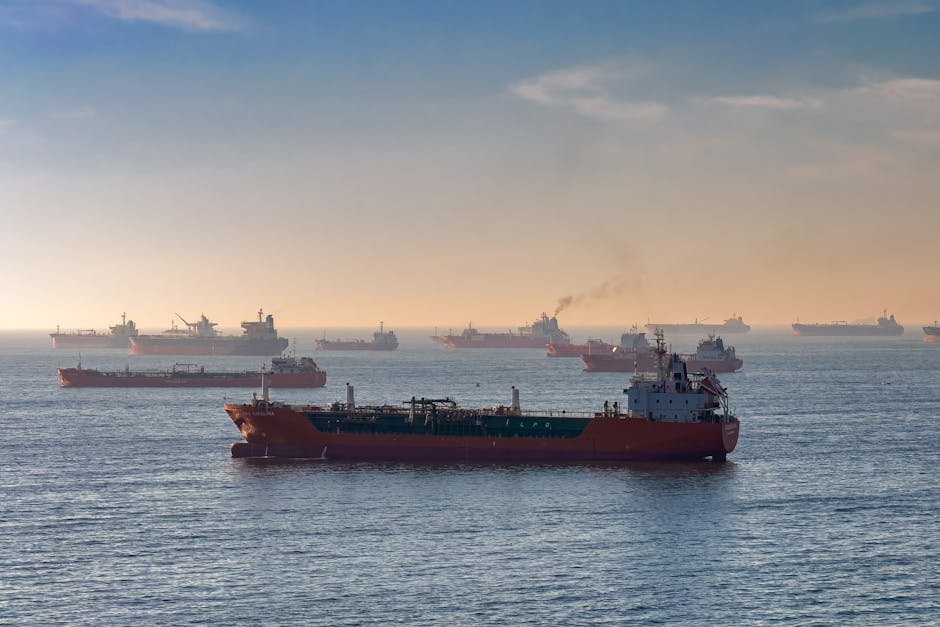
- Iran has hinted at a potential 90% drop in tensions with the US, paving the way for a full reopening of the Strait of Hormuz.
- The agreement could recalibrate energy security across Asia, Europe, and North America, impacting global oil supplies and prices.
- Iran’s reopening of the strait is contingent on verifiable sanctions relief and security guarantees from the US and other parties.
- The diplomatic opening comes amid a broader de-escalation following President Donald Trump’s surprise announcement in 2019.
- The potential deal has already influenced markets, with a 3% drop in Brent futures following Iranian officials’ comments.
The Strait of Hormuz, through which nearly 21 million barrels of oil pass each day—accounting for about 20% of global petroleum shipments—has remained a geopolitical tinderbox for decades. In recent months, heightened tensions between Iran and the United States have led to ship seizures, drone shootdowns, and a sharp spike in maritime insurance rates. Now, Iranian officials are signaling a potential breakthrough: the strategic waterway could soon reopen fully as part of an emerging peace agreement, a move that could recalibrate energy security across Asia, Europe, and North America.
Why the Hormuz Thaw Matters Now

For years, the Strait of Hormuz has symbolized Iran’s asymmetric power in the Persian Gulf, allowing it to threaten global oil supplies during periods of confrontation. The current diplomatic opening comes amid a broader de-escalation following President Donald Trump’s surprise announcement in late 2019 that a deal with Iran was “very close.” Though Tehran has not issued a formal response, several high-ranking officials, including those within Iran’s Revolutionary Guard Corps and Ministry of Foreign Affairs, have made carefully worded statements suggesting that reopening the strait is contingent on verifiable sanctions relief and security guarantees. With crude prices sensitive to Gulf instability, even speculative remarks about easing chokepoint risks can influence markets, as seen in a 3% drop in Brent futures following the latest comments.
Behind the Diplomatic Maneuvering

Iran’s messaging appears calibrated to project strength while leaving room for negotiation. While no official delegation has confirmed talks, semi-official outlets like Fars News Agency and Tasnim have quoted unnamed military advisors stating that “hostile actions will cease” if the U.S. lifts sanctions on Iranian oil exports and halts naval provocations. In parallel, European diplomats report backchannel exchanges mediated by Oman, a traditional interlocutor in Gulf crises. The U.S. Navy’s Fifth Fleet, based in Bahrain, has maintained a heightened presence in the region, but recent intelligence assessments suggest a reduction in Iranian fast-boat drills near the strait. These developments follow the seizure of an Iranian tanker by British forces in 2019 and Tehran’s retaliatory detention of a British-flagged vessel, incidents that brought the region to the brink of armed conflict.
Roots of Tension and Economic Leverage

The strategic calculus behind Iran’s stance lies in economic survival and regional influence. Years of U.S. sanctions have slashed Iran’s oil exports from over 2.5 million barrels per day in 2018 to under 300,000, crippling state revenues and fueling domestic unrest. The ability to threaten the Strait of Hormuz—already one of the world’s most militarized waterways—provides Tehran with leverage disproportionate to its conventional military power. According to a 2020 report by the Center for Strategic and International Studies, even a partial disruption could spike global oil prices by $20 per barrel. Analysts argue that Iran’s willingness to discuss reopening the strait reflects both internal economic desperation and a strategic reassessment of confrontation with the U.S., particularly as regional rivals like Saudi Arabia and Israel continue to receive American backing.
Global Ripple Effects of a Reopening

If the Strait of Hormuz fully reopens under a peace framework, the implications would be far-reaching. Energy-importing nations such as China, India, and Japan, which rely heavily on Gulf oil, would see reduced supply risks and lower insurance premiums for shipping. For the United States, a stable Hormuz could support its broader goal of energy independence while reducing the need for costly naval deployments. However, Gulf Arab states, particularly the UAE and Kuwait, remain wary of any agreement that legitimizes Iranian influence without addressing ballistic missile programs or proxy warfare in Yemen and Syria. Meanwhile, global markets would likely react positively, though traders may remain cautious until verifiable steps—such as the release of detained vessels or the lifting of secondary sanctions—are implemented.
Expert Perspectives
Experts are divided on the credibility of Iran’s overtures. Vali Nasr, a Middle East scholar at Johns Hopkins University, views the signals as a genuine bid for economic relief, stating, “Iran’s leadership knows prolonged isolation is unsustainable.” In contrast, Behnam Ben Taleblu of the Foundation for Defense of Democracies warns that “tactical openness on Hormuz could mask continued destabilizing activities elsewhere.” European diplomats urge caution, noting that past agreements, including the 2015 nuclear deal, unraveled due to enforcement gaps. The International Energy Agency has advised member states to maintain strategic reserves regardless of diplomatic progress.
Looking ahead, the path to a durable peace remains uncertain. Key questions include whether the U.S. will offer phased sanctions relief, how Iran’s regional proxies will respond, and whether verification mechanisms can be enforced. If implemented, a reopening of the Strait of Hormuz would mark a pivotal shift in Gulf security—but only if both sides move beyond rhetoric to concrete action. The world will be watching not just for declarations, but for the first tankers to sail unimpeded through one of history’s most contested waterways.
Source: The New York Times