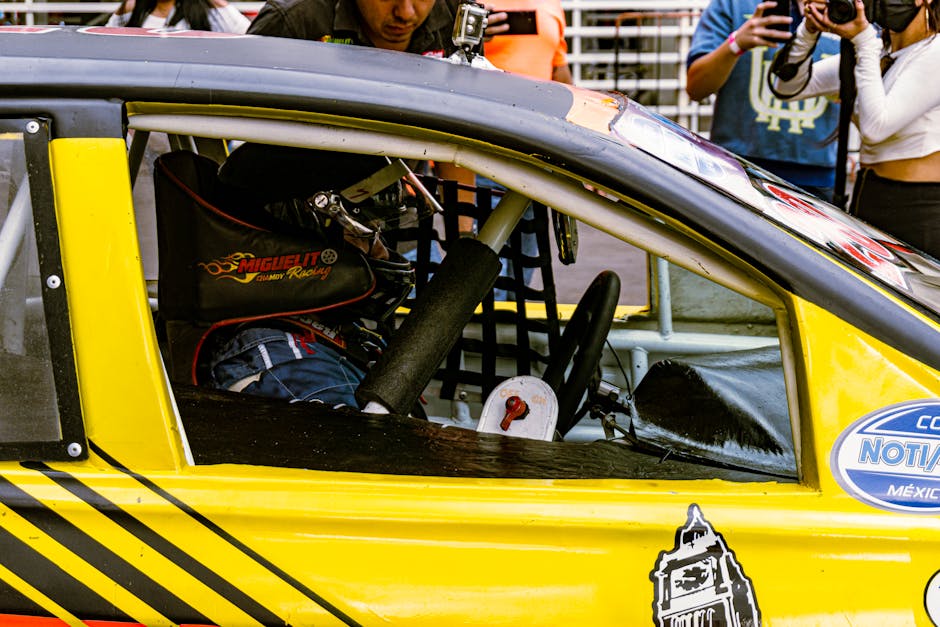
- Kyle Busch, a two-time NASCAR Cup Series champion, died unexpectedly at 41 years old, leaving behind a legacy of 63 career Cup victories.
- Busch was known for his fiery temper, unmatched work ethic, and ability to extract every ounce of performance from his car.
- He was a dominant force in NASCAR, winning across all three national series—Cup, Xfinity, and Craftsman Truck.
- Busch’s aggressive driving style earned him both admiration and criticism, but his raw talent and consistency were undeniable.
- The 41-year-old driver was in the midst of a storied career, with retirement still years away and mentorship of younger drivers just beginning.
How could someone so dominant, so deeply embedded in the fabric of modern NASCAR, be gone at just 41? That’s the question reverberating through pit lanes, garages, and fan forums after the unexpected announcement that Kyle Busch, a two-time NASCAR Cup Series champion, has died. Known for his fiery temper, unmatched work ethic, and ability to extract every ounce of performance from his car, Busch was not just a winner—he was a force of nature in the garage. With 63 career Cup victories, second among active drivers at the time of his passing, his legacy was already etched in the sport’s history. But his story was supposed to keep unfolding, with retirement still years away and mentorship of younger drivers just beginning. Now, fans and peers alike are grappling with a void no statistic can fill.
Who was Kyle Busch and what made him a NASCAR legend?

Kyle Busch was one of the most accomplished and polarizing figures in NASCAR history. He won the NASCAR Cup Series championships in 2015 and 2019, both times driving for Joe Gibbs Racing, and was known for his ability to win across all three of NASCAR’s national series—Cup, Xfinity, and Craftsman Truck. He was the first driver to win in all three series in a single season, a feat accomplished in 2010. His aggressive driving style earned him both admiration and criticism, but even his harshest critics could not deny his raw talent and consistency. Between 2005 and 2025, Busch recorded over 200 total national series wins, making him one of the most decorated drivers of his generation. Off the track, he was active in charity work through the Kyle Busch Foundation, which supported families of injured or sick children.
What do we know about the circumstances of his death?

Official details surrounding Kyle Busch’s death remain limited, but a statement released by NASCAR and Joe Gibbs Racing confirmed he passed away at the age of 41 due to complications from a cardiac event. The incident occurred at his home in Mooresville, North Carolina, a hub for NASCAR teams and drivers. Emergency responders were called shortly after 8:00 a.m. local time but were unable to revive him. According to NASCAR’s official announcement, no foul play is suspected, and further medical evaluation is underway. Tributes quickly poured in from across the sports world, including from fellow drivers like Kevin Harvick, Denny Hamlin, and Jimmie Johnson, who praised Busch’s skill, passion, and contributions to the sport’s growth.
How have critics and fans responded differently to his legacy?

While Kyle Busch’s talent was never in dispute, his legacy has always carried a duality. Some fans viewed him as arrogant, particularly after on-track incidents where his aggressive moves led to collisions—episodes often summarized with the fan-made slogan “Get a life, Kyle Busch!” Others, however, saw him as the embodiment of competitive fire, a driver unafraid to push limits in pursuit of victory. Statistically, Busch’s resume speaks for itself: only David Pearson and Richard Petty have more combined wins across NASCAR’s top three series. Yet, for years, debates raged over whether Busch deserved the same reverence as legends like Dale Earnhardt or Jeff Gordon. Even in death, those conversations persist—not out of malice, but because Busch was a figure too consequential to be simply eulogized without reflection.
What is the real-world impact of Busch’s death on NASCAR?

The loss of Kyle Busch sends shockwaves through the NASCAR ecosystem. At 41, he was still a top-tier competitor, mentoring younger drivers and serving as a bridge between the sport’s traditional roots and its modern, increasingly diverse fanbase. His presence in the garage helped maintain visibility for NASCAR during a period of transition, including the introduction of the Next Gen car and expanded digital streaming partnerships. With his passing, teams lose a veteran strategist, sponsors lose a high-profile ambassador, and fans lose a driver who never shied away from speaking his mind. The 2026 season, already marked by new safety initiatives, may now see renewed focus on driver health monitoring, particularly for those with demanding racing schedules and histories of high-stress competition.
What This Means For You
For fans of motorsports, Kyle Busch’s death is a sober reminder that even the most physically resilient athletes face unseen health risks. His career exemplifies dedication and performance under pressure, but also underscores the importance of routine medical evaluations, especially as athletes age. Whether you admired him or rooted against him, his impact on NASCAR is undeniable—and his absence will be felt for years to come in every close finish and bold pass.
As the sport mourns, one question remains: how will NASCAR honor a champion whose legacy was as intense and complex as his driving style? And in the years ahead, will the sport evolve its approach to driver wellness in ways that reflect the lessons of Busch’s untimely passing?
Source: Reddit