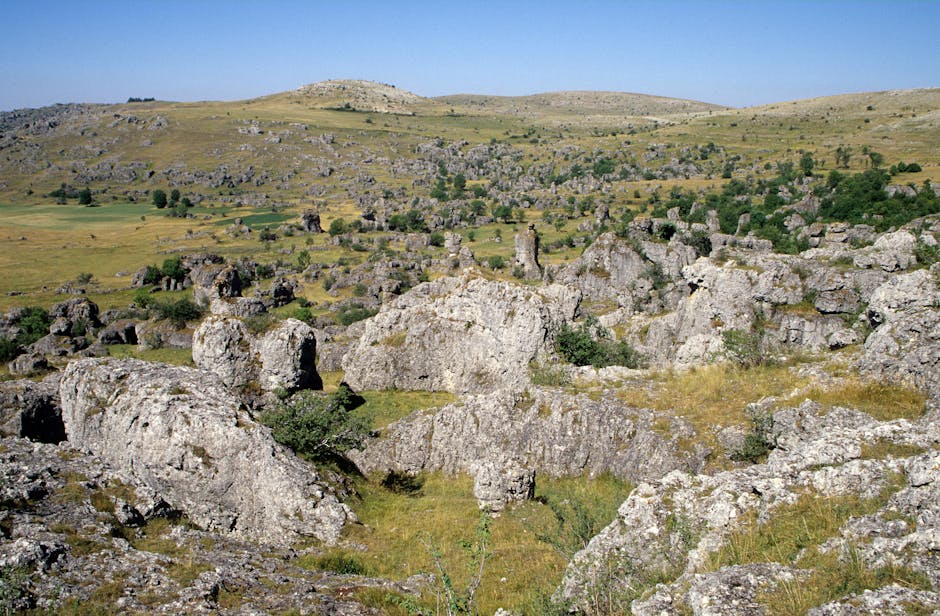
- A UK team successfully restored over 100 hectares of magnesian limestone grassland in County Durham after five years and £1 million investment.
- This rare habitat supports a unique web of life, including wild thyme, spring sedge, and rare invertebrates and nesting birds.
- Targeted ecological interventions can potentially reverse decades of environmental decline, raising hopes for conservation efforts.
- Magnesian limestone grasslands are designated as a priority habitat and protected under EU directives prior to Brexit.
- These grasslands act as biodiversity hotspots, providing refuge for species like the northern brown argus butterfly and the limestone woundwort.
What happens when a habitat is pushed to the brink—but then pulled back? In County Durham, a quiet ecological triumph has unfolded: the successful restoration of magnesian limestone grassland, a rare and protected ecosystem that clings to England’s eastern coast. Once widespread but now covering less than 1% of its original range, this grassland type supports a unique web of life—from wild thyme and spring sedge to rare invertebrates and nesting birds. After five years and nearly £1 million in investment, conservationists have restored over 100 hectares of degraded land, raising a pivotal question: can targeted ecological interventions reverse decades of environmental decline?
What Is Magnesian Limestone Grassland—and Why Does It Matter?

This rare habitat forms on ancient Permian-age rock rich in magnesium carbonate, creating thin, alkaline soils that support a distinctive assemblage of plant and animal species not found elsewhere. Magnesian limestone grasslands are designated as a priority habitat under the UK’s Biodiversity Action Plan and are protected under EU directives prior to Brexit. These grasslands act as biodiversity hotspots, providing refuge for species like the northern brown argus butterfly and the nationally scarce limestone woundwort. Their loss—driven by agricultural intensification, urban expansion, and invasive species—has been steep, with over 95% of the original coverage lost since the 1930s. The restoration in County Durham is significant not only for its scale but because it targets one of the last remaining corridors for this ecosystem.
What Evidence Shows the Restoration Worked?

Monitoring data collected by Natural England and Durham County Council show a marked increase in native plant diversity and soil stability across the restored sites. Botanists recorded over 70 flowering plant species reestablished in areas previously dominated by coarse grasses and bramble. Key indicator species, such as clustered bellflower and quaking grass, have returned naturally, suggesting ecosystem resilience. According to Dr. Eleanor Pratt, a senior ecologist with Natural England, “The recovery of specialist flora within just four years exceeds our initial projections.” Aerial surveys and drone mapping also revealed improved connectivity between fragmented patches, a critical factor for species migration. The project used a mix of techniques, including scrub clearance, controlled grazing with Hebridean sheep, and seed harvesting from donor sites, all tailored to the delicate chemistry of the limestone substrate. Research published in Nature Ecology & Evolution supports such approaches, showing that targeted restoration can accelerate ecological recovery even in degraded landscapes.
What Are the Counter-Perspectives to This Success?

Despite the positive outcomes, some ecologists caution against overgeneralizing the results. Dr. Marcus Fenwick, a landscape ecologist at the University of Leeds, notes that “restoration success in one location doesn’t guarantee scalability, especially where soil conditions or land-use history differ.” He highlights that magnesian limestone grasslands are highly localized, limiting replication opportunities. Others question the long-term financial sustainability of such projects, noting that post-restoration management—especially grazing and invasive species control—requires ongoing funding. There is also debate about whether resources might yield greater biodiversity returns if directed toward more widespread habitats like upland peat bogs or lowland woodlands. Additionally, climate change introduces uncertainty: shifting rainfall patterns and increased temperatures may alter species composition, potentially undermining current gains. While the County Durham project is lauded, it underscores the need for adaptive management and continuous monitoring.
What Real-World Impact Has This Restoration Had?

Beyond biodiversity metrics, the project has strengthened community engagement and environmental education in County Durham. Local schools now use the grasslands as outdoor classrooms, and volunteer programs have involved over 1,200 residents in planting and monitoring efforts. The restored sites also contribute to natural flood mitigation by improving soil infiltration and reducing surface runoff. Moreover, the initiative has influenced regional planning policies—new infrastructure developments near the grasslands now require ecological impact assessments and habitat offsetting. The success has prompted discussions about expanding the model to other fragmented habitats in the Tees Valley. BBC News coverage highlighted how the restoration has become a symbol of hope amid broader concerns about species decline in the UK.
What This Means For You
If you live in or care about the UK’s natural landscapes, this project offers a blueprint for what’s possible with sustained investment and community collaboration. It shows that even highly degraded ecosystems can recover when science, policy, and public engagement align. While not a panacea for wider environmental crises, it demonstrates that local action can yield measurable, lasting benefits—for wildlife, for climate resilience, and for people.
Still, a crucial question remains: how can conservation efforts like this be replicated at scale without relying on one-off funding? As the UK faces increasing pressure to meet its 2030 biodiversity targets, the answer may determine whether rare habitats like magnesian limestone grassland survive—or vanish for good.
Source: BBC