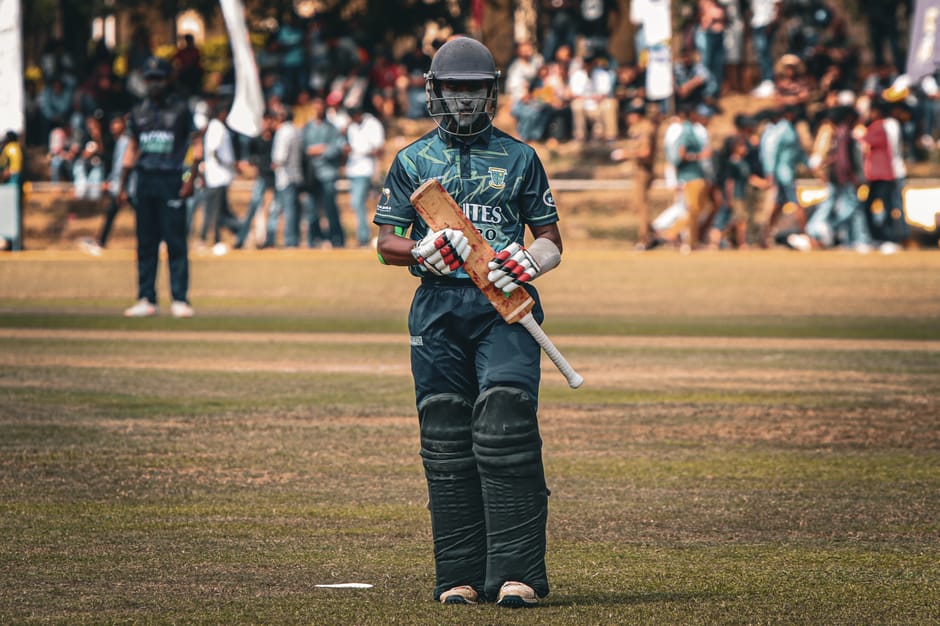
- Usman Tariq’s journey from manual labor to professional cricket at 30 is a quiet revolution against the idea that athletic dreams expire by 25.
- Tariq’s rare blend of mystery spin and relentless work ethic has drawn attention in the Vitality T20 Blast.
- As a late bloomer, Tariq’s career is a testament to perseverance and determination in the face of adversity.
- Tariq’s unconventional entry into English domestic cricket marks a significant departure from traditional norms.
- At 30, Tariq’s success in the T20 Blast challenges the notion that players are discarded after turning 25.
On a humid evening in Dubai, beneath the glare of warehouse lights and the constant hum of machinery, Usman Tariq once tightened bolts on car engines. The scent of oil clung to his clothes, and the rhythm of assembly-line work dictated his days. Cricket was a weekend escape, played barefoot on dusty lots with tape balls that frayed after an hour. Yet even as he clocked in and out of a life that offered stability but no spark, Tariq would sneak glances at his phone—watching clips of leg-spinners, studying wrist positions, imagining a different path. That dream, long deferred, now feels surreal: walking onto Edgbaston’s lush green pitch in front of thousands, wearing the navy and yellow of Warwickshire, about to bowl his mystery spin in England’s T20 Blast. His journey—from obscurity and manual labor to professional cricket at 30—is not just improbable; it’s a quiet revolution against the idea that athletic dreams expire by 25.
Breaking Into the T20 Blast at 30

Usman Tariq’s debut season with Warwickshire in the Vitality T20 Blast marks one of the most unconventional entries into English domestic cricket. Signed as an overseas player alongside his role with Birmingham Phoenix in The Hundred, Tariq brings a rare blend of mystery spin and relentless work ethic. At 30, he is a late bloomer in a sport that often discards players before they turn 35. His action, which features a sharply contorted wrist and deceptive variations, has drawn attention—and scrutiny—from umpires. Yet Tariq welcomes the attention, knowing his unorthodox style needs to withstand international standards. In recent practice matches, he took 3 for 22 against a strong Worcestershire lineup, showcasing both control and creativity. For Warwickshire, a team rebuilding its white-ball identity, Tariq represents more than a tactical addition—he’s a symbol of resilience in a fast-evolving format where innovation often trumps tradition.
The Long Road From Tape Balls to Turf

Tariq’s ascent began not in elite academies but on the concrete courts of Karachi, where tape-ball cricket is both pastime and proving ground. After moving to Dubai in his early 20s for financial stability, he joined a local expatriate league, playing weekends while working full-time. His turning point came in 2016, after watching MS Dhoni: The Untold Story, the biopic of India’s legendary wicketkeeper-captain. “It made me ask: what if I gave cricket one real shot?” Tariq recalled in an interview with Reuters. He began training rigorously, submitting videos of his action to online coaching forums, and eventually caught the eye of a former Pakistan international who recommended him for a trial. From there, he played in UAE’s domestic T20 leagues, earned a spot in the Abu Dhabi T10, and impressed scouts with his economy rate and knack for breaking partnerships—qualities that eventually led to his UK contracts.
The People Who Believed When Others Doubled

Tariq’s rise was not a solo effort. His wife, who worked extra shifts to support his training, and his younger brother, who filmed his bowling sessions and uploaded them online, were instrumental. So was Nadeem Khan, a former first-class cricketer turned coach in Dubai, who saw raw potential in Tariq’s wrist work and guided him through biomechanical adjustments to keep his action legal. “He wasn’t the fastest or the fittest, but his mind was sharp, and his hunger was real,” Khan told BBC Sport. Backing from these quiet champions gave Tariq the confidence to keep going, even when selection committees ignored him. Now, he carries their faith with him into every match. At Warwickshire, head coach Tim Boon has praised Tariq’s adaptability and humility, noting that his presence has energized the squad’s training culture.
What Tariq’s Success Means for Late Bloomers

Usman Tariq’s breakthrough sends a powerful message to aspiring athletes overlooked by traditional pathways: it’s never too late to pursue excellence. In a sport where youth academies and early specialization dominate, Tariq’s story challenges the obsession with age ceilings. His journey also highlights the growing importance of alternative circuits—like the UAE’s T10 and grassroots leagues—that offer second chances. For cricket’s global development, his success underscores the untapped talent in diaspora communities. Moreover, his legal but unorthodox action may prompt fresh discussions about inclusivity in bowling regulations, especially for spinners with non-traditional deliveries. For fans, Tariq embodies the romance of the underdog—a reminder that cricket, at its best, rewards not just talent, but tenacity.
The Bigger Picture
Tariq’s story resonates beyond the boundary ropes. In an era where career reinvention is increasingly common, his pivot from auto parts to professional sport mirrors broader societal shifts toward lifelong learning and second acts. It also reflects the democratizing power of digital platforms—YouTube, Twitter, and online coaching—that allow talent to emerge from anywhere. As cricket seeks to globalize and diversify, stories like Tariq’s offer a blueprint: find the next overlooked dreamer with a smartphone, a ball, and a will to persist.
What comes next for Usman Tariq? He aims to earn a longer-term contract in England and, ultimately, represent Pakistan in T20Is. But regardless of caps or accolades, he has already achieved something enduring: proving that passion, when paired with perseverance, can rewrite destiny—even after a decade spent far from the field.
Source: The Guardian