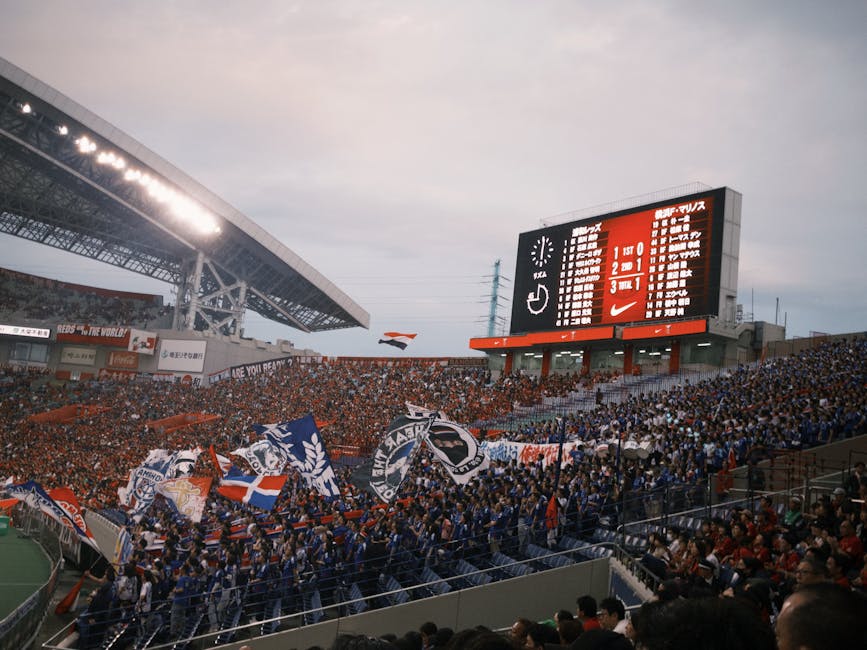
- Getafe secured their 1st European qualification in 14 years, finishing 7th in La Liga.
- Getafe’s 2-0 win over Alaves guaranteed their top-seven finish and a spot in UEFA Europa Conference League.
- Osasuna’s survival depended on Girona failing to score against Valencia, which they did in a 0-0 draw.
- The emotional finale saw Osasuna players celebrate their stay in the top flight alongside Getafe fans.
- Getafe’s achievement marked one of the most dramatic finales in recent Spanish football history.
On the final day of the La Liga season, Getafe achieved a historic milestone by securing qualification for European competition for the first time in 14 years, finishing seventh in the table. Simultaneously, Osasuna’s survival hung by a thread until the final minutes, as they needed Girona to fail to score against Valencia to avoid relegation. In a surreal twist, Osasuna players watched the match from their locker room, emerging in tears—only to join Getafe’s fans in jubilant celebration as Girona failed to break through, confirming Osasuna’s stay in the top flight. The convergence of triumph and relief created one of the most emotionally charged finales in recent Spanish football history.
Final Matchday Math and Standings

Going into Matchday 38, Getafe sat in seventh place with 59 points, holding a one-point advantage over Real Sociedad, who were in eighth. A win against already-relegated Alavés guaranteed Getafe a top-seven finish and with it, a spot in next season’s UEFA Europa Conference League. They delivered with a 2–0 victory, sealing their fate on the pitch. Meanwhile, Osasuna entered the day in 17th place with 39 points, just one point above the relegation zone. Their survival depended entirely on Girona, who were level on points but held the head-to-head advantage. Girona needed only a draw against Valencia at Montilivi to relegate Osasuna. However, despite dominating possession with 62% and registering 17 shots, Girona failed to score in a 0–0 draw, allowing Osasuna to survive on head-to-head record. According to BBC Sport, this marked the first time since 2011 that a team avoided relegation without playing on the final day.
Key Teams and Managerial Moves

Getafe’s resurgence under manager José Bordalás, back at the club for his third stint, has been rooted in defensive solidity and tactical discipline. Known for his 4-4-2 formation and aggressive pressing, Bordalás rebuilt a squad stripped of key players like Jaime Mata and Portu in previous seasons. This season’s success leaned on midfield general David Soria and breakout winger Alejo Sarabia, who contributed 8 goals and 5 assists. For Osasuna, manager Jagoba Arrasate stabilized a turbulent campaign plagued by injuries to key figures like Rubén García and Chimy Ávila. Their 1-0 win over Girona in April proved decisive, ultimately granting them survival via head-to-head despite identical points. Girona, in contrast, endured a heartbreaking collapse after a promising season under Michel, who took over in October. Their failure to secure safety reflected deeper issues in converting dominance into goals—a problem that saw them score just 43 times in 38 matches, among the lowest in the top half.
Opportunities and Risks Ahead

European qualification presents Getafe with significant financial and competitive opportunities. Participation in the UEFA Europa Conference League could bring an estimated €15–20 million in prize money, sponsorship, and broadcast revenue over the campaign, a transformative sum for a club with a reported €50 million annual budget. It also enhances their ability to retain talent and attract higher-caliber players. However, the challenge of balancing domestic and European fixtures looms large, especially given their limited squad depth. Osasuna’s survival, while emotionally uplifting, brings less financial upside—La Liga’s parachute payment structure means avoiding relegation preserves roughly €30 million in annual broadcasting revenue. Yet, with minimal investment in the transfer market and a reliance on academy talent, long-term sustainability remains uncertain. Girona, now in the Segunda División, faces a structural setback, though their ownership group—City Football Group—may accelerate a rebuild with significant investment.
Why the Drama Unfolded Now

The intensity of this season’s relegation battle reflects broader trends in La Liga’s competitive balance. Unlike previous years dominated by the ‘big three’—Barcelona, Real Madrid, and Atlético Madrid—mid-table clubs have grown more competitive due to improved analytics, youth development, and tighter financial regulations under La Liga’s Economic Control Committee. This season, only 13 points separated fifth place from 18th, the narrowest gap since 2016. Additionally, the return of full-capacity stadiums after pandemic restrictions amplified emotional stakes, with fans playing a visible role in pivotal moments. Getafe’s home advantage at Coliseum Alfonso Pérez, where they lost only four times all season, was instrumental. The convergence of sporting merit, financial pressure, and fan engagement created the perfect conditions for a dramatic finale, underscoring how parity has reshaped Spain’s top flight.
Where We Go From Here
In the next 6 to 12 months, three scenarios could unfold. First, Getafe might consolidate their European status by strategically reinvesting UEFA revenues into squad depth, potentially targeting experienced continental performers in the summer window. Second, Osasuna could face another relegation battle if they fail to strengthen key positions, particularly in attack, where they scored only 38 goals—the third-lowest among non-relegated teams. Third, Girona may mount an immediate promotion challenge from the Segunda División, leveraging City Football Group’s resources to sign high-potential talents and implement their possession-based model. The ripple effects of this final day will influence transfer strategies, managerial decisions, and fan expectations across multiple clubs as La Liga prepares for another unpredictable season.
Bottom line — Getafe’s European return and Osasuna’s escape highlight how tactical discipline and narrow margins define survival and success in modern La Liga, where emotion and mathematics collide on the final day.
Source: V