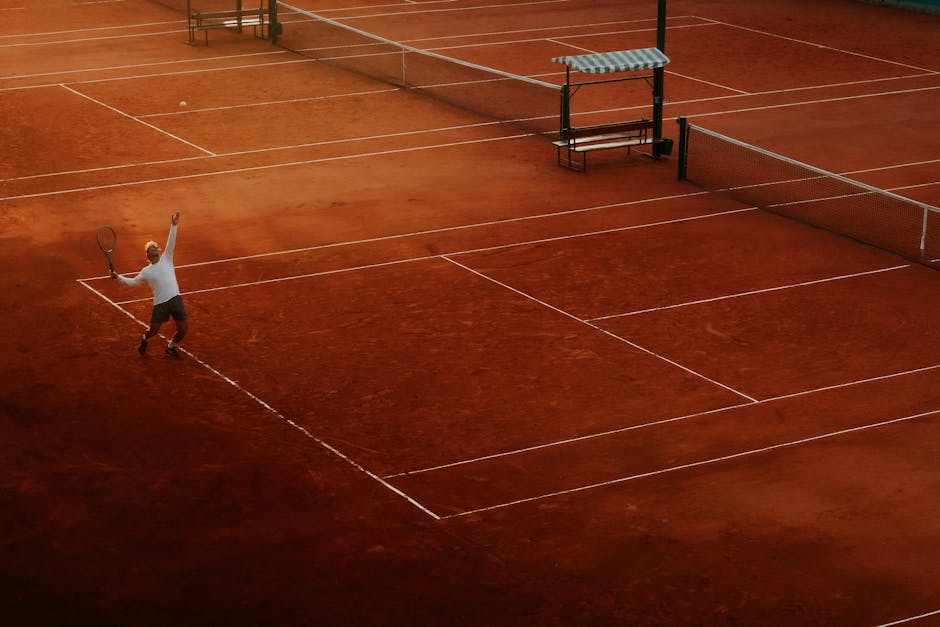
- The French Open 2026 kicked off under extreme heat conditions, raising questions about the sustainability of the Grand Slam structure.
- Top seeds, including Alexander Zverev and Taylor Fritz, navigated their opening challenges with resilience, but faced physical strain and debate over prize money equity.
- High-profile players like Emma Raducanu suffered setbacks, adding pressure on them to regain consistency and form.
- The tournament is witnessing a shift in power dynamics, with players speaking out on fairness, labor, and modern athlete expectations.
- The traditional Grand Slam model may need to adapt to meet the evolving needs of contemporary athletes.
As the French Open 2026 kicked off under unrelenting Parisian sun, tennis fans weren’t just asking who would win their first-round matches—they were questioning whether the sport’s Grand Slam structure remains sustainable. With temperatures soaring past 38°C on the red clay of Roland Garros, players faced not only fierce opponents but physical strain and a simmering debate over prize money equity. High-profile names like Alexander Zverev, Taylor Fritz, and Emma Raducanu took the court, but off it, the conversation centered on fairness, labor, and whether the traditional Grand Slam model can adapt to modern athlete expectations. Could this be the year the sport’s power dynamics shift?
How Did Top Players Perform Under Extreme Conditions?

Despite the sweltering heat, top seeds navigated their opening challenges with resilience. Alexander Zverev, seeded third, edged past Argentina’s Facundo Diaz Acosta in a grueling three-hour, 22-minute contest, winning 6-4, 5-7, 6-2, 6-3. The match tested Zverev’s fitness and mental toughness, especially during extended baseline rallies that are emblematic of clay-court tennis. Taylor Fritz, the American No. 10 seed, advanced comfortably in straight sets against French wildcard Arthur Fils, though he acknowledged the oppressive conditions. Emma Raducanu, still seeking consistency post-2021 US Open glory, lost a tight three-set battle to world No. 32 Clara Burel, 7-5, 4-6, 6-3. Her early exit adds pressure on the British star to regain form on clay, a surface where she has historically struggled.
What Evidence Supports Growing Player Dissatisfaction?

The athletic challenges were mirrored by institutional tensions. The Grand Slam Board, which oversees the four major tournaments, has come under increasing scrutiny for stagnant player compensation relative to tournament revenues. According to a 2025 Reuters investigation, while Grand Slam prize pools have grown, the percentage going to early-round players has declined, with over 60% of the funds concentrated among the top 32 finishers. In response, the newly formed Professional Tennis Association (PTA)—a player-led initiative—has pushed for revenue-sharing reforms. The French Open organizers confirmed they’ve entered formal talks with player representatives, marking the first time any Slam has agreed to structured negotiations. “We’re not asking for handouts, we’re asking for fairness,” said doubles star and PTA spokesperson Nicole Melichar-Martinez in a recent interview with BBC Sport.
What Are the Counterarguments to Player Demands?

While player advocacy has gained traction, tournament officials and some veteran analysts caution against overhauling the current model. Jacques Frantz, a former FFT (Fédération Française de Tennis) administrator, argues that Grand Slams operate as independent entities with high operational costs—especially on clay, where court maintenance, staffing, and infrastructure demand significant investment. “The French Open isn’t just a tournament—it’s a three-week city within Paris,” he said in a Le Monde op-ed. Critics also note that increased early-round payouts could reduce the financial incentive for deep runs, potentially diluting competitive intensity. Additionally, some sponsors and broadcasters worry that redistributing funds could impact future investments. Yet, even skeptics concede that transparency is lacking: prize money structures remain opaque, and player input in decision-making is minimal. The debate isn’t just about money—it’s about governance and whether athletes should have a formal seat at the table.
What Is the Real-World Impact on Players and Fans?

The stakes extend beyond boardroom negotiations. For lower-ranked players, a first-round loss at Roland Garros in 2026 earns approximately €72,000—respectable, but not life-changing when travel, coaching, and training costs are factored in. Many grind through qualifying events just to break even. Meanwhile, fans are increasingly aware of these inequities, with social media amplifying calls for reform. Attendance remains strong—over 380,000 tickets were sold for the 2026 edition—but organizers risk alienating a younger, more socially conscious demographic if change stalls. On the court, the heat exacerbated existing tensions. Medical teams treated at least five players for heat exhaustion, prompting fresh calls for extended break times and adjusted scheduling. The USTA, which runs the US Open, has already implemented heat rules allowing 10-minute breaks; Roland Garros currently permits only standard changeovers and medical timeouts.
What This Means For You
If you’re a tennis fan, the sport you love is at a crossroads. The French Open remains a spectacle of athleticism and drama, but behind the scenes, a movement for equity is gaining momentum. How Slams respond could shape player careers, tournament integrity, and fan engagement for decades. The matches will go on, but the demand for transparency and fairness won’t fade with the summer heat.
Will the 2026 French Open be remembered for thrilling tennis—or as the moment players finally reshaped the system? And if other Grand Slams resist reform, could we see a split, player-led tour emerge in the coming decade?
Source: The Guardian