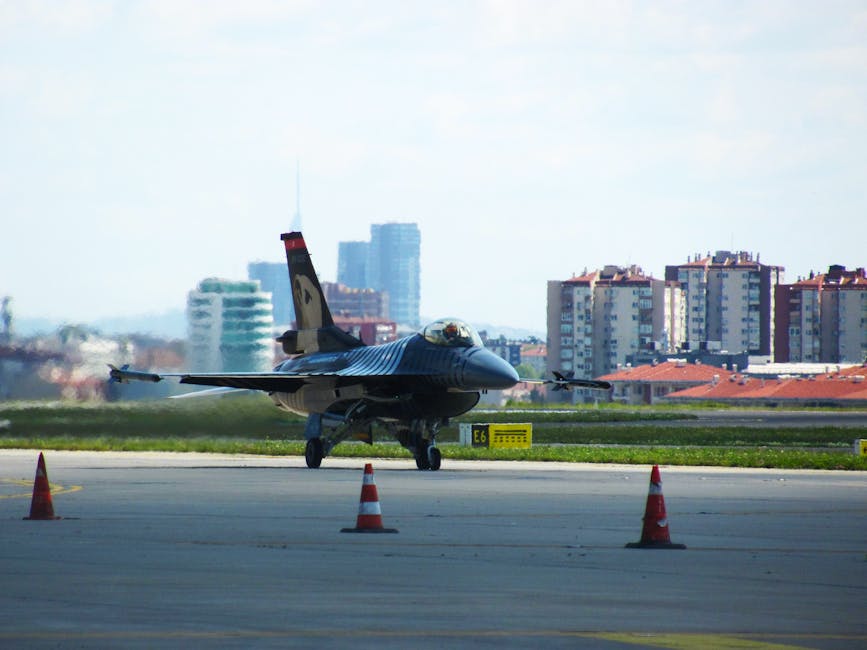
- Egypt has deployed a squadron of fighter jets to the UAE in 72 hours in response to Iranian threats.
- The move marks one of the fastest military mobilizations in recent Middle Eastern history.
- Egypt’s strategic pivot toward deeper military integration with Gulf monarchies has far-reaching implications.
- The UAE has criticized Arab nations for failing to contribute meaningfully to collective Gulf security.
- Egypt’s deployment addresses the UAE’s concerns about an uneven burden in defending shared interests.
In a striking show of regional solidarity, Egypt has deployed a squadron of fighter jets to the United Arab Emirates within 72 hours of heightened Iranian threats, marking one of the fastest military mobilizations in recent Middle Eastern history. The move comes as Iran intensifies its missile and drone campaigns targeting Gulf states, with the UAE accusing Tehran of launching over 30 precision strikes on critical energy infrastructure since the start of the year. As Gulf defense ministers convened an emergency summit in Abu Dhabi, Egyptian President Abdel Fattah el-Sisi confirmed the deployment of Mirage 2000 and Rafale aircraft, signaling Cairo’s strategic pivot toward deeper military integration with Gulf monarchies — a shift with far-reaching implications for regional power balances.
Fractures in the Arab Defense Front

The rapid deployment follows sharp public criticism from UAE officials, who accused several Arab nations of failing to contribute meaningfully to collective Gulf security. In a rare diplomatic rebuke, UAE Foreign Minister Abdullah bin Zayed Al Nahyan stated that some regional partners had offered “rhetoric without resources” amid escalating Iranian provocations. This sentiment reflects growing frustration in Abu Dhabi over what it sees as an uneven burden in defending shared interests, particularly as Iran leverages proxy forces in Yemen, Syria, and Iraq to project power. Egypt’s move not only answers that call but also positions Cairo as a pivotal security provider in the Arab world, a role traditionally dominated by Saudi Arabia and the United States. With American troop presence in the region under political scrutiny, Gulf states are actively diversifying their defense partnerships — and Egypt, with its robust military and strategic location, is emerging as a preferred ally.
Military and Diplomatic Maneuvers

The Egyptian Air Force contingent, estimated at 12 advanced fighter jets and over 200 personnel, is now operating from Al Dhafra Air Base near Abu Dhabi, a facility also used by U.S. forces. Joint air patrols have already commenced, integrating Egyptian pilots with Emirati command systems in real-time defense operations. The deployment is part of a broader defense pact signed in late 2023, but its activation now underscores the urgency of the Iranian threat. Iran has repeatedly warned Gulf states against hosting foreign military assets, calling such moves “acts of complicity” with Western powers. Meanwhile, Saudi Arabia has refrained from matching Egypt’s commitment, opting instead for backchannel diplomacy — a contrast that highlights divergent regional strategies. The absence of Jordanian or Moroccan forces, despite their close ties to Gulf rulers, further reveals the selective nature of Arab military cooperation in times of crisis.
Roots of the Escalation

The current crisis stems from a broader deterioration in Iran-Gulf relations, exacerbated by Tehran’s expanding nuclear program and its support for Houthi rebels in Yemen, who have launched cross-border attacks into Saudi Arabia and the UAE. According to Reuters, Iran conducted a coordinated missile barrage in April 2024, claiming it targeted Israeli-linked facilities in the UAE — a claim Israel has neither confirmed nor denied. The attack prompted the UAE to invoke Article 5 of the Gulf Cooperation Council’s mutual defense agreement, calling for collective action. Yet only Egypt responded with tangible force. Analysts point to Egypt’s growing dependence on Gulf financial aid — having received over $22 billion in deposits and grants from the UAE and Saudi Arabia since 2022 — as a key motivator behind its swift action. This symbiosis of security and finance is reshaping the region’s geopolitical calculus.
Consequences for Regional Stability

The Egyptian deployment risks further polarizing an already fragmented Arab world, where alignment with Iran or the Gulf bloc increasingly defines foreign policy. Smaller states may now face pressure to choose sides, undermining efforts to build a unified Arab security framework. For the UAE, hosting Egyptian jets enhances deterrence but also increases the risk of becoming a focal point in any Iran-Gulf conflict. Moreover, the move could strain Egypt’s historically cautious stance toward direct involvement in Gulf wars, potentially drawing Cairo into unintended escalations. Economically, heightened tensions have already driven up oil volatility, with Brent crude spiking above $95 per barrel in early 2024 following an attack on a UAE offshore terminal. The International Energy Agency has warned that sustained instability could disrupt global energy markets, particularly if Strait of Hormuz shipping lanes are threatened.
Expert Perspectives
“Egypt’s deployment is less about ideology and more about survival in a multipolar Middle East,” says Dr. Nawaf Obaid, a Middle East security scholar at the King Faisal Center. “Sisi needs Gulf cash, and the UAE needs credible air power — it’s a marriage of convenience.” Conversely, Dr. Dina Esfandiari, an Iran analyst at BBC News, argues that “military posturing only feeds the cycle of escalation. Iran sees foreign jets in the UAE as a direct threat, which could prompt even bolder retaliatory actions.” These contrasting views reflect the fragile balance between deterrence and provocation in the current climate.
Looking ahead, the durability of Egypt-UAE defense cooperation will depend on both military outcomes and domestic politics. Will other Arab states follow Egypt’s lead, or will bilateral deals continue to replace collective security? As Iran’s regional influence evolves, the Middle East may be witnessing the dawn of a new security order — one defined not by pan-Arab unity, but by transactional alliances forged in crisis.
Source: Financial Times