- By 2030, AI is projected to contribute over $15.7 trillion to the global economy, driven by industries outside Silicon Valley.
- 70% of companies in non-digital domains have piloted AI tools, from predictive crop modeling to algorithmic grief counseling.
- AI adoption is redefining workflows, decision-making, and service delivery in traditionally non-digital sectors.
- AI augmentation is particularly effective in industries with high emotional stakes, fragmented data, and labor-intensive processes.
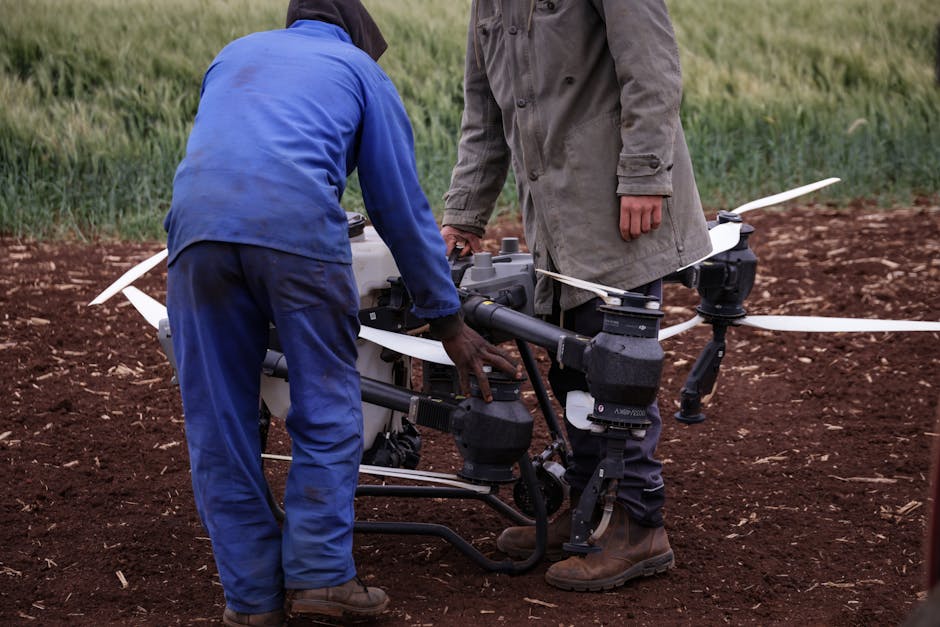
- AI-powered innovations in subsistence farming have increased yields by up to 30% in sub-Saharan Africa.
By 2030, artificial intelligence is projected to contribute over $15.7 trillion to the global economy, yet most of that growth won’t come from Silicon Valley. Instead, the deepest disruptions are unfolding in industries long considered immune to technological overhaul—sectors like soil science, probate law, and even end-of-life planning. A 2023 McKinsey Global Institute report found that up to 70% of companies in traditionally non-digital domains have already piloted AI tools, from predictive crop modeling in subsistence farming to algorithmic grief counseling in funeral homes. These quiet revolutions are not replacing humans overnight but are redefining workflows, decision-making, and service delivery in ways that challenge long-held assumptions about what machines can—and should—do.
The Hidden Frontiers of AI Adoption

While headlines focus on self-driving cars and generative AI in creative fields, the real transformation is occurring where data meets human vulnerability: agriculture, legal aid,殡葬 services, mental health, insurance underwriting, and artisanal manufacturing. These industries share common traits—high emotional stakes, fragmented data, labor-intensive processes, and regulatory complexity—making them ripe for AI augmentation. For instance, smallholder farmers in sub-Saharan Africa are now using AI-powered SMS platforms to receive hyperlocal pest forecasts, increasing yields by up to 30%, according to a 2024 BBC report on AI in agriculture. Similarly, legal aid clinics in the U.S. are deploying natural language processing tools to parse decades of housing law, enabling faster eviction defense. The convergence of low-cost sensors, cloud computing, and open-source AI models has democratized access, allowing even the most analog sectors to leapfrog into data-driven decision-making.
From Soil to Sentiment: AI’s Unexpected Inroads

One of the most surprising frontiers is殡葬 services, where AI is being used to generate personalized eulogies, manage digital legacies, and even simulate posthumous conversations. Companies like HereAfter AI and Project December have developed voice-cloning tools that allow grieving families to interact with digital avatars of the deceased—raising profound ethical questions. In law, startups such as DoNotPay and Harvey AI are automating contract reviews and legal research, reducing case preparation time from weeks to hours. Meanwhile, in insurance, Lemonade and Hippo use behavioral AI to assess risk beyond traditional metrics, analyzing speech patterns and social media activity. These applications reveal a shift: AI is no longer just optimizing efficiency but is mediating human emotion, memory, and justice in deeply personal domains.
The Engine of Disruption: Data, Not Machines

The driving force behind this wave isn’t superior robotics but the monetization of latent data. Industries like殡葬, elder care, and land tenure often operate on paper records or oral histories—data sources long dismissed as unstructured or irrelevant. AI, particularly large language models and computer vision, can now extract meaning from these. For example, genealogy platforms like Ancestry.com use AI to digitize and link millions of handwritten wills and burial records, creating predictive models for inheritance disputes. In agriculture, satellite imagery combined with soil moisture sensors feeds machine learning models that forecast droughts months in advance. The World Bank estimates that AI-driven precision farming could reduce global water waste by 25% by 2030. The disruption lies not in replacing workers but in redefining expertise: a farmer’s intuition is now augmented by real-time climate algorithms, and a lawyer’s judgment is informed by AI-generated precedent maps.
Who Wins, Who Loses, and Who Decides?

These transformations carry deep societal implications. Rural communities may gain access to legal and medical insights previously out of reach, while funeral homes in urban centers face pressure to adopt costly AI systems or lose clients to tech-savvy competitors. Workers in mid-level analytical roles—paralegals, claims adjusters, agronomists—are at highest risk of displacement, though many may transition into AI oversight roles. More critically, the deployment of AI in emotionally sensitive areas risks eroding trust. A 2023 study published in Nature Human Behaviour found that 62% of participants felt uncomfortable with AI-generated condolences, viewing them as exploitative. Regulatory frameworks lag behind, leaving gaps in accountability, especially when AI systems make errors in will interpretation or crop predictions that affect livelihoods.
Expert Perspectives
Experts are divided on the long-term impact. Dr. Fei-Fei Li, co-director of Stanford’s Human-Centered AI Institute, argues that AI in sensitive domains must be guided by ‘compassionate computing’ principles, ensuring transparency and human oversight. In contrast, AI entrepreneur Mustafa Suleyman contends that efficiency gains justify rapid deployment, stating in a 2024 Reuters interview that ‘the moral imperative is to scale what works, not to preserve outdated workflows.’ Ethicists warn of a ‘digital triage’ where only those who can afford human touch receive it, while others are served by algorithms.
Looking ahead, the critical question is not whether AI will enter these industries—it already has—but how societies will govern its role in intimate human experiences. Will AI in殡葬 services be regulated like medical devices? Can farmers own the data generated from their fields? As these tools become embedded in life’s most personal moments, the need for inclusive, cross-sectoral dialogue has never been more urgent.
Source: Reddit