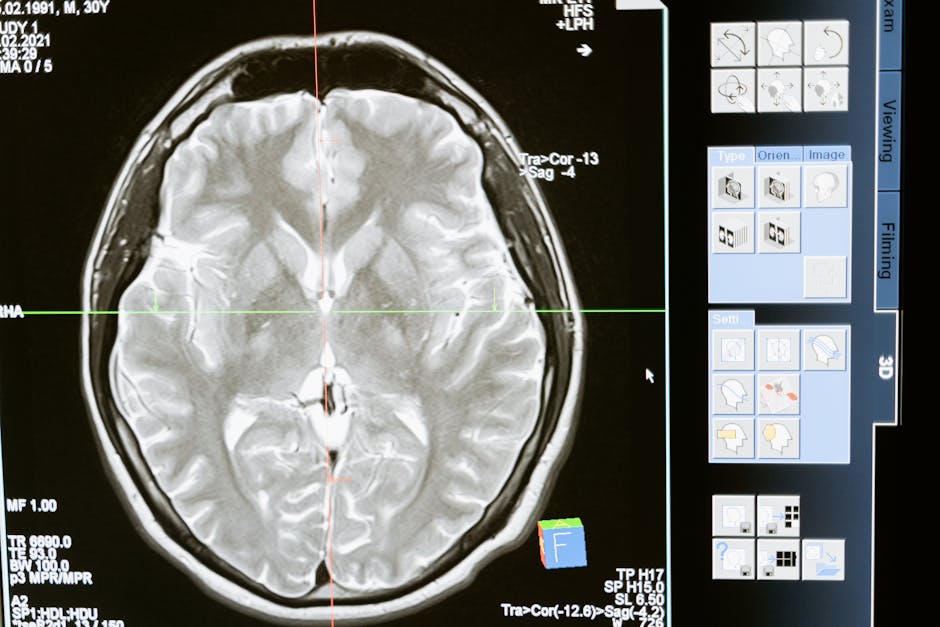
- Young adults’ brains overreact to social media likes, leading to encoded fear of missing out.
- Functional MRI scans reveal amplified activity in brain regions tied to social pain and reward processing.
- High levels of FOMO are linked to heightened brain activity in response to digital exclusion.
- Social media exclusion triggers neural responses similar to social distress and emotional regulation.
- Digital signals of social inclusion and exclusion can have a profound impact on the brain’s reward system.
Imagine scrolling through your feed as the sun dips below the skyline, the glow of your phone the only light in the room. A friend’s photo appears—laughing at a party you weren’t invited to—already gathering dozens of likes. Your thumb hovers. You wait. Seconds stretch. When your own post from last night has only three likes, a quiet unease settles in. This isn’t just vanity; it’s a neurological tremor. Scientists are now discovering that for many, especially young adults, the fear of missing out isn’t merely emotional—it’s encoded in the brain’s response to digital signals of social inclusion and exclusion. Functional MRI scans reveal that individuals high in FOMO show amplified activity in brain regions tied to social pain and reward processing when they perceive they’re being left out of online interactions, particularly the invisible currency of likes.
Heightened Brain Activity in Response to Digital Exclusion

Recent research published in Nature Human Behaviour demonstrates that participants with higher levels of FOMO exhibit significantly greater activation in the dorsal anterior cingulate cortex (dACC) and the anterior insula—areas associated with social distress and emotional regulation—when viewing social media content where they are excluded from likes or interactions. In controlled experiments, subjects believed they were participating in a simulated social network where peers could like their photos. When researchers manipulated feedback to show fewer likes than expected—or none at all—those scoring high on FOMO scales showed neural responses comparable to physical pain. The brain, it appears, treats digital social rejection not as trivial, but as a genuine threat to social belonging. This hypersensitivity was most pronounced in individuals aged 18 to 25, a developmental window when peer validation plays a critical role in identity formation.
The Rise of Digital Validation and Psychological Consequences

The connection between FOMO and neural sensitivity didn’t emerge in a vacuum. It’s rooted in two decades of evolving digital culture, where social media platforms have systematically designed feedback loops around visibility, engagement, and reward. Beginning with the introduction of the Facebook ‘like’ button in 2009, digital approval became quantifiable, public, and perpetual. Over time, these micro-interactions accumulated psychological weight. Behavioral studies in the 2010s began documenting compulsive checking, anxiety after disconnecting, and self-worth tied to online metrics. By the 2020s, neuroimaging tools advanced enough to probe the underlying brain mechanisms. Longitudinal data now suggest that chronic exposure to asymmetric feedback—seeing others celebrated while receiving little attention—can recalibrate neural sensitivity, making individuals more reactive over time. This creates a feedback loop: the more sensitive the brain becomes, the more likely users are to check, compare, and internalize digital slights.
The Researchers and Subjects Shaping the Discovery

The study was led by Dr. Lena Moretti at the Institute for Social Neuroscience in Zurich, whose team has spent nearly a decade investigating how digital environments reshape human cognition. Recruiting 120 participants through university networks, the researchers combined psychological assessments with fMRI scans during simulated social media tasks. What set this work apart was its focus not just on behavior, but on the intersection of subjective experience and neural activity. Participants who reported frequent nighttime phone use, anxiety when unable to check apps, or feelings of exclusion after seeing friends’ posts showed the strongest brain responses. These individuals weren’t necessarily clinically anxious—but their brains reacted as if they were under social threat. Dr. Moretti emphasizes that FOMO is not a disorder, but a widespread psychological phenomenon amplified by design choices in social platforms that exploit our innate need for belonging.
Implications for Mental Health and Platform Design

The findings carry weight beyond academic circles. For mental health professionals, they offer a biological basis for treating social media-related anxiety—not as mere overuse, but as a form of conditioned neural sensitivity. Therapists may now consider FOMO not just as a behavioral habit, but as a pattern of emotional dysregulation rooted in brain function. For tech companies, the research raises ethical questions about algorithmic amplification of engagement metrics. If likes trigger real neurological distress when withheld, should platforms be required to disclose their psychological impact? Some governments are already considering digital well-being regulations. Meanwhile, early interventions—such as customizable feedback settings or ‘like’ hiding features—have shown promise in reducing stress in pilot studies.
The Bigger Picture
This research underscores a broader shift: our digital behaviors are not merely choices, but interactions with systems that reshape our brains. The brain evolved to respond to social cues in face-to-face environments, where exclusion could mean survival risk. Now, those same circuits are firing in response to pixels on a screen. As social media becomes ever more immersive—from 2D feeds to augmented reality spaces—the line between digital and real-world social experience blurs. Understanding how FOMO alters neural processing is not just about individual well-being, but about the future of human connection in a mediated world.
What comes next may depend on how we integrate these findings into both personal habits and public policy. As neuroscientists continue mapping the brain’s response to digital stimuli, the challenge will be to design technologies that serve human needs without exploiting psychological vulnerabilities. The brain’s hypersensitivity to a simple ‘like’ is not a flaw—it’s a testament to our deep social nature. The question is whether our digital environments will honor that nature, or continue to manipulate it.
Source: Psypost