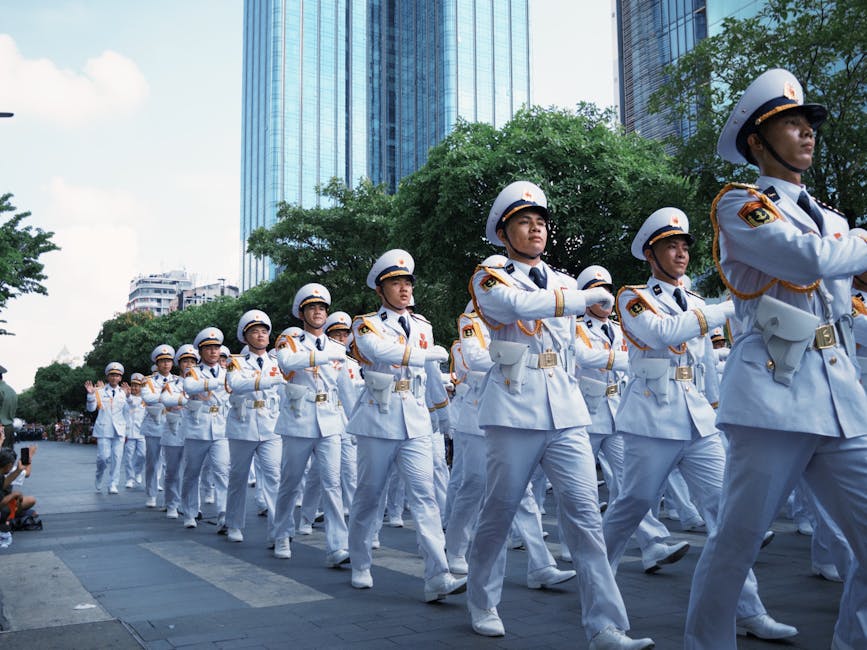
- Over 7,000 protesters rallied in Taipei, demanding a boost in defence spending amid rising tensions with China.
- The US has paused a $14 billion advanced weapons package, including F-16 fighter jets, due to internal logistics and congressional review.
- Taiwan faces mounting pressure from China, with near-daily military drills and air force breaches of the island’s air defence zone.
- Citizens fear the delay in US aid could embolden Beijing and leave Taiwan exposed during a critical window of strategic vulnerability.
- Taiwan’s Ministry of National Defense reports over 1,500 PLA sorties near Taiwanese airspace over the past three years.
In a striking display of civic urgency, over 7,000 demonstrators filled Taipei’s Ketagalan Boulevard, waving national flags and chanting “Defend Taiwan!” amid growing anxiety over national security. The rally, one of the largest in recent years focused on defence policy, erupted after the United States unexpectedly paused a $14 billion advanced weapons package—comprising F-16 fighter jets, missile defence systems, and precision-guided munitions—destined for Taiwan. With China conducting near-daily military drills encircling the island and its air force regularly breaching Taiwan’s air defence identification zone, citizens fear the delay could embolden Beijing. The pause, reportedly due to internal U.S. defence logistics and congressional review processes, has triggered a wave of concern that Taiwan may be left exposed during a critical window of strategic vulnerability.
Mounting Pressure in the Shadow of China

Taiwan’s call for enhanced military readiness comes at a time of escalating geopolitical strain. While the island maintains de facto independence, China views it as a breakaway province and has intensified military, diplomatic, and economic pressure to deter any formal declaration of sovereignty. Over the past three years, the People’s Liberation Army (PLA) has conducted over 1,500 sorties near Taiwanese airspace, according to data from Taiwan’s Ministry of National Defense. Analysts warn that Beijing may be preparing for scenarios ranging from blockade operations to amphibious invasion drills. The U.S., Taiwan’s most crucial security partner, has long maintained a policy of “strategic ambiguity,” providing defensive arms without committing to direct intervention. However, the current delay in arms delivery has sparked debate over whether Washington’s support remains reliable in the face of an increasingly assertive China.
Citizens Demand Action from Leadership

The rally, organized by civil society groups including the Taiwan Civil Government and the New Power Party, brought together veterans, students, and tech professionals alarmed by the perceived weakening of deterrence. Speakers called on President Lai Ching-te’s administration to increase defence spending from the current 2.6% of GDP to at least 3.5%, aligning with NATO benchmarks. They also urged faster domestic production of asymmetric warfare capabilities, such as anti-ship missiles, drones, and electronic warfare systems. The United States’ decision to pause the $14 billion arms sale—officially described as a “temporary administrative hold”—has fueled public suspicion, with some fearing political concessions to Beijing ahead of high-level bilateral talks. Taiwan’s Ministry of Foreign Affairs reiterated its commitment to self-defence, stating that it continues to engage closely with Washington to resolve logistical hurdles and expedite deliveries.
Strategic Calculations Behind the Arms Delay

The U.S. State Department has not formally explained the pause in the arms package, but defence analysts suggest it may stem from concerns over Taiwan’s readiness to absorb and maintain advanced systems, as well as broader strategic coordination with allies in the Indo-Pacific. According to Reuters, the hold involves technical assessments of Taiwan’s infrastructure for storing and deploying the new weaponry. Others speculate the Biden administration may be avoiding provoking China during sensitive diplomatic negotiations on trade and climate. Still, the move contradicts a 2023 U.S. Department of Defense report which emphasized Taiwan’s urgent need for “defensive capabilities to deter coercion.” Experts at the Center for Strategic and International Studies (CSIS) warn that delays in arms transfers could erode Taiwan’s deterrent effect, potentially incentivizing miscalculation in Beijing.
Consequences for Taiwan’s National Security

The implications of delayed military modernization are profound. Taiwan’s armed forces, while well-trained, face severe asymmetry against China’s 2-million-strong PLA. Without timely access to advanced air and missile defences, Taiwan’s ability to resist a blockade or initial assault could be compromised. Civilian infrastructure, including ports and power grids, is also increasingly at risk from precision strikes. Moreover, public morale hinges on visible commitments to defence—something the rally underscores. A recent National Chengchi University poll found that 68% of Taiwanese citizens believe conflict with China is likely within the next decade. The government’s proposed 2025 defence budget, expected to rise to $23 billion, includes investments in indigenous submarine production and AI-driven surveillance systems, but critics argue it remains insufficient without immediate U.S. support.
Expert Perspectives
Opinions diverge on the best path forward. Dr. Bonnie Glaser of the German Marshall Fund argues that “U.S. arms delays send a dangerous signal of hesitation,” urging Washington to expedite sales while boosting training and intelligence sharing. Conversely, Professor Zhang Wenmu of Peking University contends that “Taiwan’s militarization only deepens instability,” framing U.S. arms sales as interference in China’s internal affairs. Military analysts note that Taiwan’s asymmetric strategy—relying on mobility, dispersion, and cyber resilience—remains sound, but only if implemented swiftly and with sustained foreign backing. The debate reflects a broader tension between deterrence through strength and diplomacy through restraint.
Looking ahead, all eyes are on upcoming U.S.-China talks and whether the arms sale hold will be lifted. Taiwan plans to conduct major military exercises in June, testing its rapid mobilization and urban defence doctrines. Meanwhile, the government is accelerating partnerships with Japan and Australia under the emerging Indo-Pacific security framework. The rally in Taipei may mark a turning point—not just in defence policy, but in civic engagement with national survival. As regional tensions simmer, the question is no longer if a crisis might occur, but whether Taiwan and its allies are prepared to face it.
Source: Al Jazeera