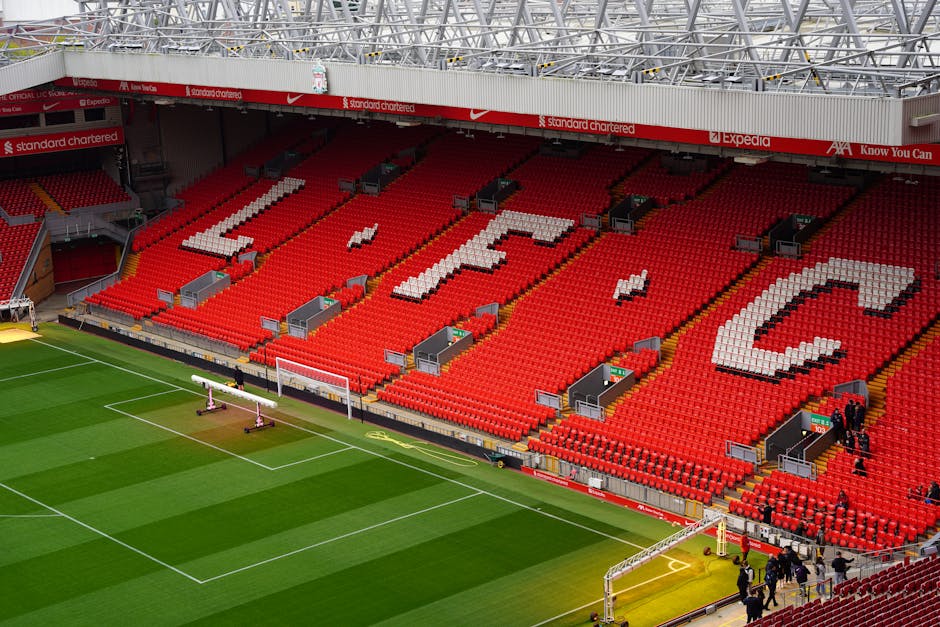
- Mohamed Salah’s emotional connection with Liverpool fans was evident even in his injury in the 2018 Champions League final.
- Salah’s return from injury was not just a physical recovery but a testament to his mental strength.
- Salah’s speed and composure made him indispensable to Liverpool’s attack under Jürgen Klopp.
- Salah’s 2018-2019 season was marked by a record-breaking 27 Premier League goals in a 38-game season.
- Salah’s Champions League victory in 2019 was a validation of his growth as a player and a leader.
It was a night of broken dreams wrapped in golden lights. Kyiv’s Olimpiyskiy Stadium shimmered under artificial glow, but the scene felt surreal, almost cruel. Mohamed Salah limped off the pitch, tears streaming down his face, clutching his dislocated shoulder after being toppled by Sergio Ramos in the 2018 UEFA Champions League final. The image became iconic not because of the injury, but because of what it symbolized: the depth of feeling Salah had already ignited in just one season at Liverpool. Fans worldwide winced not just at the physical pain, but at the injustice of seeing a man who had brought such joy suddenly silenced. That moment, raw and unfiltered, revealed the emotional contract between Salah and Anfield—a bond forged in speed, humility, and relentless excellence.
The Redemption Arc: From Kyiv to Madrid

Two years after the agony of Kyiv, Salah stood at the center of Madrid’s Estadio Metropolitano, hoisting the Champions League trophy above his head. The victory in 2019 was more than redemption—it was validation. Salah had not only returned from injury but had become indispensable. His penalty in the final against Tottenham, though not the most dramatic strike, was a quiet assertion of confidence reclaimed. That season, he scored 27 Premier League goals, tying the record for most in a 38-game season. His presence transformed Liverpool’s attack, combining blistering pace with uncanny composure. Under Jürgen Klopp, Salah evolved from a promising signing into the beating heart of a team that would end a 30-year league title drought just a year later, amassing 32 wins and just one loss in the 2019–20 campaign.
How We Got Here: The Road from Rome to Anfield

Mohamed Salah’s ascent was not linear. After early promise at Basel and a turbulent stint at Chelsea, where he managed just two goals in 13 appearances, many questioned his Premier League viability. It was his move to Roma in 2015 that reignited his career. Over two seasons, he scored 34 goals and became a fan favorite, dazzling Serie A with his low-center-of-gravity dribbling and instinctive finishing. When Liverpool signed him for £36.9 million in 2017—a then-club record—it was seen as a calculated risk. But within months, doubts evaporated. He scored on his debut against Watford and never looked back, finishing his first season with 44 goals across all competitions, including 32 in the Premier League, a record at the time. His transfer, once questioned, became one of the most lopsided deals in modern football history.
The Man Behind the Magic: Humility and Hunger

What sets Salah apart is not just his talent but his demeanor. Despite global fame, he remains grounded, often citing his Egyptian roots and Muslim faith as central to his identity. He donates generously—reportedly gifting $10 million to build a hospital in his hometown of Nagrig—and avoids the flashiness that often accompanies stardom. Yet, his quietness belies fierce ambition. Teammates describe him as obsessively dedicated, the first to training and the last to leave. Klopp has called him “a model professional.” This duality—modest off the pitch, ruthless on it—has made him a role model across continents. In Egypt, he’s credited with inspiring a generation of young players; in Europe, he’s redefined perceptions of Arab athletes in top-tier football.
Consequences: Legacy and Representation

Salah’s impact transcends statistics. He has become a cultural symbol, breaking barriers in a sport where Muslim and African players have historically faced discrimination. His presence has coincided with a significant drop in anti-Arab sentiment at Liverpool matches, with studies noting fewer reported incidents of racism at Anfield since his arrival. Commercially, he’s a magnet—adidas extended his deal citing “unprecedented global appeal.” For Liverpool, he’s not just a player but a flagship asset, central to their brand identity. As he approaches his mid-30s, questions about longevity arise, but his adaptation—shifting from pure winger to a more central, intelligent role—shows his evolving genius. His legacy is already secure, but his influence continues to grow.
The Bigger Picture
Salah’s story reflects broader shifts in football: the globalization of talent, the rise of data-driven signings, and the increasing importance of athlete activism. He embodies the modern footballer—technically elite, socially conscious, and globally connected. His success challenges outdated narratives about where superstars come from and how they should behave. In an era of fleeting fame, Salah’s consistency and character stand out. He’s not just a product of Klopp’s system but a catalyst who elevated it. His journey from overlooked winger to Anfield legend mirrors football’s evolving soul—one where skill, humility, and resilience are celebrated in equal measure.
What comes next remains unwritten, but Salah’s imprint on Liverpool is indelible. Whether he sees out his career at Anfield or departs for a final chapter abroad, his six defining moments—from Kyiv’s pain to Madrid’s glory, from title triumphs to quiet acts of generosity—will resonate for decades. The joy of six is not just in the goals, but in the meaning they carry. And as long as Anfield sings his name, Mohamed Salah will remain a symbol of what football, at its best, can be.
Source: The Guardian