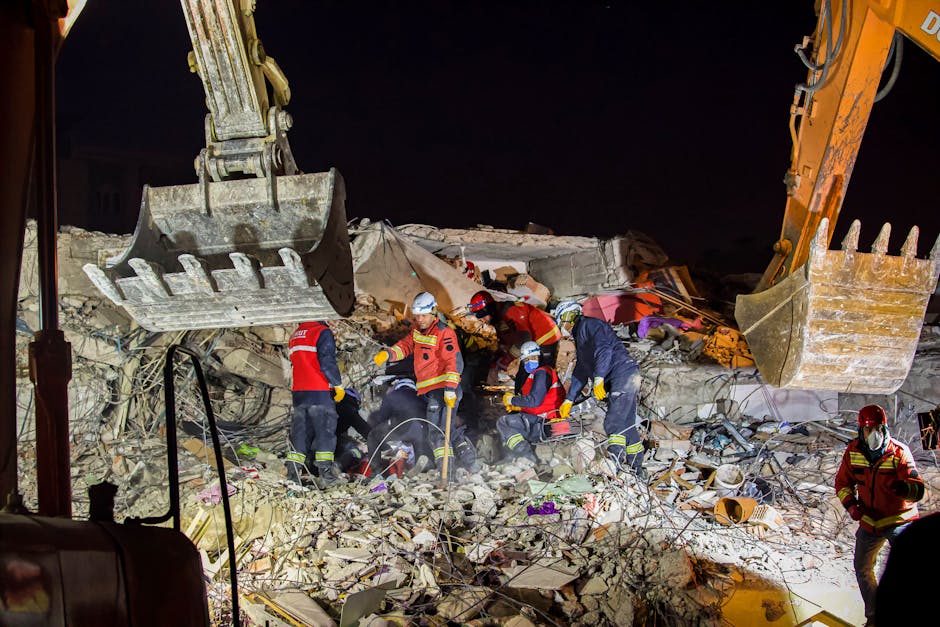
- A 9-storey building under construction in Makati, Philippines, collapsed suddenly in the early hours of Sunday morning.
- At least 19 construction workers are feared trapped under the rubble, with no fatalities confirmed yet.
- The building was not yet occupied, but workers were conducting formwork and concrete pouring overnight.
- Heavy machinery and urban search-and-rescue teams are on the site to search for survivors.
- The chances of survival decrease with every passing hour, with rescue efforts underway.
Dawn broke over the Makati skyline with an eerie silence where the rhythmic clang of steel and the hum of cranes should have been. Instead, a jagged pile of shattered concrete, twisted rebar, and splintered wood marked the site of what was supposed to be a new commercial high-rise. The nine-storey structure, still under construction, had collapsed suddenly in the early hours of Sunday morning, sending shockwaves through the bustling financial district. Dust hung in the air like a shroud, coating nearby vehicles and the faces of emergency responders scrambling over the wreckage. Eyewitnesses reported hearing a deep, groaning crack before the building gave way—no alarm, no evacuation, just a thunderous implosion that left 19 construction workers unaccounted for. Search dogs barked into the void, their handlers scanning the rubble for any sign of life beneath the debris.
Rescue Efforts Underway Amid Fears for Survivors

As daylight strengthened, heavy machinery and urban search-and-rescue teams from the Philippine National Police and the Bureau of Fire Protection converged on the site in Barangay San Antonio, Makati City. Rescue coordinators estimated that at least 19 workers—mostly laborers from nearby provinces—were inside the building when it collapsed, likely conducting overnight formwork and concrete pouring. Authorities confirmed no fatalities yet but warned that the chances of survival diminish with every passing hour. “The structure was not yet occupied, but workers were on-site for continuous construction,” said Fire Marshal General Antonio Ragos in a press briefing. Engineers expressed concern that the unstable pile could shift at any moment, endangering both survivors and rescuers. Sniffer dogs and seismic listening devices were deployed to detect movement or voices beneath the wreckage, but as of Sunday evening, no signals had been confirmed. Emergency medical units stood by with ambulances and trauma kits, preparing for the worst.
Construction Boom Meets Weak Oversight

The collapse comes amid a construction boom in Metro Manila, where high-rises are rising at a rapid pace to meet demand from the city’s expanding business sector. But experts warn that growth has outpaced regulation. The Philippines has long struggled with lax enforcement of building codes, especially on private developments operating under fast-tracked permits. According to a 2022 report by the Department of Public Works and Highways, nearly 40% of construction projects in Metro Manila bypassed mandatory structural inspections. The building that collapsed was part of a mixed-use development by a private real estate firm, whose permits were reportedly up to date. However, structural engineers familiar with the project questioned why such a tall structure was being built on reclaimed land near the Pasig River, an area prone to soil liquefaction during seismic events. The last major audit of the site, conducted months ago, did not flag any immediate risks, but critics argue that periodic checks are often superficial or influenced by developer interests.
The Workers Behind the Concrete

The missing are believed to be daily wage laborers, many from low-income families in Bulacan, Laguna, and Rizal provinces. They typically earn between 400 and 600 pesos ($7–$11) per day, working long hours under demanding conditions. Union leaders say these workers rarely receive formal safety training and often lack access to protective gear. “They’re the backbone of the skyline, but the first to be forgotten when things go wrong,” said Nestor Larida, secretary general of the National Union of Workers in Construction and Allied Trades. Interviews with surviving crew members revealed that some had raised concerns about cracks in support columns days before the collapse, but their warnings were dismissed by site supervisors. Many of the trapped workers were young men in their 20s and 30s, supporting parents and children back home. As relatives gathered near the perimeter in tears, clutching hard hats and photographs, officials struggled to provide updates, deepening the anguish.
Accountability and the Cost of Negligence

If investigations confirm structural deficiencies or oversight failures, the consequences could extend beyond this single site. Families of the missing may pursue legal action, and regulators could face renewed pressure to overhaul construction monitoring. The Department of Labor and Employment has launched a preliminary inquiry into possible violations of occupational safety standards, while the Office of the Ombudsman has flagged the project for potential graft if permits were improperly issued. Engineers and urban planners warn that without systemic reform, similar tragedies are inevitable. “One building falls, but the foundations of many others may be just as fragile,” said Dr. Lourdes Cruz, a civil engineering professor at the University of the Philippines. The incident has already sparked protests from labor groups demanding better protections, higher wages, and independent safety audits on all major construction sites.
The Bigger Picture
This collapse is not just a local disaster—it reflects a broader pattern in rapidly urbanizing nations where economic ambition outpaces accountability. From Dhaka to Lagos, cities are rising faster than their institutions can regulate them, often on the backs of vulnerable workers. In the Philippines, where typhoons and earthquakes make structural integrity a matter of life and death, the stakes are especially high. The Makati collapse is a visceral reminder that behind every gleaming tower is a network of risk, labor, and often, silence. As global cities compete to build higher and faster, the human cost can become invisible—until a building falls, and the world finally listens.
With the search entering its second day, hope is fading but not extinguished. Officials vow to continue digging until every possible survivor is found. Meanwhile, questions about permits, inspections, and corporate responsibility are only beginning to surface. The rubble may be cleared, but the reckoning has just begun. BBC News and Reuters continue to monitor the developing story.
Source: Al Jazeera