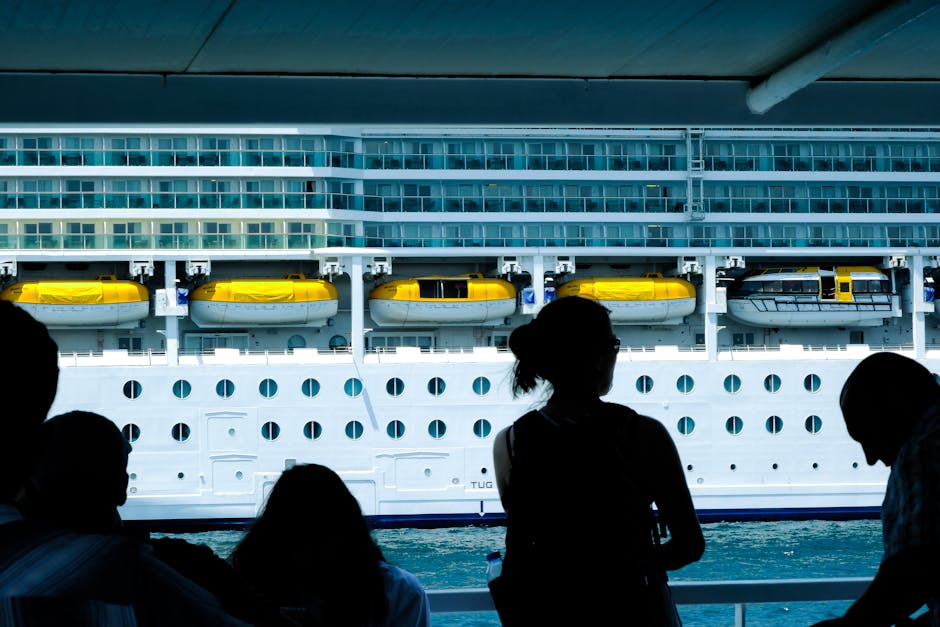
- A mysterious outbreak affecting 2,000 cruise passengers was investigated by a South African lab, revealing a severe pulmonary syndrome.
- The MS Ocean Venture cruise ship was diverted to Tromsø, Norway, after five confirmed cases and a sense of dread spread among passengers.
- Initial tests ruled out common illnesses like influenza and COVID-19, leaving health officials baffled and seeking answers.
- Dr. Lucille Blumberg, a South African epidemiologist, played a key role in solving the mystery through data analysis and international collaboration.
- The outbreak highlighted the global reach of infectious diseases and the importance of cross-border collaboration in disease control.
On a quiet South African morning, with streets empty and flags fluttering in the spring wind, Dr. Lucille Blumberg sat at her kitchen table with coffee, catching up on emails during the national Labor Day holiday. Cape Town was still, but the digital world pulsed with urgency. Among the messages was a flagged alert from the World Health Organization’s surveillance network—a report of a cluster of severe respiratory illness aboard the MS Ocean Venture, cruising the North Atlantic between Iceland and Greenland. Two passengers had been evacuated to Norwegian hospitals in critical condition; three more were hospitalized onboard. Symptoms included sudden fever, muscle pain, and acute respiratory distress. Initial tests ruled out influenza, SARS-CoV-2, and MERS, leaving health officials baffled. Blumberg, deputy director of the National Institute for Communicable Diseases (NICD) in Johannesburg, felt the familiar tingle of epidemiological curiosity. Though continents away, she knew that viruses respect no borders—and that the answer might lie not in Europe, but in data, collaboration, and a sharp eye for patterns.
The Outbreak at Sea

By May 3, the MS Ocean Venture, operated by a Norway-based cruise line, had been diverted to Tromsø after five confirmed cases of a severe pulmonary syndrome. Passengers described a creeping sense of dread as crew members in masks moved through corridors and medical teams quarantined entire decks. The ship, carrying 1,987 passengers and 892 crew, became a floating isolation zone. Norwegian health authorities, working with the European Centre for Disease Prevention and Control (ECDC), sequenced pathogen samples but found no match in their databases. That’s when they reached out to the WHO’s Global Outbreak Alert and Response Network (GOARN), which routed the data to Blumberg’s team in South Africa—a hub for emerging virus analysis in the Global South. Within hours, Blumberg and her colleagues cross-referenced the genomic fragments with known zoonotic pathogens. The breakthrough came when a bioinformatician noticed a 94% match to Andes virus, a strain of hantavirus previously seen only in South America. This was the first time a hantavirus had been detected in a cruise setting—and possibly the first instance of airborne human-to-human transmission outside Latin America.
Tracing the Virus’s Journey

Hantaviruses are typically carried by rodents, with transmission to humans occurring through inhalation of aerosolized urine or droppings. The Andes virus, found primarily in the long-tailed pygmy rice rat (Oligoryzomys longicaudatus) of Chile and Argentina, has been documented to spread between people—a rarity among hantaviruses. Investigators traced the Ocean Venture’s recent ports: it had docked in Punta Arenas, southern Chile, two weeks prior. Surveillance footage revealed loading crews transferring fresh produce and dry goods, some stored in cardboard—ideal nesting material. A follow-up inspection by Chilean authorities found rodent nests in a storage hold, with rat droppings near air intake vents. Genomic sequencing confirmed the presence of Andes virus. How it survived the 8,000-mile journey remains unclear, but researchers speculate that the enclosed environment, stable temperatures, and ample food sources allowed both rats and virus to persist. This case underscores the vulnerability of maritime transport to zoonotic spillover—a risk amplified by increasingly globalized supply chains and climate-driven rodent migration.
The Scientists Behind the Discovery

Lucille Blumberg’s team at the NICD includes virologists, epidemiologists, and data scientists trained in rapid response. Many, like Blumberg, cut their teeth during the Ebola and COVID-19 pandemics, learning to move swiftly in the face of uncertainty. Blumberg, known for her calm demeanor and incisive logic, has spent over two decades studying emerging infections in Africa, from Lassa fever to Rift Valley virus. Her team’s success in identifying the hantavirus was not accidental but the result of years of investment in genomic infrastructure and international partnerships. Collaborators at the University of Cape Town and the South African Medical Research Council provided computational support, while real-time data sharing with labs in Germany, the U.S. CDC, and the World Health Organization ensured validation. As Blumberg later told reporters, “We don’t need to be at the epicenter to be part of the solution—just connected, prepared, and vigilant.”
Global Health Implications

The cruise ship incident has triggered alerts across international maritime and public health agencies. The International Maritime Organization is now reviewing biosecurity protocols for cargo handling and ventilation systems. Cruise lines face pressure to adopt more rigorous rodent inspections and rapid diagnostic testing at embarkation. For public health, the case highlights the growing threat of zoonotic diseases in confined, high-density environments. It also exposes disparities in global surveillance: while Norway and South Africa could mobilize advanced labs, many ports in the Global South lack even basic pathogen sequencing. The Andes virus strain detected shows no resistance to current antivirals, but its potential for human-to-human transmission raises concerns about future outbreaks. The WHO has issued interim guidance for managing suspected hantavirus cases in non-endemic areas, emphasizing early isolation and ribavirin treatment.
The Bigger Picture
This episode is a microcosm of 21st-century infectious disease threats: global, interconnected, and often unpredictable. Climate change, deforestation, and mass travel are erasing the boundaries between human and animal habitats. The fact that a scientist in South Africa identified a South American virus on a European ship illustrates both the fragility and resilience of our surveillance systems. It proves that expertise is distributed, not centralized—and that timely communication can be as vital as medical intervention.
As the MS Ocean Venture undergoes deep disinfection and passengers complete their quarantines, the focus shifts to prevention. Genomic monitoring of port zones, better rodent control, and real-time data sharing could avert future crises. Blumberg and her team have returned to routine work—but now with a reminder: the next outbreak could begin with an email, a hunch, and a world waiting to be connected.
Source: MedicalXpress