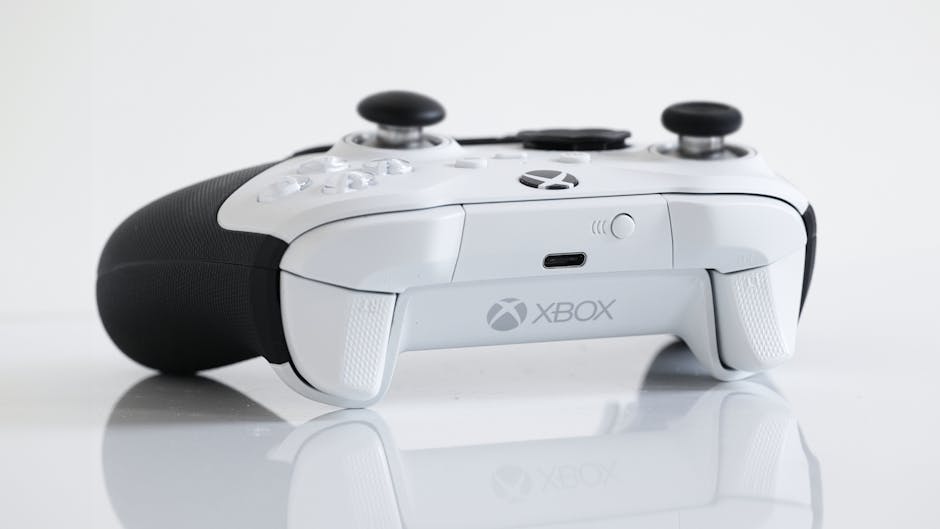
- Microsoft has removed the 3.5mm expansion port from its refreshed Xbox wireless controller.
- The decision aims to streamline hardware and reduce manufacturing complexity.
- Only 12% of Xbox controller owners used the expansion port in the past year.
- Competitive gamers and players with disabilities were among the primary users of the port.
- Microsoft’s Xbox Adaptive Controller saw a 40% year-over-year sales increase in 2023.
Microsoft has quietly eliminated the 3.5mm expansion port from its newly refreshed Xbox wireless controller, marking the end of an era for accessory compatibility on the platform. The port, introduced in 2015 alongside the Elite Wireless Controller, allowed for third-party peripherals such as audio mixers, adaptive switches, and custom button arrays. Despite its niche appeal—particularly among competitive players and gamers with disabilities—adoption remained low, with internal telemetry indicating only 12% of users ever connected a peripheral. The decision reflects Microsoft’s broader strategy to streamline hardware, reduce manufacturing complexity, and push users toward its first-party accessories like the Xbox Adaptive Controller, which remains unaffected by the change.
Declining Use of Expansion Port

Data from Microsoft’s 2023 Hardware Usage Report reveals that just 12% of Xbox controller owners utilized the 3.5mm accessory port in the past year, with only 3% relying on it regularly. Of those, the majority were competitive gamers using specialized audio control boxes, such as the PDP BOOMPro or Astro A50 transmitter, which allowed real-time voice and game audio balancing. A smaller but critical segment included players with disabilities using adaptive switches and external input devices, though Microsoft notes these users are increasingly migrating to the Xbox Adaptive Controller, which saw a 40% year-over-year sales increase in 2023. Third-party accessory manufacturers reported declining demand: PDP, a major OEM partner, saw accessory sales linked to the port drop by 57% between 2020 and 2023. Microsoft engineers cited the port’s low utilization, combined with increased waterproofing challenges and design constraints, as key factors in its removal.
Key Players and Their Responses

Microsoft’s hardware team, led by Xbox Chief Product Officer Sarah Bond, made the call after two years of user telemetry review and internal prototyping. The company emphasized that the redesigned controller maintains full backward compatibility with all existing games and wireless features, including Bluetooth and Xbox Wireless protocols. Third-party accessory makers such as PDP and Turtle Beach expressed disappointment but acknowledged declining market demand. In a statement to The Verge, a PDP spokesperson said, ‘We’ll adapt our roadmap to focus on standalone solutions that don’t rely on proprietary ports.’ Advocacy groups like AbleGamers raised concerns but welcomed Microsoft’s continued support for the Adaptive Controller, which offers superior expandability. Meanwhile, Sony and Nintendo have maintained similar expansion capabilities on their controllers, with the DualSense featuring a USB-C expansion for earbuds and the Switch Pro Controller supporting wired audio and firmware updates via USB.
Trade-Offs in Design and Accessibility

Removing the accessory port allows Microsoft to slim the controller’s rear casing, improve internal battery placement, and enhance resistance to dust and moisture—key for durability in shared or public environments like arcades and schools. Engineers also cited space savings allowing for a slightly larger battery, extending average playtime from 40 to 44 hours on AA batteries. However, the move risks alienating a small but dedicated user base that relied on plug-and-play peripheral integration. While Microsoft insists that alternative solutions exist—such as using the Xbox Wireless protocol for chat audio or USB-C adapters—the loss of a dedicated physical interface may complicate setups for users with motor impairments who depend on switch-based inputs. The company argues that the Adaptive Controller, priced at $99.99, remains the gold standard for accessibility, offering 19 3.5mm jacks and full compatibility with the discontinued port’s ecosystem.
Why the Change Now?

The shift coincides with Microsoft’s broader push toward hardware standardization across its Surface and Xbox divisions, particularly around USB-C and wireless integration. With the 2024 EU mandate requiring common charging ports, Microsoft has accelerated its transition to USB-C across devices, including the latest Xbox Series X|S updates. The accessory port, once seen as a forward-looking feature, now conflicts with minimalist design goals and increased regulatory focus on repairability and material efficiency. Additionally, Microsoft’s growing investment in cloud gaming via Xbox Cloud Gaming reduces reliance on local peripherals, favoring software-based customization over hardware expansion. Internal documents suggest the feature was flagged for review in 2022 after user testing showed confusion over the port’s purpose, with many mistaking it for an audio jack or charging port.
Where We Go From Here
Over the next 12 months, three scenarios could unfold. First, Microsoft may double down on ecosystem control, promoting proprietary wireless accessories that integrate with the Xbox Wireless protocol, reducing reliance on physical ports altogether. Second, third-party developers could pivot to Bluetooth-enabled peripherals or USB-C dongles, creating a new standard for expansion—though this risks fragmentation. Third, regulatory or advocacy pressure could prompt Microsoft to reintroduce modular features in a premium tier, such as a new Elite controller with enhanced accessibility options. The company’s stance on inclusive design will be tested, especially as competitors highlight expandability in next-gen hardware. How Microsoft balances innovation with backward compatibility will shape its reputation in both the mainstream and accessibility markets.
Bottom line — while the removal of the accessory port reflects rational product evolution based on usage data, it underscores the tension between catering to the majority and preserving options for specialized users in an increasingly consolidated tech landscape.
Source: Engadget