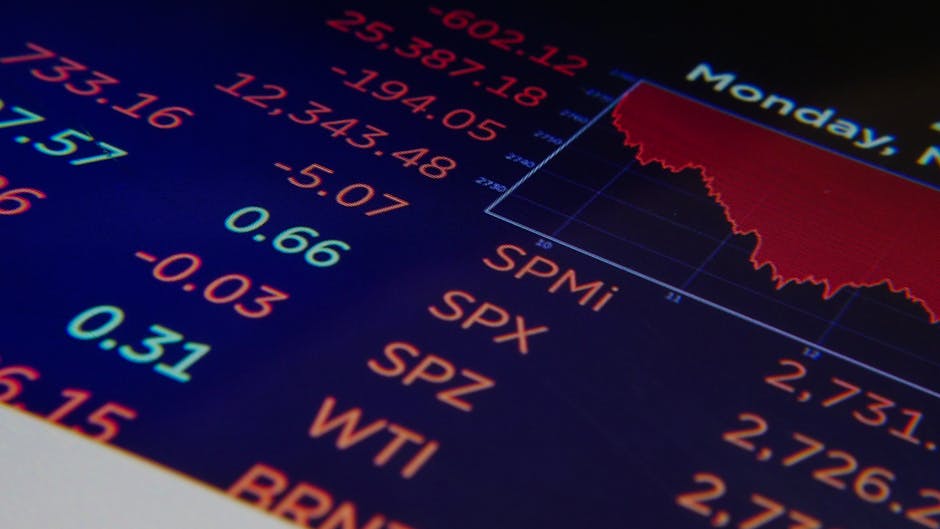
- Wall Street expects a Fed rate hike by 2026 due to inflation concerns, driven by energy shocks and geopolitical tensions.
- The appointment of Kevin Warsh as the next Fed Chair has accelerated rate hike probabilities, shifting predictions from 2027 to 2026.
- Financial markets now assign a 68% probability to a Fed rate increase by December 2026, up from 32% at the start of the year.
- The 10-year Treasury yield has climbed to 4.7% in response to market ripples following Warsh’s confirmation hearing.
- Economists are revising models to reflect the recalibration of power, ideology, and the fragile balance between war, prices, and policy.
In the hushed trading pits of Lower Manhattan, where Bloomberg terminals flicker with geopolitical alerts and bond yields climb minute by minute, a quiet consensus is forming. Traders in tailored coats and earpieces exchange glances as oil futures breach $105 a barrel—up nearly 18% in six weeks—spurred by drone attacks on Persian Gulf tankers and U.S. naval deployments near Hormuz. The air hums not just with tension, but calculation. Behind glass-walled conference rooms at Goldman Sachs and JPMorgan, economists are revising models, shifting rate hike probabilities from 2027 to late 2026. The trigger? The unexpected appointment of Kevin Warsh, former Stanford scholar and hawkish critic of prolonged easy money, as the next Chair of the Federal Reserve. His confirmation hearing, marked by stern warnings about inflation’s ‘creeping renaissance,’ has sent ripples through fixed-income markets, where the 10-year Treasury yield has climbed to 4.7%. This is no longer a debate about data—it’s a recalibration of power, ideology, and the fragile balance between war, prices, and policy.
Fed Markets Price in 2026 Rate Hike

Financial markets now assign a 68% probability to a Federal Reserve rate increase by December 2026, up from just 32% at the start of the year, according to CME Group’s FedWatch Tool. The central bank’s benchmark federal funds rate has held steady at 5.25–5.50% since July 2023, but traders are betting that sustained inflation—driven by energy shocks and supply chain bottlenecks—will force the Fed’s hand. The latest CPI report showed annual inflation at 3.8%, above the Fed’s 2% target, with energy costs alone contributing 1.2 percentage points. Brent crude, a global benchmark, surged past $107 after Iran-linked forces targeted oil infrastructure in the UAE, raising fears of broader regional conflict. The U.S. Energy Information Administration has warned of potential supply shortfalls, while shipping rates across the Red Sea have tripled due to rerouting around Africa. Wall Street economists, including those at Morgan Stanley and Bank of America, now project two 25-basis-point hikes in late 2026, contingent on war escalation and core inflation persistence. ‘Warsh doesn’t blink,’ one senior strategist remarked, referencing the new Fed chair’s reputation for inflation vigilance during his prior tenure as a Fed governor from 2006 to 2011.
The Road to a Hawkish Fed

The shift in market expectations traces back to the political upheaval following the 2024 elections, when a divided Congress and rising public anxiety over inflation created space for a paradigm shift in monetary leadership. Chair Jerome Powell, widely seen as a steady hand through the pandemic and inflation surge of the early 2020s, stepped down in early 2025 after eight tumultuous years. His successor was not the expected dovish nominee, but Kevin Warsh—a former investment banker, Stanford Graduate School of Business fellow, and vocal critic of central bank overreach. Warsh first joined the Fed in 2006 under Ben Bernanke and gained notoriety for warning, as early as 2007, about the housing bubble’s dangers. His return to the Board of Governors in 2025, followed by his ascension to chair, marks a philosophical pivot toward tighter money and greater skepticism of fiscal dominance. This shift echoes the Volcker era of the 1980s, when aggressive rate hikes tamed inflation at the cost of a deep recession. With memories of 2022’s 9% inflation still fresh, Warsh has signaled willingness to act preemptively, even at the risk of slowing growth.
The Architects of Monetary Turnaround

Kevin Warsh does not act alone. Behind the scenes, a cohort of inflation hawks has gained influence within the Federal Open Market Committee (FOMC). Neel Kashkari, President of the Federal Reserve Bank of Minneapolis, has long advocated for tighter policy, while Michelle Bowman, a Republican-appointed governor, has criticized deficit spending as a driver of long-term price instability. Warsh’s inner circle includes former Treasury officials and academic economists who argue that the Fed lost credibility during the post-pandemic inflation surge by maintaining low rates too long. Their worldview is shaped by historical precedents—from the 1970s stagflation to the ECB’s struggles in the 2010s—and a deep concern that geopolitical shocks, once transitory, are becoming structural. On the other side, regional Fed presidents like Tom Barkin of Richmond and Susan Collins of Boston urge caution, warning that over-tightening could choke off job growth. Yet Warsh’s confirmation by a 53–47 Senate vote, with bipartisan support from fiscal conservatives, underscores a broader political appetite for monetary restraint.
What the Shift Means for Markets and Households

The prospect of higher rates by 2026 has already begun reshaping financial decisions. Mortgage rates, which briefly dipped below 6% in early 2025, have climbed back to 6.9%, cooling the housing market. Auto loans and credit card APRs are following suit, squeezing household budgets still recovering from pandemic-era debt. For corporations, the cost of refinancing maturing debt is rising, particularly for high-yield borrowers. Pension funds and insurance companies, meanwhile, face tougher asset-liability matching in a higher-rate environment. Internationally, emerging markets with dollar-denominated debt—such as Egypt, Pakistan, and Kenya—are watching nervously, recalling the 2013 ‘taper tantrum’ that sparked capital flight. A stronger dollar, up 6% on the DXY index this year, threatens export competitiveness and inflation in developing economies. The irony is not lost on policymakers: efforts to control U.S. inflation could export instability abroad.
The Bigger Picture
This moment reflects a broader reckoning: the end of the ‘great moderation’ consensus that low inflation and steady growth could be reliably managed through accommodative policy. Geopolitical fragmentation, climate-driven supply disruptions, and aging demographics are making price stability harder to achieve. The Fed’s response under Warsh may signal a return to old doctrines, but the world it operates in is fundamentally different. Central banks can no longer assume that shocks are temporary or that labor markets will self-correct. As the Middle East simmers and energy markets tighten, the Fed is not just fighting inflation—it’s navigating a new era of economic vulnerability shaped by war, scarcity, and shifting global power.
What comes next is uncertain. Warsh has not committed to a rate hike, only to vigilance. But in the markets, perception often precedes policy. If inflation remains sticky and oil stays above $100, the Fed may have little choice. The shadow of 2022 looms large, and the cost of inaction could be higher than the pain of tightening. As traders in New York and London adjust their models, one truth emerges: money is no longer free, and the era of easy assumptions is over.
Source: Financial Times