- Donald Trump’s plan to cut interest rates with Kevin Warsh could spark market chaos.
- Warsh’s appointment signals a challenge to Federal Reserve independence, sparking inflation concerns.
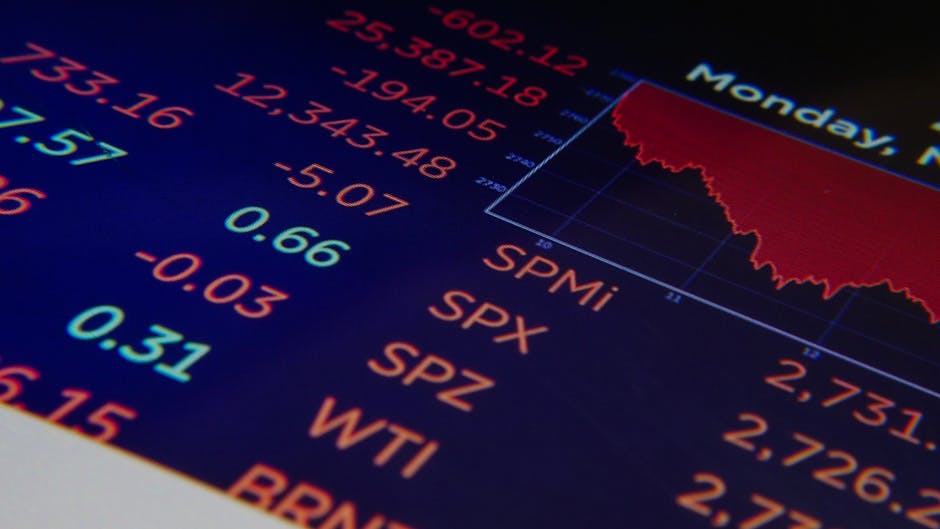
- Markets react sharply to the news, with Treasury yields and dollar value fluctuating.
- Analysts warn of renewed inflation risk, leading to increased demand for inflation-protected securities.
- Trump’s rate-cut strategy may backfire, causing instability in financial markets.
On a crisp January morning in Washington, the marble corridors of the Eisenhower Executive Office Building hummed with quiet urgency. Inside, aides shuffled briefing books stamped with the gold seal of the President’s Economic Council. Outside, financial markets in New York and London twitched at headlines: Donald Trump had tapped Kevin Warsh, former Federal Reserve governor and vocal advocate for aggressive monetary easing, to lead a sweeping initiative to slash interest rates. The announcement, delivered via early-morning tweet and formal White House press release, sent shockwaves through bond desks and central bank boardrooms alike. Investors, still scarred by the inflation surge of the early 2020s, began recalibrating portfolios. For the first time since Trump’s return to office, the specter of policy-driven market chaos loomed large—not from trade wars or tariffs, but from the heart of monetary strategy.
Markets React to Warsh’s Appointment

Within hours of the announcement, two-year Treasury yields spiked by 28 basis points—the sharpest single-day move since the 2023 banking crisis—while the dollar weakened against major currencies. Equity futures wobbled, and inflation-protected securities, or TIPS, saw a surge in demand as traders priced in renewed inflation risk. Analysts at Goldman Sachs and Morgan Stanley issued near-simultaneous notes warning that Warsh’s appointment signaled a direct challenge to Federal Reserve independence. Reuters reported that senior Fed officials held an emergency conference call to assess the implications. Though the central bank remains technically independent, Trump’s move to install a high-profile ally with a history of advocating for political influence over monetary policy has reignited fears of a ‘twin crisis’—simultaneous fiscal and monetary instability. Warsh himself has long argued that central banks should be more responsive to elected leaders, a stance that many economists warn undermines long-term credibility.
The Roots of the Rate-Cut Push

The current push for rate cuts traces back to Trump’s 2024 campaign promises to revive economic growth through ‘maximum liquidity.’ During his first term, Trump frequently criticized then-Fed Chair Jerome Powell for raising rates, calling him his ‘greatest threat’ and advocating for negative rates akin to those in Europe and Japan. Though the Fed remained independent, market participants noted a de facto alignment between fiscal stimulus—massive tax cuts and spending increases—and accommodative monetary policy. The appointment of Warsh, who served under George W. Bush and helped navigate the 2008 financial crisis, is seen as an escalation: a bid to institutionalize political pressure on monetary policy. Historically, such interventions have ended poorly. The 1970s saw similar tensions under Nixon and Ford, culminating in double-digit inflation and a decade of stagflation. Economists at the Brookings Institution have drawn direct parallels, warning that short-term political gains could trigger long-term economic pain.
The Key Players Behind the Strategy

Kevin Warsh is not alone in this effort. He is joined by a cadre of Trump-aligned economists, including Stephen Moore and Larry Kudlow, who are advocating for what they call ‘Growth Shock Therapy.’ Their argument hinges on the belief that ultra-low interest rates will spur investment, boost stock valuations, and create a wealth effect that lifts consumer spending. Warsh, however, brings a unique blend of technocratic credibility and political ambition. Former colleagues describe him as fiercely intelligent but ideologically flexible—someone who once warned against ‘central bank adventurism’ but now champions aggressive intervention. Behind the scenes, Trump’s inner circle views the economy as his re-election linchpin, and they believe a booming market in 2025 will outweigh long-term risks. The Fed, meanwhile, remains divided. Chair Jerome Powell has reiterated the bank’s commitment to price stability, but internal memos suggest growing concern about political encroachment on monetary independence.
Consequences for Investors and Consumers

If Warsh succeeds in pressuring the Fed toward premature rate cuts, the consequences could ripple across the economy. In the short term, stock markets may rally and borrowing costs for mortgages and business loans could fall. But economists warn that reviving inflation could erode real wages and destabilize retirement funds. For everyday consumers, the return of high inflation would mean higher prices for essentials like food, energy, and housing—undoing much of the progress seen in 2023 and 2024. International investors, particularly from Japan and Europe, may reassess their holdings in U.S. Treasuries if confidence in dollar stability wanes. The dollar’s role as the world’s reserve currency, long taken for granted, could face its most serious challenge in decades. Even corporate treasurers are beginning to hedge against currency volatility, a sign that the business community is taking the threat seriously.
The Bigger Picture
This moment transcends one administration or one policy decision. It reflects a growing global tension between democratic accountability and technocratic independence. As populism rises, central banks are increasingly seen not as neutral arbiters, but as political battlegrounds. The U.S. is not alone—Turkey, Argentina, and Hungary have all seen leaders assert control over monetary policy, often with devastating results. The Federal Reserve was designed to insulate monetary decisions from electoral cycles, but that firewall is now under unprecedented pressure. If it cracks, the precedent could empower future presidents to treat interest rates as tools of political expediency rather than economic stewardship.
What comes next may depend on the Fed’s resolve. If it holds firm, markets may stabilize, but political backlash could intensify. If it yields, a short-term boom could give way to long-term instability. Kevin Warsh’s return to power marks not just a policy shift, but a test of one of America’s most important economic institutions. The outcome will shape not only the next election cycle but the credibility of U.S. economic governance for a generation.
Source: Wsj