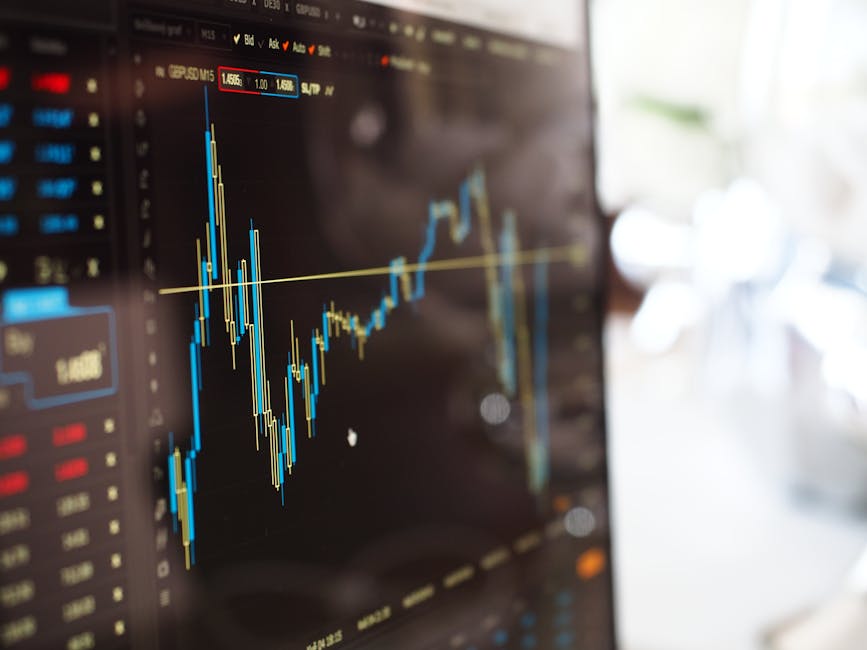
- The bond market is sending alarm bells on inflation, with yields on the 10-year U.S. Treasury note climbing past 4.5% since 2007.
- Traders are pricing in the likelihood of higher interest rates to control inflation, contradicting the Fed’s current monetary stance.
- Investors are seeking higher compensation for inflation, as reflected in weaker demand for bonds at current levels.
- The bond market’s reaction suggests a growing disconnect between market sentiment and Federal Reserve policy.
- Portfolio managers and strategists believe inflation isn’t tamed, and the Fed may have paused too soon.
In the quiet hum of trading floors and algorithmic dashboards, a message is being etched in real time: confidence in the Federal Reserve’s current monetary stance is eroding. On Wall Street, where every basis point tells a story, the bond market has become the most eloquent dissenter. The yield on the 10-year U.S. Treasury note, long regarded as the world’s most important interest rate, has climbed steadily past 4.5%—a level not seen since 2007—without triggering the kind of panic that once accompanied such moves. Instead, there’s a grim consensus forming among portfolio managers, hedge fund strategists, and pension planners: inflation isn’t tamed, and the Fed may have paused too soon. Behind the numbers lies a tectonic shift in expectations. Traders are no longer betting on imminent rate cuts; they’re pricing in the likelihood that rates will need to go higher, and stay there longer, to bring inflation fully under control.
Bond Yields Rise Despite Fed Pause

The current trajectory of U.S. Treasury yields reveals a growing disconnect between market sentiment and Federal Reserve policy. Despite the central bank holding rates steady at its latest meeting, with Chair Jerome Powell suggesting that lending costs may be “sufficiently restrictive,” the bond market has responded skeptically. The 10-year yield, which moves inversely to price, has climbed sharply, reflecting weaker demand for bonds at current levels—a sign investors want higher compensation for inflation and duration risk. According to Reuters, this move has been fueled by stronger-than-expected economic data, including resilient consumer spending and a tight labor market, which together suggest underlying demand pressures remain elevated. Even the 2-year yield, which closely tracks rate expectations, has risen, indicating markets now anticipate at least one more hike this year—or a much longer hold period than the Fed currently projects.
How We Got Here: From Pandemic Stimulus to Sticky Inflation

The roots of today’s bond market tension stretch back to the pandemic-era policy response, when the Fed slashed rates to zero and launched an unprecedented $120 billion monthly asset purchase program. At the time, the goal was clear: prevent financial collapse and support economic survival. But the prolonged stimulus, combined with massive fiscal spending, over time contributed to an overheated economy. When inflation began accelerating in 2021, the Fed initially dismissed it as “transitory,” delaying rate hikes until March 2022. Since then, the central bank has raised the federal funds rate from near zero to 5.25%-5.50%, the highest in over two decades. Yet inflation, particularly in services and housing, has proven stubborn. Core CPI remains above 3.5%, well above the Fed’s 2% target. This persistence has forced investors to reconsider whether the Fed’s current tightening cycle has truly matched the inflation challenge.
The Players Shaping Market Sentiment

Behind the bond market’s verdict are some of the world’s most influential investors—hedge fund managers like Paul Tudor Jones and Larry Fink of BlackRock, who have publicly questioned whether the Fed is underestimating inflationary momentum. Institutional asset managers, holding trillions in fixed-income portfolios, are increasingly reallocating toward shorter-duration bonds or inflation-protected securities like TIPS, a strategic pivot that reflects deepening skepticism about long-term purchasing power. Foreign central banks, particularly Japan and China, are also adjusting their Treasury holdings, indirectly influencing supply and demand dynamics. Meanwhile, a new generation of quantitative funds uses high-frequency data to detect shifts in inflation expectations, feeding algorithmic trades that amplify market moves. These actors don’t speak with one voice, but their collective behavior—buying, selling, hedging—forms a kind of distributed intelligence that often anticipates policy errors before they occur.
Consequences for Consumers and Policymakers

The bond market’s warning carries real-world implications. Higher long-term rates feed directly into mortgage costs, auto loans, and corporate borrowing, threatening to slow housing and investment activity. The average 30-year fixed mortgage rate has already climbed above 7%, cooling home sales and squeezing affordability. For the federal government, rising yields mean higher debt servicing costs—projected to exceed $1 trillion annually in the coming decade. This could constrain fiscal flexibility, especially if deficits remain elevated. For the Fed, the stakes are credibility. If inflation reaccelerates due to premature dovishness, the central bank may be forced into even more aggressive tightening later, risking a deeper recession. Markets are essentially demanding that the Fed prove its commitment to price stability through action, not rhetoric.
The Bigger Picture
This moment reflects a broader shift in the post-pandemic economic order. For over a decade, investors operated under the assumption that central banks would always step in to cushion downturns—a doctrine known as the “Fed put.” But with inflation returning as a structural concern, that assumption is fraying. The bond market’s behavior suggests a new era may be dawning: one where monetary policy must balance growth, debt sustainability, and inflation without the crutch of perpetual stimulus. In this environment, market signals matter more than ever, serving as an independent check on policy complacency.
What comes next may hinge on the next few inflation reports and labor market readings. If prices continue to grind downward, the Fed may yet avoid further hikes. But if data surprises to the upside, the bond market has made its position clear: rates are still too low, and the central bank must act. The quiet calculus of yield curves may ultimately prove louder than any press conference.
Source: Reddit