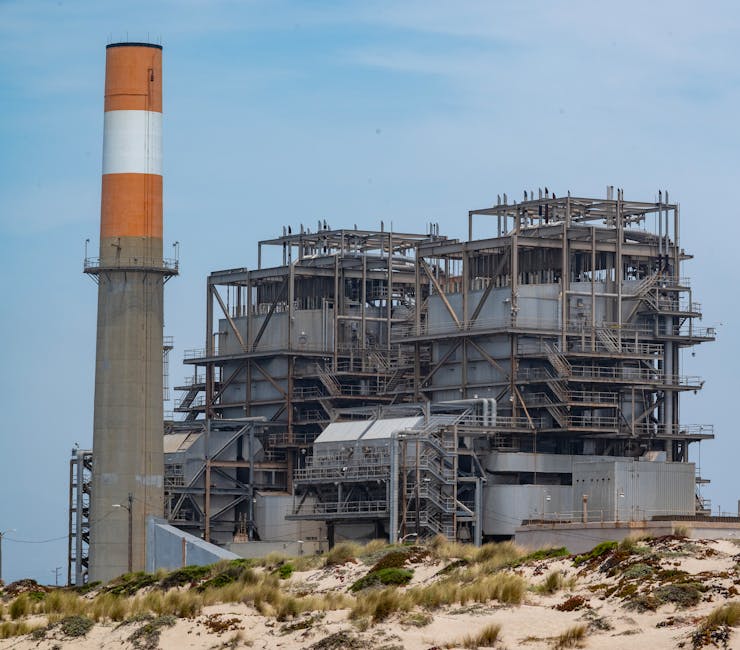
- Elon Musk’s xAI venture has abandoned its solar-powered ambitions for artificial intelligence, opting for natural gas instead.
- xAI’s primary data center in Texas will be powered almost entirely by natural gas, bypassing renewable energy sources.
- The shift from solar to gas is due to the instability of solar output and the energy demands of training AI models.
- Musk’s vision of a sustainable, sun-powered future is being eclipsed by the brute-force energy needs of AI technology.
- The xAI data center’s reliance on natural gas raises concerns about the environmental impact of the tech industry’s energy consumption.
In the high desert of West Texas, beneath skies once imagined as vast fields of glittering solar arrays, a new kind of energy infrastructure is rising—industrial gas turbines humming day and night, feeding power to enormous data centers. This is not the sustainable utopia Elon Musk once painted, where solar panels and batteries would free humanity from fossil fuels. Instead, it’s a landscape defined by pipelines and compressor stations, quietly fueling the insatiable appetite of artificial intelligence. At the center of it all is xAI, Musk’s ambitious AI venture, which has quietly abandoned the solar-electric economy he once championed. The dream of a sun-powered future, once broadcast from Tesla rooftops to Powerwall commercials, is being eclipsed by the brute-force energy demands of training trillion-parameter models.
xAI’s Natural Gas Pivot

xAI has confirmed plans to power its primary data center in Bastrop County, Texas, almost entirely with natural gas, a stark reversal from Musk’s earlier vision of integrating solar and battery storage into every major tech infrastructure project. According to filings with the Public Utility Commission of Texas, the facility will draw on regional gas pipelines and operate with on-site combustion turbines as its main power source, bypassing renewable integration altogether. While the company claims the move is temporary, internal documents suggest long-term reliance on gas due to the instability of solar output and the immense, nonstop energy needs of AI clusters. This pivot reflects a broader industry trend—AI’s energy footprint is growing so rapidly that even companies founded on sustainability principles are turning to fossil fuels to keep up. As AI workloads double every few months, the promise of clean computation is giving way to the reality of carbon-intensive scaling.
How We Got Here

The shift didn’t happen overnight. Musk’s original vision—articulated as early as 2016—was for Tesla, SolarCity, and eventually all of his ventures to form a closed-loop, solar-powered ecosystem. He envisioned homes with solar roofs feeding batteries that powered electric vehicles and smart grids. But that dream collided with economic and logistical hurdles: SolarCity struggled with installation costs and customer acquisition, Tesla’s solar roof rollout stalled, and grid interconnection delays plagued renewable projects. Meanwhile, the rise of large language models after 2020 created a new energy crisis. Training a single AI model like Grok, xAI’s flagship chatbot, can consume as much electricity as hundreds of homes in a year. According to a 2023 study published in Nature, AI’s global electricity demand could surpass that of small countries by 2026. Faced with investor pressure and aggressive timelines, Musk opted for reliability over idealism.
The People Behind the Power Shift

At the helm of this transformation is Elon Musk himself, whose role has evolved from clean energy evangelist to pragmatic infrastructure strategist. His recent public statements emphasize “energy density” and “uptime” over carbon neutrality. Internally, xAI’s engineering leadership—many drawn from Google and OpenAI—has pushed for maximum computational throughput, often at the expense of sustainability goals. Eric Brigg, xAI’s head of infrastructure, previously worked on Google’s data center efficiency team but now champions gas-powered peaker plants for their on-demand reliability. Meanwhile, Tesla’s energy division has seen key departures, including former SolarCity executives who objected to the reduced focus on renewables. The new guard prioritizes speed and scale, viewing natural gas not as a compromise but as a necessary bridge—even if that bridge has no clear endpoint.
Consequences for Stakeholders

Investors in Tesla’s energy business face uncertainty as the company de-emphasizes solar. Customers who bought Powerwalls expecting a green future may find their devices supporting gas-powered grids. Environmental groups, once cautiously optimistic about Musk’s influence, are now sounding alarms. The Sierra Club has called the shift a “betrayal of the climate mission,” while analysts at BloombergNEF warn that AI’s reliance on fossil fuels could undermine global emissions targets. Regulators in California and the EU are beginning to scrutinize data center energy sourcing, potentially forcing disclosure rules that could impact xAI’s operations. Even SpaceX, long seen as Musk’s most futuristic venture, is contributing to the energy strain—its proposed orbital data centers would require massive ground-based support powered by existing grids, increasingly fed by gas.
The Bigger Picture
Musk’s pivot reflects a deeper tension in the tech industry: the clash between visionary ideals and operational reality. For all the talk of disruption and sustainability, AI’s explosive growth is being fueled by the same fossil infrastructure it was supposed to help replace. This irony isn’t lost on energy experts, who warn that without breakthroughs in fusion, next-gen nuclear, or ultra-efficient computing, even the most ambitious green promises may collapse under computational weight. Musk’s journey—from solar evangelist to gas pragmatist—mirrors a broader reckoning: that saving the planet may require more than just smart algorithms. It requires energy sources that don’t yet exist at scale.
What comes next may hinge on whether Musk can revive his earlier bets on innovation over compromise. Fusion projects like Helion, which he has invested in, offer a glimmer of hope—but they remain years from commercial viability. Until then, the hum of gas turbines in Texas will serve as a reminder of a future deferred. The solar-electric economy isn’t dead, but it’s been placed on hold, waiting for technology to catch up with its promise.
Source: TechCrunch