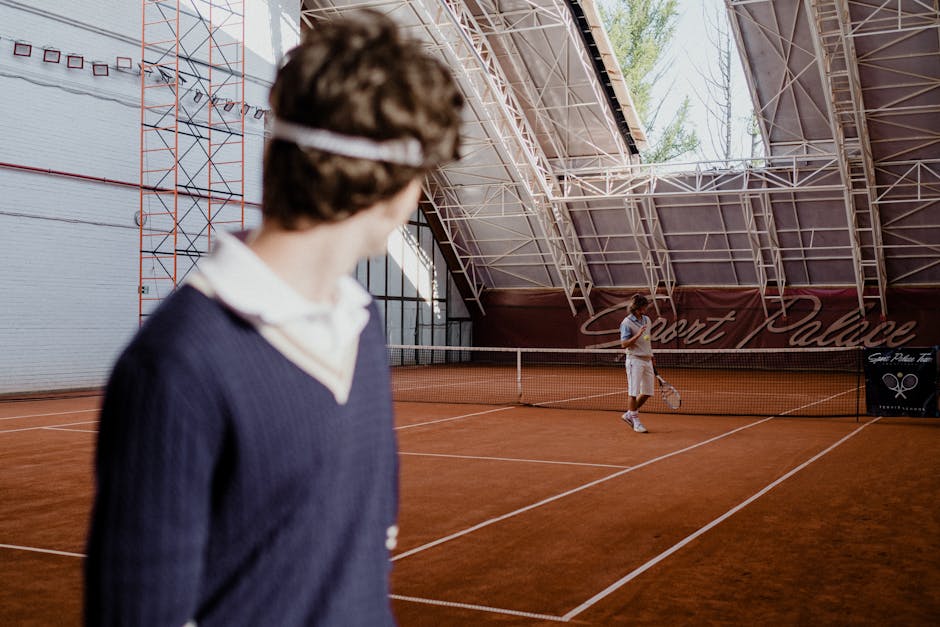
- Emma Raducanu rehires Andrew Richardson as her head coach, marking a reset in her professional trajectory after a decline in form.
- Raducanu has struggled to maintain her level of play since her historic 2021 US Open victory, winning just two WTA-level matches in 2023.
- The decision to reinstate Richardson reflects a strategic shift towards stability and emotional alignment over experimentation in her support system.
- Raducanu’s on-court performance has sharply declined, with early exits at Grand Slams and a ranking drop from No. 10 outside the top 70.
- Her serve has regressed, and unforced errors have spiked, averaging 28 per match in key 2023 tournaments.
Emma Raducanu’s return to Andrew Richardson as her head coach marks a pivotal reset in her professional trajectory. After a meteoric rise to fame with her 2021 US Open victory as a qualifier, Raducanu has struggled to maintain form, winning just two WTA-level matches in 2023. Her decision to reinstate Richardson, who was with her during her breakthrough season, underscores a strategic shift toward stability and emotional alignment over experimentation. This move reflects not just a coaching change, but a recalibration of her entire support system, acknowledging that technical refinement alone cannot compensate for fractured trust or disrupted continuity.
Performance Decline and Statistical Realities

Since her historic US Open win, Raducanu’s on-court performance has sharply declined, raising concerns about her long-term viability on the WTA Tour. In 2022, she won only nine main-draw matches, and in 2023, her record worsened, with early exits at Grand Slams and a ranking drop from a peak of No. 10 to outside the top 70. Her serve, once a reliable weapon, has regressed, with first-serve percentage falling to 52% in 2023 from 61% in 2021, according to Reuters match data. Unforced errors have spiked, averaging 28 per match in key 2023 tournaments, compared to 18 during her US Open run. These figures highlight a player grappling with consistency, confidence, and tactical coherence—issues that successive coaching changes have failed to resolve. The statistical tailspin suggests that technical adjustments were insufficient without a stable, trusted mentor at the helm.
Key Coaches and Support Team Shifts

Since parting ways with Richardson after the 2021 season, Raducanu has cycled through multiple coaching arrangements, each ending prematurely. She briefly worked with Torben Beltz, then brought in Nigel Sears, before appointing Dmitry Tursunov and later Andrew Richardson’s temporary return in 2022. In 2023, she hired Australian Scott Robertson, only to part ways months later. Each change disrupted her training rhythm and on-court chemistry. Richardson, who coached her from age 10 through her junior career and the 2021 US Open triumph, represented continuity and deep familiarity with her game. His departure created a void that transient coaches could not fill. By rehiring him, Raducanu is not only restoring a technical alliance but also rekindling a psychological bond critical for high-pressure performance.
Trade-Offs: Stability vs. Innovation

The reappointment of Richardson brings emotional stability but risks insulating Raducanu from fresh tactical perspectives. On the one hand, their long-standing relationship fosters open communication, trust, and a shared understanding of her strengths—particularly her aggressive baseline play and two-handed backhand. This consistency could help rebuild her confidence and reduce performance anxiety. On the other hand, critics argue that the same coaching framework failed to adapt to higher-level competition post-2021. Opponents have studied her patterns, and without innovative adjustments, she may remain vulnerable on faster surfaces and against elite returners. The trade-off, therefore, lies between psychological security and technical evolution. Success will depend on whether Richardson can evolve his coaching methods while leveraging their established rapport to implement new strategies.
Timing: Why the Reset Comes Now

The decision to bring Richardson back in 2024 follows a series of missed opportunities and mounting pressure. With the Paris Olympics and the grass-court season approaching, Raducanu needed a decisive intervention before the 2024 Wimbledon Championships. Her early 2024 season was marred by injuries and early-round losses, including a first-round exit at the Australian Open. These setbacks signaled that previous coaching structures were not yielding progress. The timing reflects a broader realization: without a trusted figure to stabilize her game and mindset, her career risks plateauing prematurely. Richardson’s return is less about nostalgia and more about seizing a narrow window to re-establish competitive footing before her prime development years slip away.
Where We Go From Here
Looking ahead, three scenarios could unfold over the next 6 to 12 months. In the optimistic scenario, Raducanu regains form under Richardson’s guidance, reaches the top 30 by mid-2024, and contends in Grand Slam second weeks. A moderate outcome would see incremental improvement—consistent second-week appearances but no deep runs, stabilizing her ranking in the 40–60 range. The pessimistic path involves persistent injuries, unresolved technical flaws, and a slide into the 100s, potentially forcing a longer-term career reassessment. Each scenario hinges on how effectively Richardson can modernize her game while restoring mental resilience.
Bottom line — Raducanu’s rehiring of Richardson is a high-stakes gamble on trust and familiarity, offering a last realistic chance to reignite a career that once promised dominance.
Source: BBC