- Israel’s October 7 tribunal is being held under a military court system in the occupied West Bank, sparking concerns over fairness and accountability.
- Over 800 Palestinians have been charged with ties to Hamas or support for attacks, but only 10% of cases have had a public outcome.
- The tribunals have been criticized for their lack of transparency, with charges read in Hebrew and limited access for defense lawyers.
- The power dynamics in the courtroom are asymmetrical, with Israeli soldiers monitoring proceedings behind bulletproof glass.
- The focus on retribution may be overshadowing the pursuit of justice, raising concerns about the fairness of the tribunals.
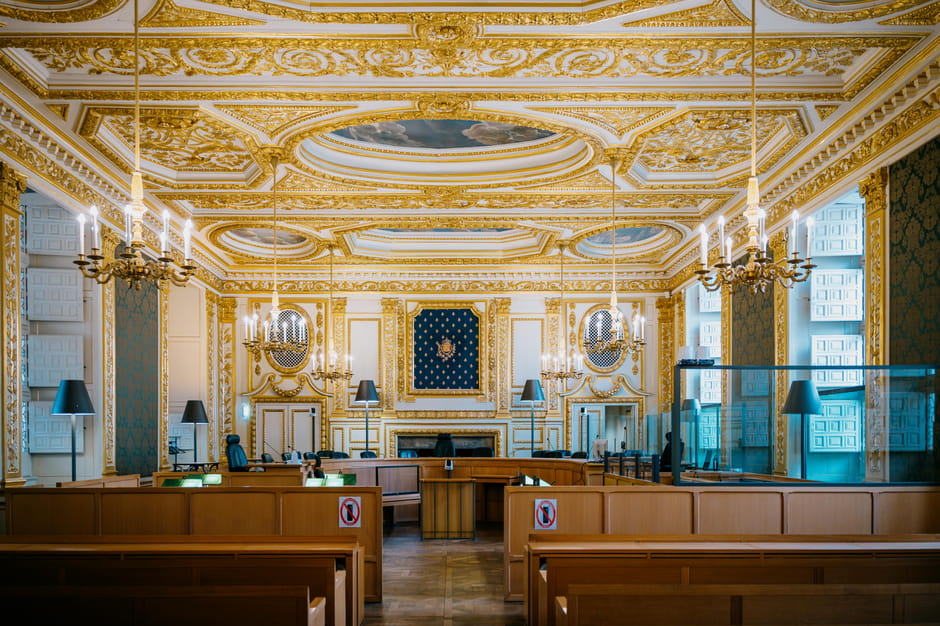
In the cracked concrete corridors of Israel’s Ofer Military Court near Ramallah, the air hums with tension and the scent of stale coffee. Rows of Palestinian detainees, many in their twenties, sit shackled and silent, their eyes hollow from weeks of detention. Behind bulletproof glass, Israeli soldiers monitor proceedings where charges are read in Hebrew—a language most defendants do not understand. This is the stage for Israel’s response to the October 7 Hamas-led attacks: a wave of military tribunals meant to deliver justice. But as trial after trial unfolds, a growing chorus of legal observers, human rights advocates, and international jurists question whether these proceedings serve justice—or merely the optics of retribution. The courtroom, with its asymmetrical power dynamics and limited access for defense lawyers, has become a symbol of a deeper crisis in accountability, where due process often appears secondary to political urgency.
Flawed Trials Behind Closed Doors

The tribunals, held under Israel’s decades-old military court system in the occupied West Bank, have charged over 800 Palestinians since October 7 on suspicion of involvement with or support for Hamas. Most face charges such as membership in a terrorist organization, incitement, or material support for attacks. Yet, according to a report by BBC News, fewer than 10 percent of the cases have included evidence accessible to defense attorneys, and plea bargains are often coerced through prolonged detention. Detainees are routinely held in administrative detention—without charge or trial—for months. The United Nations Office for the Coordination of Humanitarian Affairs (OCHA) has documented widespread use of solitary confinement and allegations of physical abuse during interrogation. While Israel maintains that the tribunals are lawful under its military authority in the West Bank, critics argue the process violates fundamental principles of fair trial enshrined in international law, including the right to legal counsel and presumption of innocence.
A Legacy of Military Justice

This system is not new. Established after Israel occupied the West Bank in 1967, the military courts were designed to maintain security in contested territory. Over the decades, they have prosecuted over half a million Palestinians, with conviction rates exceeding 99 percent, according to data from Haaretz, citing Israeli military statistics. Legal scholars note that such an extreme conviction rate undermines the credibility of due process. The system operates under Military Order 1651, which allows for broad definitions of ‘hostile acts’ and ‘terrorist support,’ often encompassing nonviolent political expression. Human rights groups like B’Tselem and Amnesty International have long condemned the courts as tools of collective punishment rather than justice. The current wave of tribunals, launched in the emotionally charged aftermath of October 7, has intensified scrutiny, with many arguing that the machinery of military justice is being weaponized to suppress dissent under the guise of counterterrorism.
The Architects and Enforcers

The tribunals are overseen by Israel’s Military Advocate General, a branch of the Israel Defense Forces (IDF), which both investigates and prosecutes cases—raising concerns about independence. Key figures, including Defense Minister Yoav Gallant and IDF Chief of Staff Herzi Halevi, have publicly endorsed the aggressive legal campaign as essential to national security. Behind the scenes, military prosecutors and Shin Bet interrogators hold disproportionate influence, often basing cases on intelligence gathered through surveillance or interrogations that human rights groups say involve coercive methods. Defense lawyers, many of whom work for underfunded NGOs like Al-Haq or Addameer, struggle to access clients or evidence. Meanwhile, Palestinian families view the trials as inherently unjust, stripped of neutrality. For Israeli officials, the tribunals signal resolve; for Palestinians, they represent another chapter in a legal system that has long treated them as subjects, not citizens, under military rule.
Consequences for Justice and Peace

The erosion of fair trial standards carries long-term consequences. For Palestinians, the tribunals reinforce a sense of legal disenfranchisement, deepening mistrust in any future peace process. For Israel, the international legitimacy of its legal system is at stake, especially as the International Criminal Court investigates potential war crimes on both sides. Legal scholars warn that bypassing due process may offer short-term deterrence but fuels long-term radicalization. Moreover, the lack of transparency prevents accountability for potential abuses, including torture or false confessions. As global attention remains fixed on Gaza, the tribunals in the West Bank unfold with less scrutiny—but their impact on the rule of law could be just as consequential.
The Bigger Picture
What happens in these military courts is not just a legal matter—it is a reflection of the broader power imbalance in the Israeli-Palestinian conflict. When justice is perceived as punitive rather than impartial, it undermines the moral authority of the state administering it. The tribunals may deliver verdicts, but without transparency, fairness, and adherence to international norms, they risk entrenching cycles of violence rather than closing them. In an era where accountability is demanded from all parties in conflict, the treatment of detainees becomes a litmus test for democratic values.
As Israel continues to process suspects from October 7, the world watches not only for outcomes but for how justice is defined. Will these tribunals be remembered as a necessary response to terrorism, or as a cautionary tale of justice compromised by fear and retribution? The answer may shape the possibility of peace long after the final gavel falls.
Source: Al Jazeera