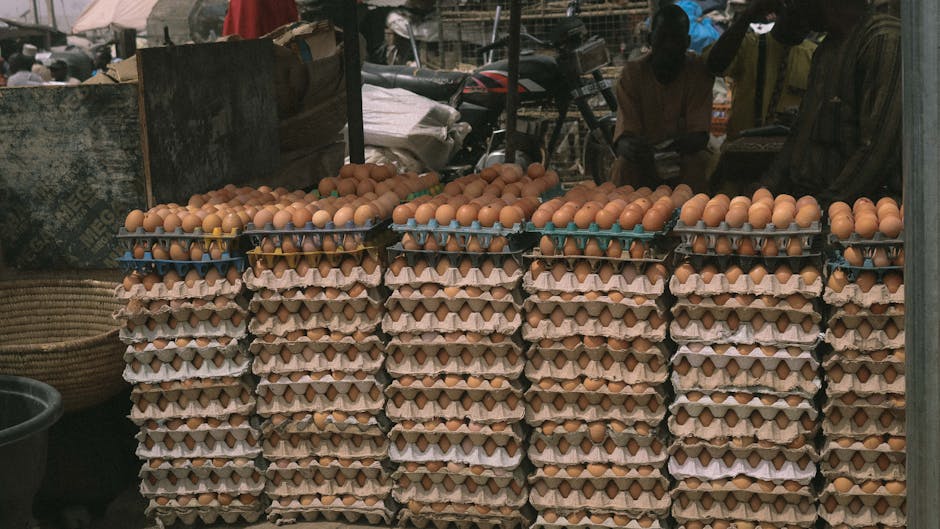
- Egg prices in the US have plummeted by 40% over the past six months, driven by an oversupply of eggs.
- The national retail price for a dozen large eggs fell to $2.17 in May 2024, down from $4.84 in January 2023.
- Despite rising output, many egg farmers are operating at a loss due to persistent inflation in feed, fuel, and labor costs.
- The current oversupply is a result of the massive depopulation of laying hens during the 2022-2023 avian flu outbreak.
- The swift recovery of the national flock of commercial laying hens to pre-outbreak levels has led to a surge in egg production.
Egg prices in the United States have plummeted by nearly 40% over the past six months, marking a dramatic reversal from the record highs seen during the 2022–2023 avian flu crisis when a dozen large whites briefly exceeded $4. However, this relief at the grocery store is coming at a steep cost to producers. Despite rising output, many egg farmers are now operating at a loss as persistent inflation in feed, fuel, and labor continues to erode already thin margins. According to the U.S. Department of Agriculture (USDA), the national retail price for a dozen large eggs fell to $2.17 in May 2024, down from a peak of $4.84 in January 2023. While consumers welcome the drop, industry leaders warn the current imbalance between supply and pricing could destabilize the sector, with some small and mid-sized farms contemplating early exits.
Rebound After Avian Flu Disruptions

The current oversupply stems directly from the massive depopulation of laying hens during the worst avian influenza outbreak in U.S. history, which wiped out more than 58 million birds between 2022 and 2023. In response, egg producers rapidly rebuilt flocks, anticipating continued high demand and prices. The USDA reports that the national flock of commercial laying hens has rebounded to 392 million as of April 2024—surpassing pre-outbreak levels. This swift recovery, combined with improved biosecurity measures that have kept new outbreaks minimal, has led to a surge in egg production. Weekly output now averages nearly 105 million dozen eggs, up 7% year-over-year. The market, however, did not expand at the same pace, creating a classic supply glut. As a result, wholesale prices have collapsed, with some regional markets reporting cartons selling below $1 per dozen—far below the estimated break-even point of $1.40 to $1.60 for most producers.
Producers Grapple with Soaring Input Costs

While supply has rebounded, the cost structure for egg production remains elevated. Feed, which accounts for roughly 60–70% of total expenses, has stayed high due to sustained global demand for corn and soybeans. According to the U.S. Department of Agriculture, feed costs per hundredweight of eggs produced remain 25% above pre-pandemic levels. Fuel prices, critical for transportation and climate-controlled housing, have also remained volatile, particularly in rural areas dependent on diesel deliveries. Labor, another major cost center, has become harder to staff and more expensive, with wages rising across agricultural sectors. Many farms invested heavily in automation and biosecurity during the avian flu years, adding fixed costs that must now be covered even as revenue declines. As one Indiana egg producer told Reuters, “We’re producing more eggs than ever, but every dozen we sell is losing money. It’s a race to the bottom we can’t win.”
Market Imbalance and Economic Pressures

The collapse in egg prices reflects a broader economic mismatch between supply elasticity and demand rigidity. Unlike industrial goods, egg demand is relatively inelastic—consumers don’t dramatically increase consumption when prices fall. Thus, the surge in supply has not been met with proportional demand growth, leading to inventory buildups and discounting. Processors and retailers, benefiting from the low prices, have little incentive to raise prices or support farmers through premium contracts. Meanwhile, futures markets show no sign of near-term recovery, with July 2024 egg futures trading at levels not seen since 2020. Economists at the University of Illinois warn that prolonged negative margins could trigger consolidation in the industry, with smaller farms unable to withstand sustained losses. This could reduce regional diversity in supply and increase long-term price volatility, undermining food security.
Impact on Farmers and Food Supply Chains

The financial strain is hitting family-run and independent egg operations the hardest. Unlike large integrators with diversified revenue streams, small producers often lack the capital reserves to weather extended periods of negative margins. Some are reducing flock sizes or converting to alternative poultry products, while others are exiting the business entirely. This contraction could reduce competition and resilience in the egg supply chain, particularly in regions dependent on local production. Additionally, reduced farm viability may discourage future investment in sustainable practices, such as cage-free transitions or renewable energy integration, which require long payback periods. If the current trend continues, it could lead to a cycle of boom-and-bust pricing that harms both producers and consumers over time.
Expert Perspectives
Industry analysts are divided on the path forward. Some, like Dr. Paul Eigenberg of Iowa State University’s agricultural economics department, argue that the market will eventually self-correct as weaker producers exit and supply contracts. “This is painful, but necessary recalibration,” he said in a recent interview. Others warn of systemic risks. Sarah Thompson, a food systems analyst at the Union of Concerned Scientists, cautions that “relying solely on market forces ignores the public interest in a stable, equitable food system.” She advocates for targeted support, such as cost-sharing for sustainable practices or risk management tools, to prevent consolidation and maintain supply diversity. Meanwhile, the American Egg Board emphasizes long-term consumer benefits from lower prices but acknowledges the need for industry adaptation.
Looking ahead, the egg market faces several uncertainties. Will sustained low prices trigger another round of flock culling, potentially leading to future shortages? Can policy interventions help stabilize margins without distorting the market? And how will shifting consumer preferences—such as demand for cage-free or organic eggs—affect profitability in a price-sensitive environment? With inflationary pressures showing no immediate relief and global trade dynamics in flux, egg producers must navigate a volatile landscape. The current crisis may ultimately reshape the structure of U.S. poultry farming, testing the resilience of an industry that sits at the intersection of agriculture, economics, and food security.
Source: CNBC