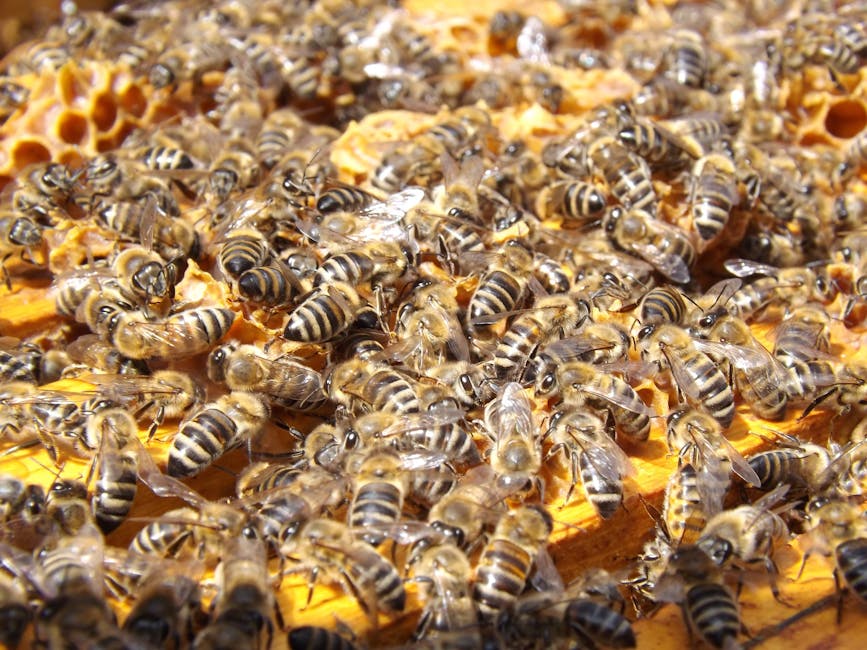
- Industrial honeybee farming in the US is ecologically unsustainable and ethically indefensible.
- Commercial beekeeping operations have turned honeybees into overworked, undernourished, and frequently doomed laborers.
- Honeybee populations have declined by 30% or more on average annually for the past two decades.
- Migratory beekeeping practices exacerbate stress, disease transmission, and nutritional deficits in bees.
- Bees are not just pollination machines, but sentient beings deserving of ethical consideration.
Industrial honeybee farming in the United States is not only ecologically unsustainable but ethically untenable, argues Jennie Durant in her new book, Bitter Honey. Drawing on investigative reporting and scientific data, Durant exposes how commercial beekeeping operations—essential to large-scale agriculture—have turned honeybees into overworked, undernourished, and frequently doomed laborers. The core thesis is not simply that bees are dying at alarming rates, but that the system treating them as disposable inputs is structurally flawed and morally indefensible. While the book presents stark statistics on colony collapse, its deeper contribution lies in reframing bees as sentient beings deserving of ethical consideration, not merely as pollination machines propping up industrial agriculture.
Alarming Decline in Honeybee Populations

In the past two decades, US beekeepers have reported average annual colony losses exceeding 30%, with some years surpassing 45%, according to data from the Bee Informed Partnership and the U.S. Department of Agriculture. These figures represent a dramatic departure from historical norms, where winter losses were typically under 15%. Durant cites internal industry surveys showing that migratory beekeeping—the practice of trucking hives across states to pollinate almonds, apples, and blueberries—exacerbates stress, disease transmission, and nutritional deficits. Bees in these operations often face monoculture diets lacking in diverse pollen, weakening their immune systems. Pesticide exposure, particularly neonicotinoids, compounds these problems. A 2023 study published in Scientific Reports linked sublethal pesticide doses to impaired navigation and reduced brood survival. Durant underscores that these are not isolated issues but systemic outcomes of treating millions of hives as fungible assets.
Key Players in the Pollination Economy

The industrial beekeeping network is dominated by a handful of large operators, many based in California and the Pacific Northwest, who manage tens of thousands of hives. These beekeepers contract with agribusiness giants to pollinate vast monocultures, most notably California’s almond orchards, which require over 2 million hives each February—nearly two-thirds of all managed colonies in the U.S. Companies like Paramount Farms and Olam International rely on this seasonal pollination, creating enormous demand that drives hive rentals above $200 per colony. Meanwhile, the USDA provides subsidies and research funding that prioritize crop yields over bee health. Environmental nonprofits such as the Xerces Society advocate for reform, but their influence pales next to the economic clout of industrial agriculture. Durant interviews beekeepers who express deep ambivalence—aware of the toll on bees but trapped by market pressures and diminishing margins.
Ecological and Ethical Trade-offs

The trade-offs of industrial beekeeping extend beyond bee mortality. While managed honeybees support $15 billion in U.S. crop value annually, their dominance can harm native pollinators by introducing pathogens and competing for floral resources. Moreover, the focus on Apis mellifera overlooks over 4,000 native bee species, many of which are more efficient pollinators for certain plants. Ethically, Durant challenges the anthropocentric framework that reduces bees to tools. She draws on emerging research in invertebrate sentience, citing studies suggesting bees experience pain, exhibit problem-solving behavior, and display social learning—traits that, she argues, warrant moral consideration. The economic model of maximizing hive output ignores these dimensions, risking not only ecological collapse but a failure of stewardship. Transitioning to more sustainable practices—such as integrated pollination systems and reduced chemical use—would require systemic investment and policy shifts.
Why the Crisis Is Reaching a Tipping Point

The urgency of rethinking beekeeping has intensified due to converging pressures: climate change altering bloom cycles, rising pesticide resistance, and declining beekeeper recruitment. The 2020–2023 droughts in the Western U.S. devastated forage lands, forcing beekeepers to feed artificial substitutes that lack essential nutrients. Simultaneously, public awareness has grown, spurred by documentaries and advocacy campaigns linking bee decline to broader ecological collapse. Durant’s book arrives amid increasing scientific consensus on insect population declines, with a 2022 meta-analysis in Nature warning that 40% of insect species face extinction. These factors have shifted the debate from mere conservation to one of ethical responsibility, making Bitter Honey particularly timely.
Where We Go From Here
In the next 12 months, three scenarios are possible. First, incremental reforms—such as expanded pesticide restrictions and USDA incentives for habitat restoration—could slow declines without challenging the core model. Second, a major collapse in almond pollination or a high-profile disease outbreak might trigger emergency regulations and accelerated research into alternative pollinators. Third, a growing ethical movement, inspired by Durant’s framing of bees as cohabitants rather than commodities, could spur consumer-driven shifts toward bee-friendly certifications and reduced reliance on industrial honey. Each path depends on whether policymakers, farmers, and the public accept that sustainability requires not just technical fixes but a reconception of our relationship with non-human life.
Bottom line — Bitter Honey makes a compelling case that saving honeybees demands more than better management; it requires recognizing their intrinsic value beyond economic utility.
Source: New Scientist