- More than 70% of online daters in the US reported encountering fake profiles in 2023, fueling a crisis of trust.
- The surge in deception has created a $2.3 billion economic opportunity for start-ups promising verified experiences.
- Traditional online dating platforms are struggling to keep pace with fraudsters using deepfake technology and stolen identities.
- New dating services are stepping in with advanced verification protocols to restore integrity to digital matchmaking.
- The online dating economy faces a credibility reckoning, with regulators demanding better safeguards.
More than 70% of online daters in the United States reported encountering at least one fake profile in 2023, according to a Pew Research Center study, fueling a crisis of trust in an industry built on connection. This surge in deception—from catfishing and romance scams to AI-generated images—has not only eroded user confidence but also created a $2.3 billion economic opportunity for start-ups promising verified, authentic experiences. With fraudsters increasingly leveraging deepfake technology and stolen identities, traditional platforms reliant on self-reported profiles are struggling to keep pace. Now, a new generation of dating services is stepping in with advanced verification protocols, including government ID checks, live video confirmation, and blockchain-backed identity systems, aiming to restore integrity to digital matchmaking.
The Trust Crisis Reshaping Online Dating

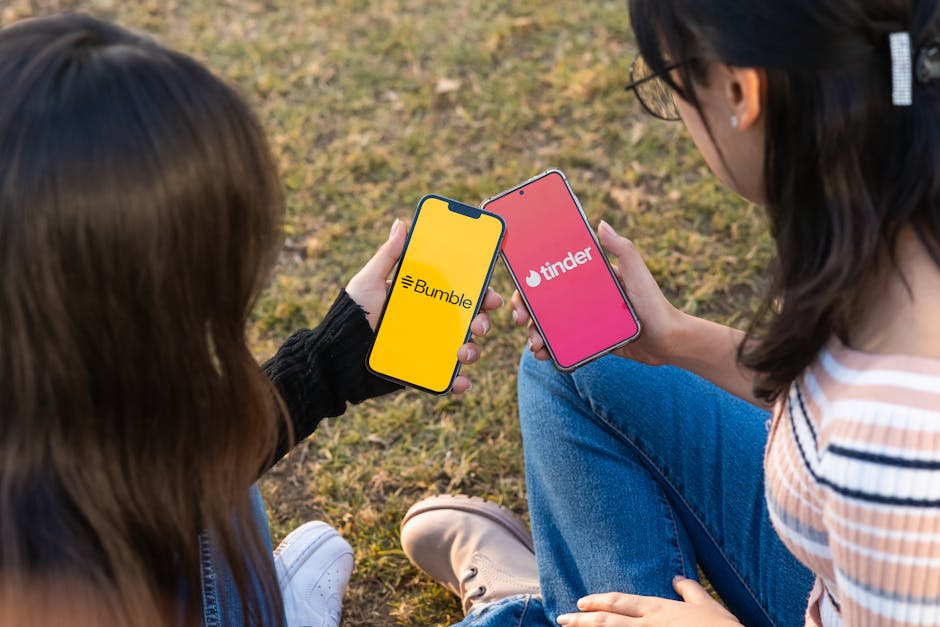
The online dating economy, once hailed as a democratizer of romance, now faces a credibility reckoning. While platforms like Tinder and Bumble have normalized swiping culture, their reliance on minimal profile validation has made them vulnerable to abuse. Scammers exploit anonymity to manipulate vulnerable users, often leading to emotional distress and financial loss—over $1.3 billion was lost to romance scams in the U.S. alone in 2022, according to the Federal Trade Commission. This growing threat has prompted regulators and investors alike to demand better safeguards. The shift isn’t just ethical—it’s economic. Consumers are increasingly willing to pay for privacy and authenticity, creating fertile ground for start-ups that prioritize safety over scalability.
New Platforms, New Verification Models

Enter start-ups like Lumen, Cera, and Once, which are redefining what it means to be ‘real’ online. Lumen, launched in 2022, requires users to verify their identity through government-issued IDs and facial recognition, ensuring each profile represents a legitimate person. Cera takes a community-driven approach, where existing members must vouch for newcomers, creating a trusted network effect. Meanwhile, Once uses AI to analyze profile behavior and flag inconsistencies, such as reused photos or suspicious messaging patterns. These methods go beyond basic email confirmation, embedding trust into the onboarding process. Even established players are responding: Bumble has introduced selfie verification, while Hinge is testing professional credential checks for select users.
Technology Meets Psychology in Fraud Prevention

The battle against fake profiles hinges on both technological innovation and behavioral science. Start-ups are deploying machine learning models trained on millions of profile interactions to detect subtle anomalies—such as mismatched typing patterns or inconsistent location data—that suggest impersonation. Some services, like Cera, use timed photo uploads, requiring users to submit real-time selfies with specific gestures to prevent the use of pre-recorded or stolen images. According to Dr. Natalia Ramos, a behavioral economist at MIT, ‘Trust in digital environments isn’t just about proof of identity—it’s about creating psychological safety through transparency and accountability.’ Platforms that combine hard verification with community norms are seeing higher match quality and lower report rates, suggesting a cultural shift is underway.
Consumer Demand Fuels a Verification Economy

The move toward verified dating is not just a technical upgrade—it’s a market-driven evolution. A 2023 survey by Statista found that 68% of dating app users would switch to a more secure platform, even if it meant paying a premium. This demand is translating into venture capital interest: Lumen raised $20 million in Series A funding in early 2024, while Cera secured a $15 million round led by Index Ventures. Investors see a clear path to monetization through subscription models and premium features that emphasize safety. Moreover, as online relationships increasingly lead to real-world commitments—marriages, cohabitation, family planning—the stakes for authenticity have never been higher. The cost of fraud is no longer just emotional; it’s financial, legal, and societal.
Expert Perspectives
While verification tools offer promise, experts caution against over-reliance on technology. ‘No system is foolproof,’ warns cybersecurity researcher Dr. Elena Torres of BBC News. ‘Scammers adapt quickly, and biometric data can be spoofed or stolen.’ Others, like relationship psychologist Dr. Mark Chen, argue that excessive verification could deter genuine users uncomfortable with surveillance. ‘We risk creating a paradox where the quest for safety makes dating feel transactional and cold,’ he says. The challenge lies in balancing security with accessibility—a tightrope modern platforms must navigate carefully.
Looking ahead, the future of online dating may lie in decentralized identity systems, where users control their verified credentials across multiple platforms without repeated checks. Projects backed by the World Wide Web Consortium (W3C) and explored by W3C on decentralized identifiers could enable portable digital identities, reducing friction while enhancing trust. As regulatory scrutiny grows—particularly in the EU under the Digital Services Act—the pressure to authenticate users will only intensify. The question is no longer whether dating apps should verify users, but how they can do so ethically, efficiently, and at scale.
Source: BBC