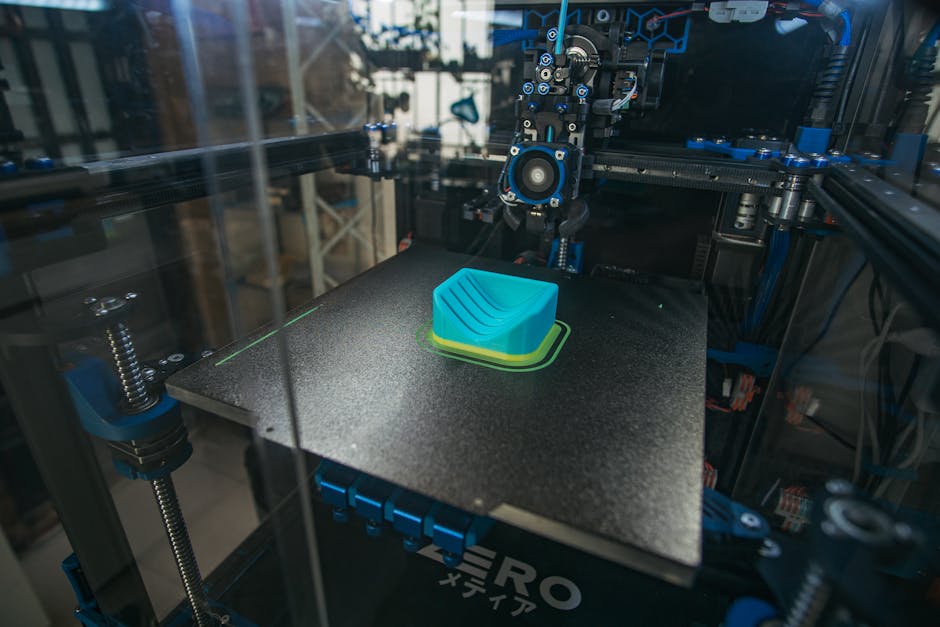
- A team of researchers at Cincinnati Children’s is developing 3D-printed scaffolding trays to accelerate human gut organoid growth.
- The innovative trays enable the production of larger, more complex, and functional human gut organoids.
- The new method reduces the time it takes to produce functional human gut organoids by half.
- The 3D-printed trays provide a framework for human gut organoids to self-organize and mature.
- The breakthrough has opened up new avenues for studying the human gut and exploring treatments for gastrointestinal diseases.
In a small laboratory at Cincinnati Children’s, a team of researchers is working on a groundbreaking project that could change the face of human gut research. The room is filled with the soft hum of 3D printers, as they meticulously craft tiny, intricate trays that will serve as the foundation for a new generation of human gut organoids. These tiny, three-dimensional structures are designed to mimic the complex environment of the human gut, and the innovative scaffolding trays are enabling researchers to produce larger, more functional versions of these organoids at an unprecedented rate.
Accelerating Organoid Growth

The current situation is nothing short of remarkable. Researchers can now produce human gut organoids that are not only larger but also more complex, with the ability to grow their own nerve cells. This breakthrough is made possible by the 3D-printed scaffolding trays, which provide a framework for the organoids to self-organize and mature. The results are astounding, with the new method enabling the production of functional human gut organoids in half the time of previous methods. This rapid growth is a game-changer for researchers, who can now study the human gut in unprecedented detail and explore new avenues for the treatment of gastrointestinal diseases.
A History of Innovation

The story behind this breakthrough is one of dedication and innovation. Researchers at Cincinnati Children’s have been working tirelessly to develop new methods for growing human gut organoids, driven by the need for more effective treatments for devastating diseases such as Hirschsprung’s disease. The development of 3D-printed scaffolding trays is the culmination of years of research, as scientists have worked to perfect the design and materials used in the trays. The result is a system that is not only highly effective but also remarkably versatile, enabling researchers to tailor the growth of organoids to specific needs and applications.
The Researchers Behind the Breakthrough

So, who are the individuals behind this groundbreaking research? The team at Cincinnati Children’s is led by a group of visionary scientists who are driven by a passion for discovery and a commitment to improving human health. These researchers are motivated by the potential of their work to transform our understanding of the human gut and to develop new treatments for a range of debilitating diseases. As they continue to push the boundaries of what is possible with 3D-printed scaffolding trays, they are driven by a sense of excitement and wonder at the secrets that these tiny structures may yet reveal.
Consequences and Implications

The consequences of this breakthrough are far-reaching and profound. The ability to produce larger, more complex human gut organoids will enable researchers to study the human gut in unprecedented detail, exploring the intricate relationships between different cell types and the ways in which the gut responds to disease and injury. This knowledge will be invaluable in the development of new treatments for gastrointestinal diseases, and may also have implications for our understanding of the gut-brain axis and the complex interplay between the gut and the central nervous system. As the research community begins to explore the full potential of 3D-printed scaffolding trays, the possibilities seem endless, and the future of human gut research has never looked brighter.
The Bigger Picture
This breakthrough is not just a significant advance in human gut research; it also has important implications for our broader understanding of human development and disease. The use of 3D-printed scaffolding trays to accelerate the growth of organoids may have applications in a range of fields, from tissue engineering to regenerative medicine. As researchers continue to explore the potential of this technology, they may uncover new insights into the fundamental processes that govern human development, and develop new strategies for the treatment of a range of diseases and disorders. The work of the team at Cincinnati Children’s is a powerful reminder of the importance of basic scientific research and the potential for innovative technologies to transform our understanding of the human body.
As we look to the future, it is clear that the development of 3D-printed scaffolding trays is just the beginning. Researchers will continue to refine and improve this technology, exploring new applications and pushing the boundaries of what is possible. The potential for this work to transform our understanding of the human gut and to develop new treatments for devastating diseases is vast, and the team at Cincinnati Children’s is poised to play a leading role in this exciting and rapidly evolving field. With their innovative spirit and commitment to discovery, they are helping to shape the future of human gut research and to unlock the secrets of the human body.
Source: MedicalXpress