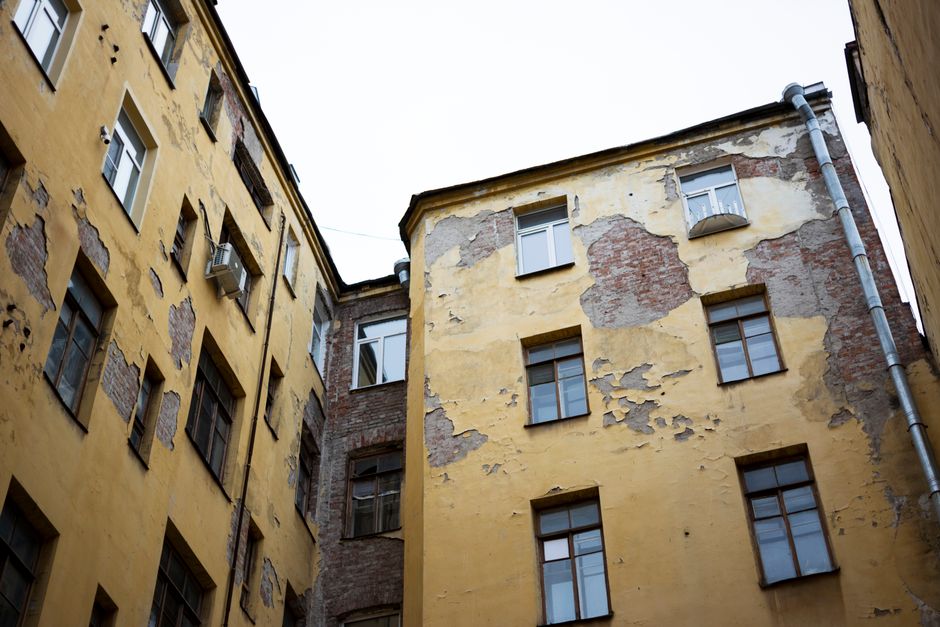
- The Carpenters Estate’s Lund Point tower has 164 empty flats, leaving only 4 occupied by long-term residents.
- The tower was built in the 1960s as part of postwar urban living plans but now stands as a monument to stalled regeneration.
- Construction on the estate’s overhaul has yet to begin, nearly a decade after planning started in 2017.
- Tenants were relocated, services withdrawn, and windows boarded up, leaving the tower in a state of disrepair.
- Long-term residents have refused to leave despite deteriorating conditions and repeated assurances of redevelopment.
Lund Point rises like a sentinel over the Carpenters Estate in Stratford, its pale concrete facade pockmarked with boarded-up windows and sealed doors. On a crisp autumn morning, the only movement is the flutter of plastic caught in chain-link fencing below. Inside, however, life persists. Tee Fabikun brews tea in her fifth-floor flat, the scent of ginger and cloves mingling with the faint damp of aging concrete. Her walls are lined with memories — photos of children grown, certificates from community meetings, a woven Nigerian tapestry that softens the institutional architecture. Outside, 164 flats lie empty, their silence a constant reminder of what once was: a bustling, if imperfect, community now reduced to whispers in the stairwell and the occasional echo of a door closing three floors below.
The Tower That Time Forgot

Lund Point, one of three towers on the Carpenters Estate, was built in the 1960s as part of a postwar vision for modern urban living. Today, it stands as a monument to stalled regeneration. Of its 168 flats, only four remain occupied — all by long-term residents who have refused to leave despite years of deteriorating conditions and repeated assurances of redevelopment. Since 2017, when Newham Council and its development partner, L&Q, began planning the estate’s overhaul, Lund Point has been systematically emptied. Tenants were relocated, services withdrawn, and windows boarded up. Yet, nearly a decade on, construction has not begun. The promised mixed-income community with green space and modern amenities remains unbuilt, leaving the holdouts in a legal and emotional limbo. Heating is intermittent, cleaning services have ceased, and some corridors smell of mildew and neglect.
From Community to Clearance

The unraveling of Lund Point began long before the first board went up. Residents recall a vibrant, if aging, community where children played in the courtyards and neighbors gathered for birthdays and funerals alike. The turning point came in 2014, when Newham Council designated the Carpenters Estate a regeneration zone, citing outdated infrastructure and social deprivation. Public consultations followed, but many residents felt sidelined. Tee Fabikun, a community activist who has lived in Lund Point since 1997, remembers attending meetings where promises of ‘like-for-like’ replacement housing were made — assurances that have since been walked back. By 2017, the council had acquired over 80% of homes, and demolition plans were approved. Yet, as other estates across London were rebuilt, the bulldozers never arrived at Carpenters. Legal challenges, planning disputes, and shifting political priorities delayed the project, leaving Lund Point in a state of suspended decay.
The Keepers of Lund Point

Fabikun and the few remaining residents are not merely stubborn — they are guardians of memory. For them, Lund Point is not a failed social experiment but a home shaped by decades of struggle and solidarity. Fabikun, a trained nurse and former tenants’ association chair, speaks with the weary resolve of someone who has fought too many losing battles. She and her neighbors — including 78-year-old Margaret Adeyemi, who moved in during the 1980s, and two other elderly tenants — have refused to accept rehousing offers, fearing they will never be allowed to return. Their resistance is both personal and political: they believe the redevelopment plan, which includes only 50% ‘affordable’ housing, will erase the working-class heart of the estate. BBC reports have documented their plight, highlighting how some residents feel coerced into leaving under poor conditions.
What the Silence Costs

The consequences of delay ripple far beyond the four occupied flats. For those who left, many now live in temporary accommodation miles from their support networks, schools, and jobs. For those who stayed, isolation has become a daily reality. Emergency services are slower to respond, and basic maintenance is nearly nonexistent. The psychological toll is heavy: one former tenant, speaking anonymously, described the feeling of returning to visit a friend as ‘like walking through a graveyard.’ Meanwhile, the financial cost of stagnation mounts. The council continues to pay for security and minimal upkeep, while the land — in a borough transformed by the 2012 Olympics — remains underutilized. Developers argue that market volatility and funding shortfalls have hindered progress, but activists point to a deeper failure: the lack of genuine resident involvement in planning decisions.
The Bigger Picture
Lund Point is not unique. Across the UK, regeneration projects have sparked controversy over displacement, affordability, and broken promises. Estates like Aylesbury in south London and Hulme in Manchester tell similar stories: communities dismantled in the name of progress, with unclear benefits for those most affected. What Lund Point reveals is a systemic flaw in how urban renewal is conceived — too often as a top-down process that treats people as obstacles rather than stakeholders. As cities grapple with housing shortages and climate resilience, the question is no longer just whether to redevelop, but how to do so with justice and memory intact.
For now, Tee Fabikun still answers her door, still waters her plants, still watches the city change from her fifth-floor window. The redevelopment may yet come, though no one can say when. But if and when the wrecking ball arrives, she wants one thing known: Lund Point was not a failed place. It was home. And for those who lived there, that truth remains unboarded.
Source: The Guardian