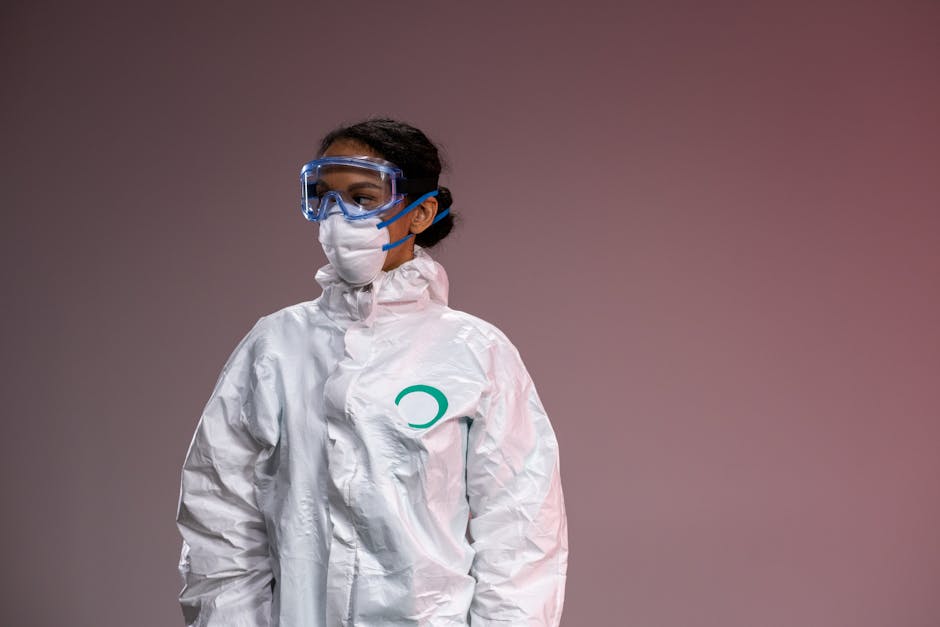
- The Ebola virus has re-emerged in 2024, infecting an American doctor in Uganda, highlighting the ongoing threat of viral hemorrhagic fevers.
- The Zaire strain of Ebola, responsible for the current infection, is the most lethal variant with a case fatality rate ranging from 25% to 90%.
- This case marks the first known Ebola infection of a US healthcare worker since the 2014-2016 West Africa epidemic, raising concerns about frontline worker safety.
- Uganda’s success in containing previous Ebola outbreaks has been undermined by the current incident, highlighting the fragility of containment efforts.
- The re-emergence of Ebola comes at a critical time for global health systems, which are still recovering from the COVID-19 pandemic and facing climate-driven disease spread challenges.
In a stark reminder of the persistent threat posed by viral hemorrhagic fevers, an American doctor working in Uganda has been infected with the Ebola virus and is now in critical condition. Despite the severity of his illness, the physician, whose identity has been withheld for privacy, issued a brief statement expressing cautious optimism about his recovery. Ebola, which has a case fatality rate ranging from 25% to 90% depending on the strain and access to care, remains one of the most feared pathogens in global health. The current Zaire strain, responsible for this infection, is the most lethal variant. This case marks the first known Ebola infection of a US healthcare worker since the 2014–2016 West Africa epidemic, reigniting concerns about frontline worker safety and international preparedness for emerging infectious diseases.
Why This Outbreak Matters Now

The reappearance of Ebola in East Africa comes at a time when global health systems are still recovering from the strain of the COVID-19 pandemic and facing increasing challenges from climate-driven disease spread. Uganda has confirmed a new cluster of Ebola cases linked to the Zaire ebolavirus, triggering an emergency response from the Ministry of Health and the World Health Organization (WHO). While Uganda has successfully contained several Ebola outbreaks since 2018 thanks to rapid diagnostics and ring vaccination strategies, this latest incident underscores the fragility of containment efforts in regions with limited healthcare infrastructure. The involvement of an international medical worker adds a transnational dimension, prompting scrutiny of cross-border infection control protocols and the adequacy of personal protective equipment (PPE) training for foreign health volunteers.
Inside the Infection and Response

The US doctor, employed by an international medical NGO, was working in Mubende District, a region previously affected by Ebola in 2022. He began exhibiting symptoms—including high fever, severe headache, and muscle pain—shortly after participating in the care of a patient who later tested positive. Upon symptom onset, he was immediately isolated and transferred to a specialized Ebola treatment unit. He has since been administered monoclonal antibody therapy, including Ebanga (ansuvimab-zykl), which has shown efficacy in improving survival rates when administered early. With critical support, including fluid resuscitation and organ function monitoring, he remains under intensive care. Ugandan health authorities have traced over 100 contacts, including fellow healthcare workers and local community members, and have initiated ring vaccination using the rVSV-ZEBOV vaccine, which has proven effective in prior outbreaks.
Analyzing the Gaps in Global Preparedness

Despite advances in Ebola therapeutics and vaccines since the 2014 crisis, this case reveals persistent vulnerabilities in global health security. According to the WHO, only 20% of healthcare facilities in sub-Saharan Africa meet minimum infection prevention standards, increasing the risk of nosocomial transmission. Experts point to inconsistent PPE usage, fatigue among frontline workers, and delays in diagnostic confirmation as key factors in recent infections. Additionally, while the rVSV-ZEBOV vaccine has been instrumental in outbreak control, supply remains limited, with fewer than 500,000 doses available globally at any given time. Dr. Agnes Binagwaho, former Rwandan Minister of Health, warned in a recent WHO commentary that ‘outbreaks will continue to breach borders as long as health inequity persists.’
Who Is at Risk and What’s at Stake

The implications of this infection extend beyond the individual patient. Other international medical personnel, particularly those from non-endemic countries with limited experience in viral hemorrhagic fever management, are now under heightened scrutiny. US-based organizations deploying health workers to high-risk zones are reviewing their safety protocols, including pre-deployment training and real-time telemedicine support. Locally, communities in affected regions face renewed fear and stigma, which can hinder early reporting and treatment-seeking behavior. Economically, outbreaks disrupt trade and travel; the 2014 West Africa epidemic cost an estimated $2.8 billion in lost GDP. With no approved oral antiviral for Ebola yet available, containment remains the cornerstone of response, making early detection and isolation more critical than ever.
Expert Perspectives
Opinions diverge on the long-term strategy for preventing Ebola infections among healthcare workers. Dr. Anthony Fauci, former director of the National Institute of Allergy and Infectious Diseases, emphasized the need for universal access to protective gear and rapid diagnostics, stating, ‘We have the tools—we must ensure they reach the frontlines.’ Conversely, Dr. Peter Piot, co-discoverer of the Ebola virus, cautioned against over-reliance on vaccines alone, arguing that ‘community engagement and trust are the bedrock of outbreak control.’ Some experts also raise ethical concerns about the deployment of foreign medical personnel without full integration into local health systems, suggesting that sustainable capacity building should be prioritized over emergency response.
Looking ahead, the coming weeks will be crucial in determining whether this outbreak remains contained or spreads further. Health officials are monitoring for secondary infections among contacts and evaluating the effectiveness of the current vaccine campaign. Researchers are also tracking viral sequencing data to detect any mutations that could affect transmissibility or treatment response. As climate change and deforestation increase human-wildlife contact, the frequency of zoonotic spillover events is expected to rise. The case of the US doctor, while singular, serves as a sentinel event—a warning that global health security is only as strong as its weakest link. The world must decide whether to invest in prevention before the next outbreak, or respond in crisis mode once again.
Source: Abcnews