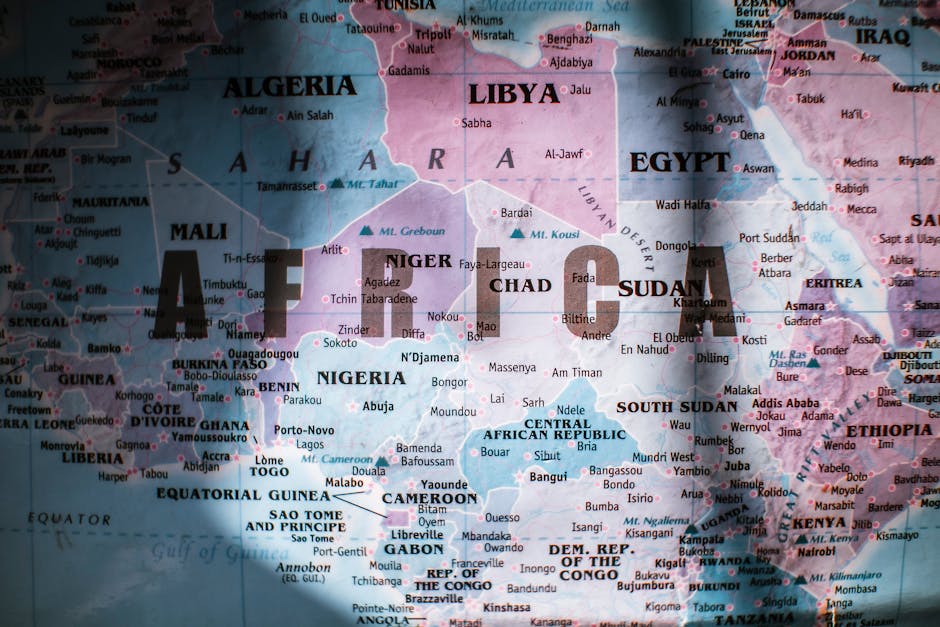
- A new Ebola outbreak in the Democratic Republic of the Congo has led to over 1,200 suspected cases and 452 reported deaths.
- The US government’s cuts to global health programs have weakened international efforts to contain the virus.
- The Bundibugyo strain of Ebola lacks a licensed vaccine and proven antiviral treatments, making it a significant concern.
- Genetic sequencing suggests the virus is genetically distinct from previous outbreaks, raising concerns about transmissibility and immune evasion.
- The World Health Organization (WHO) has logged 1,237 suspected cases of Ebola in eastern DRC as of late June 2024.
Experts warn that the United States is effectively stepping back from its historic leadership in global health emergencies, as a new outbreak of the rare Bundibugyo strain of Ebola spreads through the Democratic Republic of the Congo. With over 1,200 suspected cases and rising fatalities, the response has been hampered by the U.S. government’s deep cuts to global health programs, including the dismantling of key USAID offices and the cancellation of critical infectious disease research initiatives. Without American logistical, financial, and scientific support, international efforts to contain the virus are significantly weakened—putting not only Central Africa but global health security at risk.
Expanding Outbreak Amid Limited Data

As of late June 2024, the World Health Organization (WHO) has logged 1,237 suspected cases of Ebola in eastern DRC, with 318 confirmed through laboratory testing and 452 reported deaths—yielding a case fatality rate approaching 60%. The outbreak, centered in North Kivu and Ituri provinces, marks the first major emergence of the Bundibugyo variant since 2012. Unlike the more studied Zaire strain, for which vaccines exist, Bundibugyo lacks both a licensed vaccine and proven antiviral treatments. Genetic sequencing conducted by the Institut National de Recherche Biomédicale (INRB) in Kinshasa confirms the virus is genetically distinct from previous outbreaks, raising concerns about transmissibility and immune evasion. Field teams face immense challenges due to ongoing conflict, with over 120 armed groups operating in the region, disrupting contact tracing and vaccination efforts. According to WHO, fewer than 30% of known contacts are being monitored regularly, severely limiting containment.
Key Players and Shifting Roles

The response is now being led by the WHO, Médecins Sans Frontières (MSF), and the DRC’s Ministry of Health, with logistical support from the United Nations Stabilization Mission in the country (MONUSCO). Notably absent is the U.S. Centers for Disease Control and Prevention (CDC), which previously deployed rapid response teams within days of past Ebola outbreaks. This time, no CDC personnel have entered the affected zones, and the U.S. Agency for International Development (USAID) has not activated its Disaster Surge Capacity. Former USAID global health officials report that the Bureau for Global Health was reduced by over 60% in early 2024, with entire divisions—such as the Emerging Pandemic Threats program—dissolved. Meanwhile, the Coalition for Epidemic Preparedness Innovations (CEPI) has fast-tracked funding to develop a Bundibugyo-specific vaccine candidate, partnering with researchers in Uganda and South Africa, but U.S. research institutions are no longer involved due to halted NIH grants for filovirus studies.
Trade-offs in Global Health Leadership

The U.S. retreat from frontline outbreak response reflects a broader strategic pivot that prioritizes domestic budget discipline over global health security, but at a steep cost. While the federal government saved an estimated $850 million through cuts to foreign health aid, experts warn the long-term risks far outweigh short-term savings. A 2023 World Bank study estimated that every dollar invested in pandemic preparedness yields up to $30 in economic protection during outbreaks. Without U.S. leadership, coordination lags, supply chains falter, and vaccine development slows. On the other hand, African-led initiatives are gaining momentum: the Africa CDC has deployed mobile labs and trained over 200 local epidemiologists, signaling a shift toward regional self-reliance. Yet, without access to advanced diagnostics, therapeutics, and surge funding, these efforts may not be enough to stop cross-border spread, particularly into Uganda and Rwanda, both of which have reported suspected cross-border cases.
Why This Outbreak Is Different

This outbreak comes at a time of profound institutional change in global health governance. The dismantling of USAID’s global health infrastructure—announced in January 2024 under a broader federal efficiency review—removed critical coordination nodes that once linked U.S. science, diplomacy, and humanitarian action. Simultaneously, political resistance in Congress has blocked new emergency funding for epidemic response, echoing debates seen during the early days of the COVID-19 pandemic. The Bundibugyo virus, while less transmissible than the Zaire strain, poses unique challenges due to its ability to evade existing diagnostic tools. Combined with misinformation spreading in conflict-affected communities and attacks on health workers, the situation has created a perfect storm. The timing underscores a dangerous gap: the world may now face a major viral threat without the most powerful public health actor at the table.
Where We Go From Here
In the next six to twelve months, three potential scenarios could unfold. In the best-case, CEPI and African research consortia succeed in fast-tracking a vaccine candidate by early 2025, supported by Gavi and the WHO’s emergency stockpile, while regional cooperation strengthens surveillance. In a moderate scenario, the outbreak becomes endemic in eastern DRC, with periodic spillovers into neighboring countries, straining fragile health systems and requiring long-term humanitarian support. In the worst-case, the virus adapts to increased human-to-human transmission, sparking a regional crisis that forces a belated global response—including a potential U.S. reversal of its non-engagement policy. All scenarios depend heavily on whether donor nations reinstate funding and whether scientific collaborations can overcome political disengagement.
Bottom line — the U.S. is no longer the default leader in global health emergencies, and its absence in the current Ebola outbreak risks prolonging the crisis, empowering alternative actors, and weakening the international system designed to prevent pandemics.
Source: The Guardian