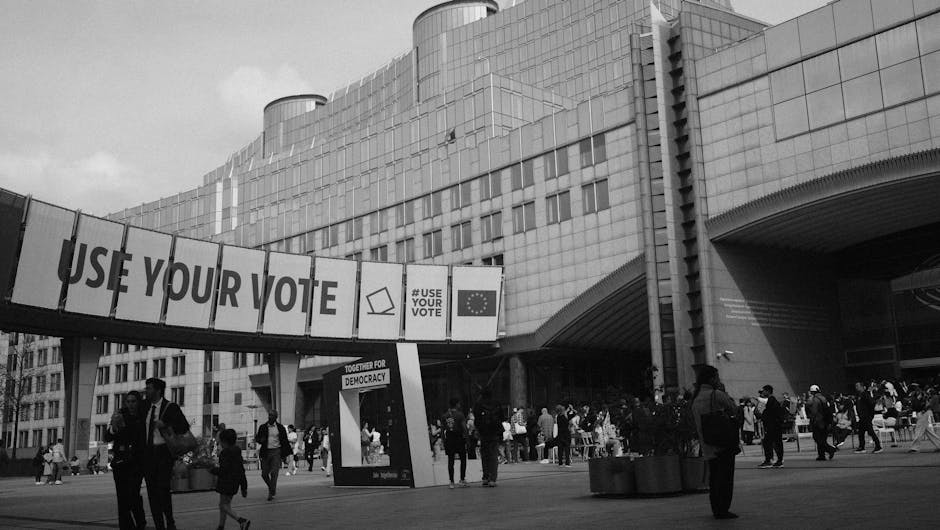
- Europe is witnessing a wave of political and environmental change driven by citizens’ demands for faster climate action, energy independence, and social equity.
- The convergence of high-stakes elections, youth-led climate protests, and economic strain from fluctuating energy markets is creating a transformative moment in European politics.
- The European Parliament’s growing influence and national governments under pressure are shaping the continent’s future at a crossroads.
- Four national elections in May 2026 have marked a significant shift in the European political landscape, with progressive coalitions and climate-focused governments emerging victorious.
- Voters across Europe are prioritizing action on climate change, energy independence, and social equity over traditional governance models.
What is driving the wave of political and environmental change sweeping across Europe in 2026? As the spring unfolds, citizens from Lisbon to Vilnius are expressing deep dissatisfaction with traditional governance models, demanding faster action on climate change, energy independence, and social equity. The convergence of high-stakes elections, youth-led climate protests, and economic strain from fluctuating energy markets has created a volatile yet transformative moment. With the European Parliament’s influence growing and national governments under pressure, the continent stands at a crossroads—where will these forces lead?
What’s Behind Europe’s Political Realignment?

The political landscape across Europe is undergoing a significant shift, marked by the outcome of four national elections in May 2026—in Portugal, Hungary, Finland, and Bulgaria. In Portugal, a progressive coalition led by the Socialists and Greens secured a narrow majority, ousting the center-right alliance that had delayed offshore wind projects. Meanwhile, in Hungary, Prime Minister Viktor Orbán’s Fidesz party lost its two-thirds supermajority for the first time since 2010, following widespread protests over judicial independence and EU fund access. Finland elected a climate-focused government pledging to accelerate carbon neutrality by 2032, while Bulgaria saw a reformist bloc unseat a long-standing oligarch-linked administration. These results reflect a broader trend: voters are prioritizing transparency, sustainability, and alignment with EU green directives. The European Commission has interpreted the results as a mandate for deeper integration and stricter conditionality on rule-of-law compliance.
What Evidence Supports This Political and Environmental Shift?

Data from Eurobarometer and national polling agencies shows that 67% of EU citizens now rank climate change as a top-three policy concern, surpassing inflation for the first time since 2022. In early May, over 350,000 demonstrators gathered in Berlin, Paris, and Warsaw under the banner of Fridays for Future’s Renew Europe campaign, calling for an end to fossil fuel subsidies and faster rollout of renewable infrastructure. Scientific support comes from the Copernicus Climate Change Service, which reported that Europe experienced its warmest April on record in 2026, with temperatures averaging 3.1°C above the 1991–2020 baseline. EU Energy Commissioner Kadri Simson cited these figures in her May 20 speech, announcing a proposal to fast-track cross-border hydrogen pipelines and offshore wind grids. Additionally, the European Central Bank released analysis showing that green investment now accounts for 41% of all public infrastructure spending—up from 28% in 2023—indicating a structural pivot in fiscal priorities.
Are There Counterarguments to This Narrative of Change?

Despite the momentum, skepticism remains. Critics argue that the political changes are more fragmented than transformative, with populist and Eurosceptic parties gaining ground in Austria, Slovakia, and parts of Italy. In Germany, the governing coalition faced internal strife after the Free Democratic Party blocked a proposed carbon tax increase, warning of economic strain on middle-class households. Some analysts caution that youth turnout, while high in urban centers, remains low in rural and eastern regions, suggesting the climate movement’s reach is uneven. Moreover, energy dependency on non-EU suppliers persists—LNG imports from the United States and Qatar rose in Q1 2026 due to underperformance in North Sea wind output. As Reuters noted in a recent analysis, Europe’s green transition remains vulnerable to global market shocks and internal political fragmentation. These factors indicate that while momentum exists, the path forward is neither linear nor guaranteed.
What Are the Real-World Impacts of These Developments?

The consequences are already visible. In Spain, new solar microgrid projects in Andalusia are powering over 120,000 homes, reducing reliance on imported gas and lowering electricity prices by 14% year-on-year. Meanwhile, the EU’s revised Carbon Border Adjustment Mechanism (CBAM) has prompted export shifts: Turkish steel producers are investing in low-carbon furnaces to maintain access to EU markets. On the political front, the European Parliament has initiated infringement procedures against Poland and Hungary over delays in implementing EU climate directives. Socially, cities like Amsterdam and Copenhagen have expanded car-free zones and boosted public transit funding, citing voter mandates. However, challenges persist: farmers in France and Romania staged tractor blockades in mid-May, protesting new environmental regulations they claim threaten livelihoods. These tensions underscore that policy changes, while ambitious, must balance ecological goals with economic and cultural realities.
What This Means For You
If you live in or follow European affairs, these developments signal a deepening commitment to sustainability and democratic accountability—but also heightened volatility. Policies you rely on, from energy bills to transportation, will continue evolving. Travelers may notice greener infrastructure, while investors should anticipate stricter ESG requirements. Public sentiment is clearly shifting, and institutions are responding, but the transition will require patience and adaptation.
As Europe navigates this complex transformation, one question remains: Can the EU maintain unity and momentum when member states face such diverse economic and social pressures? The answer may shape not only Europe’s future but also the global fight against climate change.
Source: Euronews