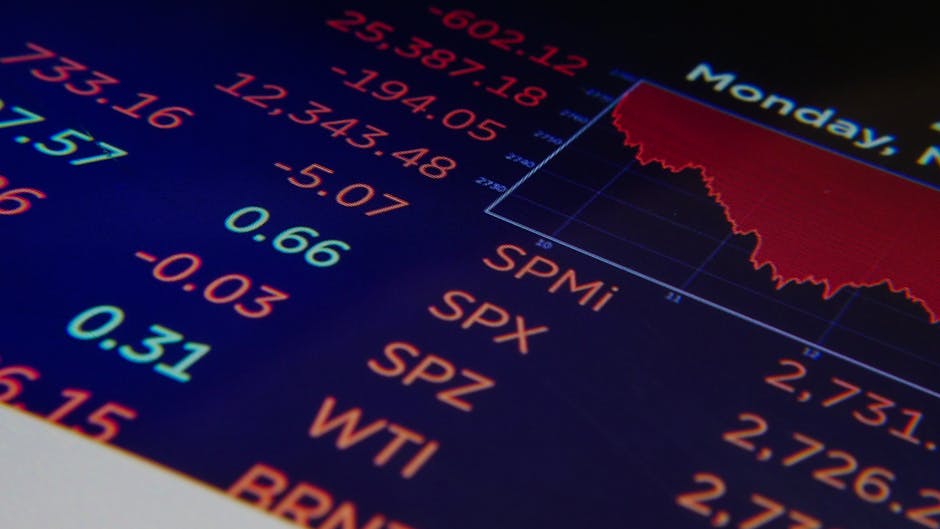
- SpaceX, OpenAI, and Anthropic are set to enter the S&P 500 within months, bypassing the typical multi-year waiting period.
- These tech giants’ fast-track IPOs may force passive index funds to sell up to $15 billion in existing portfolio companies.
- The admission of these companies could destabilize mid-cap stocks and supercharge trading volumes in the tech sector.
- The S&P 500’s eligibility criteria may be waived for companies of exceptional size and influence, like SpaceX, OpenAI, and Anthropic.
- The expedited admission of these companies could have significant ripple effects on the market and the overall economy.
Wall Street is bracing for one of the most disruptive market realignments in decades as SpaceX, OpenAI, and Anthropic prepare for fast-track initial public offerings (IPOs) that could see them enter major indices like the S&P 500 within months of going public—bypassing the typical multi-year waiting period. Market analysts estimate that passive index funds, which collectively manage over $12 trillion in assets, may be forced to sell as much as $15 billion in existing portfolio companies to free up space for these high-demand entrants. Unlike traditional IPOs, which can take years to qualify for index inclusion, the scale, profitability, and market dominance of these tech titans have prompted index providers like S&P Dow Jones Indices to consider expedited admission. The ripple effects could destabilize mid-cap stocks while supercharging trading volumes and speculative activity across the tech sector.
The End of the IPO Waiting Game

For years, the S&P 500 has required companies to demonstrate four consecutive quarters of positive earnings before becoming eligible for inclusion—a rule designed to filter out speculative ventures and ensure financial stability. However, exceptions have historically been made for companies of exceptional size and influence, such as when Facebook entered the index just three months after its 2012 IPO. Now, with SpaceX valued at over $180 billion, OpenAI nearing $100 billion after its latest funding round, and Anthropic climbing past $45 billion, index providers are reportedly reconsidering standard protocols. According to sources familiar with S&P’s internal discussions, a ‘fast-entry’ mechanism is being evaluated for firms that exceed $50 billion in market cap and demonstrate robust revenue growth, even if profitability remains uneven. This shift would reflect the growing influence of private markets, where tech unicorns now mature far faster than in previous cycles.
Who’s Moving the Market?

The potential IPOs of SpaceX, OpenAI, and Anthropic represent a convergence of transformative technologies—orbital infrastructure, generative AI, and constitutional AI safety frameworks—that have captured investor imagination. SpaceX, led by Elon Musk, has already achieved profitability through its Starlink satellite internet service and NASA contracts, generating over $4 billion in revenue in 2023. OpenAI, backed by Microsoft, is preparing a monetization surge through its expanded enterprise API offerings and AI-as-a-service platforms. Meanwhile, Anthropic, co-founded by former OpenAI researchers, has secured major partnerships with Amazon and Google Cloud, positioning itself as a trusted provider of safety-first AI models. Each company is expected to file confidentially with the SEC in the coming quarters, with IPOs likely in late 2024 or early 2025, depending on market conditions. Their entry would not only reshape tech investing but also redefine how indices evaluate innovation-driven growth.
Why the Index Shake-Up Matters

The inclusion of these firms in major indices would trigger automatic purchases by passive funds, which now account for over 55% of U.S. equity assets under management. Because index funds must replicate their benchmarks precisely, the addition of a $100-billion-plus company necessitates the removal of smaller constituents to maintain weighting integrity. Historically, this has led to sharp sell-offs in displaced stocks—what analysts call the “index effect.” For example, when Tesla joined the S&P 500 in 2020, funds sold off nearly $40 billion in other automakers and industrial firms to rebalance. With SpaceX and OpenAI likely to enter with combined market caps exceeding $250 billion, the sell-off pressure on current index members could be unprecedented. Sectors like consumer staples, regional banking, and legacy IT services are seen as most vulnerable to displacement, particularly mid-cap companies with lower trading volumes.
Market Implications and Investor Risk

The fast-entry IPOs could amplify volatility across equity markets, particularly during the rebalancing window. Traders are already positioning for so-called “index arbitrage” opportunities, where they anticipate price distortions in both incoming and outgoing stocks. Moreover, the concentration risk in the tech sector may deepen, as passive flows pour into a handful of dominant firms. Some economists warn this could mirror the late-1990s dot-com bubble, where index-driven buying detached valuations from fundamentals. “We’re creating a self-reinforcing cycle where size begets inclusion, and inclusion begets size,” said Dr. Leila Hafez, senior economist at the Brookings Institution. “That’s dangerous if these companies face regulatory headwinds or technological setbacks post-listing.” Investors in displaced firms may also face liquidity crunches, especially if automated trading algorithms accelerate sell-offs.
Expert Perspectives
Opinions are divided on whether fast-entry IPOs benefit long-term market health. Proponents argue that excluding transformative companies from indices delays price discovery and misrepresents the economy. “The S&P 500 should reflect where value is being created, not where it was created 20 years ago,” said Michael Chen, head of equity strategy at Piper Sandler. Critics, however, caution against setting a precedent that favors well-funded private giants over profitable but less-hyped public firms. “This risks turning the index into a popularity contest,” said Maria Tolstoy, portfolio manager at Vanguard. “If we keep bending the rules for Elon Musk or Sam Altman, what’s next?”
Looking ahead, all eyes will be on S&P Dow Jones Indices’ next quarterly review, expected in September 2024. Any formal announcement on fast-entry criteria could send shockwaves through pre-IPO markets. Meanwhile, investors must grapple with an open question: as private markets grow ever more powerful, should public indices adapt—or risk irrelevance? The answer may redefine equity investing for a generation.
Source: Financial Times