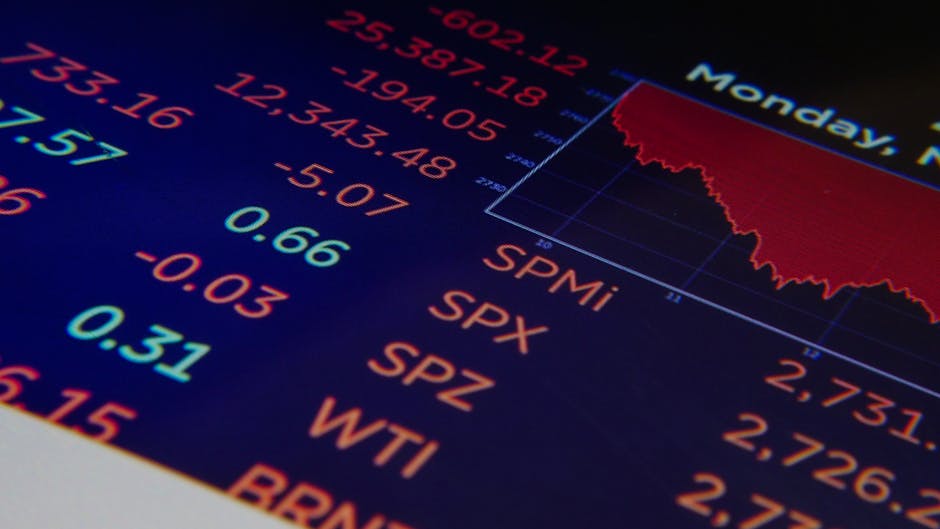
- The 10-year Treasury yield has breached 5% for the first time in 16 years, marking a significant shift in global financial markets.
- This level signals the end of the low-rate era, with cheap money officially over and higher discount rates affecting all sectors.
- The 5% yield reflects a recalibration of investor expectations around inflation, growth, and the cost of capital.
- Mortgage rates have climbed above 7.5% and corporate bond issuance has slowed due to the higher yields.
- Emerging markets are bracing for capital outflows as investors chase higher yields in safer U.S. debt.
The U.S. 10-year Treasury yield has breached 5%, a psychological threshold not seen since 2007, marking a seismic shift in global financial markets. This level, last reached during the early stages of the Great Financial Crisis, reflects a profound recalibration of investor expectations around inflation, growth, and the cost of capital. At 5%, the benchmark bond yield — often considered the world’s most important interest rate — signals that cheap money is officially over. Every sector of the economy, from housing to tech startups, now faces higher discount rates, revaluing trillions in assets. The ripple effects are already visible: mortgage rates have climbed above 7.5%, corporate bond issuance has slowed, and emerging markets are bracing for capital outflows as investors chase higher yields in safer U.S. debt.
The End of the Low-Rate Era

For more than a decade following the 2008 financial crisis, the Federal Reserve kept interest rates historically low to stimulate growth and combat deflationary pressures. The 10-year yield spent years below 3%, even dipping below 0.5% during the pandemic panic of 2020. But persistent inflation, driven by supply chain disruptions, fiscal stimulus, and a tight labor market, forced a policy reversal. The Fed raised rates from near zero to over 5% between 2022 and 2023, and while rate hikes paused in 2024, officials signaled a higher-for-longer stance. As inflation proved stickier than expected, bond markets began pricing in sustained yields above 4%, then 4.5%, and now 5%. This shift marks the definitive end of the era of ultra-cheap capital that fueled everything from real estate booms to speculative tech valuations.
A Perfect Storm of Inflation and Debt

The surge to 5% wasn’t sudden but the result of converging pressures. Core inflation remained above 3.5% through early 2024, well above the Fed’s 2% target, despite aggressive rate hikes. At the same time, U.S. federal debt surpassed $34 trillion, with record Treasury issuance needed to fund budget deficits. Investors began demanding higher yields to compensate for inflation risk and the growing debt burden. Geopolitical tensions, including conflicts in Ukraine and the Middle East, added upward pressure on energy prices, reinforcing inflation fears. The Treasury Department’s auctions in May and June saw weaker-than-expected demand from foreign buyers, particularly from China and Japan, forcing yields higher to attract capital. This confluence of fiscal expansion, persistent inflation, and shifting global demand for U.S. debt created a perfect storm pushing yields to multi-decade highs.
Why 5% Is a Psychological and Economic Threshold

The 5% level is more than symbolic — it has real economic consequences. In financial modeling, the 10-year yield serves as a baseline risk-free rate, used to discount future cash flows across asset classes. When this rate doubles from 2.5% to 5%, valuations for equities, especially growth stocks, compress significantly. Tech stocks, which rely on long-term future earnings, have underperformed in this environment. Meanwhile, higher yields translate directly into higher borrowing costs: the average 30-year fixed mortgage rate, closely tied to the 10-year yield, has exceeded 7.5%, dampening housing affordability. For corporations, the cost of issuing debt has risen sharply, with investment-grade bond yields now averaging over 6%. According to Reuters, corporate bond issuance has dropped 30% year-on-year.
Global Repercussions and Emerging Market Stress

The impact extends far beyond U.S. borders. A 5% U.S. Treasury yield makes dollar-denominated assets more attractive, drawing capital away from emerging markets. Countries with high external debt, such as Argentina, Ghana, and Pakistan, face rising default risks as their borrowing costs spike in global markets. The strong dollar, bolstered by higher yields, also makes it harder for foreign governments to service dollar-denominated debt. Central banks in Europe and Asia now face a dilemma: raise their own rates to prevent capital flight, risking domestic recession, or allow currency depreciation and imported inflation. The International Monetary Fund has warned of a “fragile” global financial system under these conditions. Even developed economies like Japan are feeling the strain, as the Bank of Japan struggles to maintain its yield curve control policy amid rising U.S. rates.
Expert Perspectives
Economists are divided on whether 5% is a new equilibrium or a temporary overshoot. Mohamed El-Erian, chief economic advisor at Allianz, argues that structural forces — aging populations, deglobalization, and climate spending — will keep inflation and yields structurally higher. ‘We’re moving to a world of higher real interest rates,’ he told BBC News. In contrast, former Treasury Secretary Larry Summers believes the Fed may be over-tightening, risking a recession. ‘The economy is slowing, and inflation is coming down — holding rates this high could be a policy mistake,’ he recently stated. The debate centers on whether inflation is truly entrenched or if it will resume its decline as economic activity cools.
Looking ahead, the key question is whether the 10-year yield stabilizes above 5% or retreats as inflation eases. Much will depend on labor market trends, geopolitical developments, and the Fed’s next moves. If inflation remains sticky, yields could climb further, potentially testing 5.5%. Conversely, a sharp economic downturn could trigger a flight to safety and push yields back down. For now, markets are pricing in a ‘higher for longer’ scenario, resetting expectations for a new era of finance — one where capital is scarce, expensive, and fiercely allocated.
Source: Advance