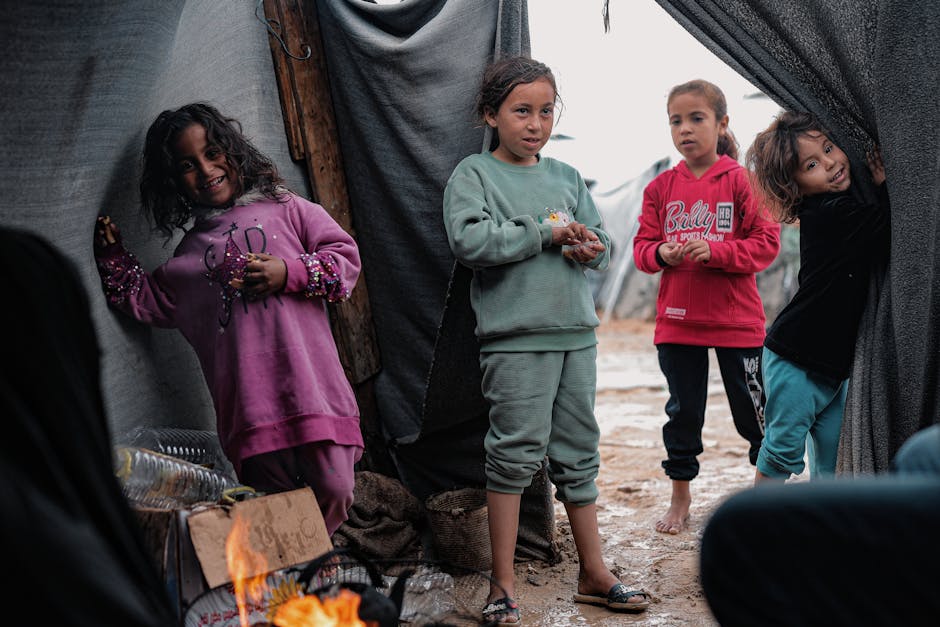
How much should wealthier nations pay to help countries on the frontlines of global migration crises? As conflict and instability displace millions across the Middle East and Africa, Egypt has become a critical but overstretched hub for refugees fleeing war in Sudan, Syria, Yemen, and elsewhere. With over 10 million migrants and refugees now within its borders, the country’s public services, labor markets, and humanitarian infrastructure are under growing strain. Despite billions pledged by the European Union to support Cairo’s efforts, Egyptian officials argue the funding falls far short of what’s needed — raising urgent questions about global responsibility, equity, and the long-term sustainability of migration management in host nations.
What Is Egypt’s Role in the Regional Migration Crisis?

Egypt serves as both a destination and transit point for some of the world’s most vulnerable displaced populations. Since the outbreak of war in Sudan in April 2023, more than 600,000 people have fled into neighboring countries, with Egypt hosting over 500,000 Sudanese refugees alone, according to the United Nations High Commissioner for Refugees (UNHCR). In addition, Egypt continues to shelter hundreds of thousands of Syrians, Yemenis, and Eritreans who arrived during earlier waves of displacement. Unlike many other host countries, Egypt does not operate closed refugee camps; instead, refugees live in urban areas, relying on public hospitals, schools, and housing markets already stretched thin. This integration model is humane but costly, requiring sustained investment in healthcare, education, and social services — costs that Cairo says it cannot bear indefinitely without deeper international support.
What Support Has the EU Provided — and Is It Sufficient?

The European Union has committed approximately €3.1 billion (about $3.5 billion) in financial assistance to Egypt between 2021 and 2027, with a significant portion allocated to migration management, economic stabilization, and job creation. This includes funding for the EU-Egypt Sustainable Energy and Migration Support Program, aimed at improving infrastructure and employment opportunities for both Egyptians and displaced communities. However, Egyptian officials argue that the actual cost of hosting millions of migrants far exceeds this amount. In a 2023 statement, Egypt’s Minister of International Cooperation, Rania Al-Mashat, emphasized that every refugee hosted in Egypt costs the state an estimated $1,500 annually in direct and indirect expenditures. At current levels, that would amount to over $1.5 billion per year — nearly half of the EU’s entire multi-year package. Aid groups like the International Rescue Committee have echoed Cairo’s concerns, warning that underfunded responses risk destabilizing host communities and fueling social tensions.
Are There Alternative Views on Responsibility and Aid?

While Egypt and humanitarian organizations stress the need for greater burden-sharing, some European policymakers argue that aid must be tied to stronger migration control measures. Critics in Brussels contend that without enforceable agreements on readmission and border management, increased funding may not effectively reduce irregular migration to Europe. A 2022 European Parliament report noted that while Egypt has improved documentation and registration systems for migrants, gaps remain in protecting asylum seekers’ legal rights and preventing deportations to unsafe countries. Additionally, some analysts caution against creating dependency on foreign aid, suggesting that long-term solutions require regional cooperation, economic reforms, and investment in countries of origin to address root causes of displacement. Still, others counter that expecting low- and middle-income host nations to absorb millions of displaced people without robust, predictable financing is neither fair nor sustainable.
What Are the Real-World Consequences of Underfunding?

The strain of underfunded migration support is already visible across Egyptian cities. In Cairo’s Nasr City and Maadi districts, where many Sudanese families have settled, schools report overcrowding and shortages of teaching materials. Public hospitals face extended wait times as demand surges. Meanwhile, labor markets are tightening, with local workers and refugees competing for low-wage jobs in construction, cleaning, and informal trade. Human rights groups have documented rising xenophobia and discrimination, particularly against sub-Saharan Africans. In 2023, the Egyptian Initiative for Personal Rights reported several incidents of hate speech and arbitrary detentions targeting migrant communities. Without increased investment in social cohesion programs and equitable service delivery, experts warn that unrest could escalate — potentially undermining both national stability and regional peace efforts.
What This Means For You
Global migration is no longer a distant issue confined to border policies — it’s a shared challenge with economic, ethical, and security dimensions that affect societies worldwide. How industrialized nations respond to the burden borne by frontline countries like Egypt will shape the future of international cooperation. If wealthier states fail to provide adequate, predictable funding, they risk fueling instability in strategically important regions and violating humanitarian principles. For the average citizen, this translates into broader implications for global security, economic fairness, and moral leadership on human rights.
As displacement levels reach record highs — with over 110 million people forcibly displaced worldwide, per UNHCR — a critical question remains: Can the international community build a fairer system for sharing the costs and responsibilities of hosting refugees, or will frontline nations continue to shoulder the burden alone?
Source: Euronews