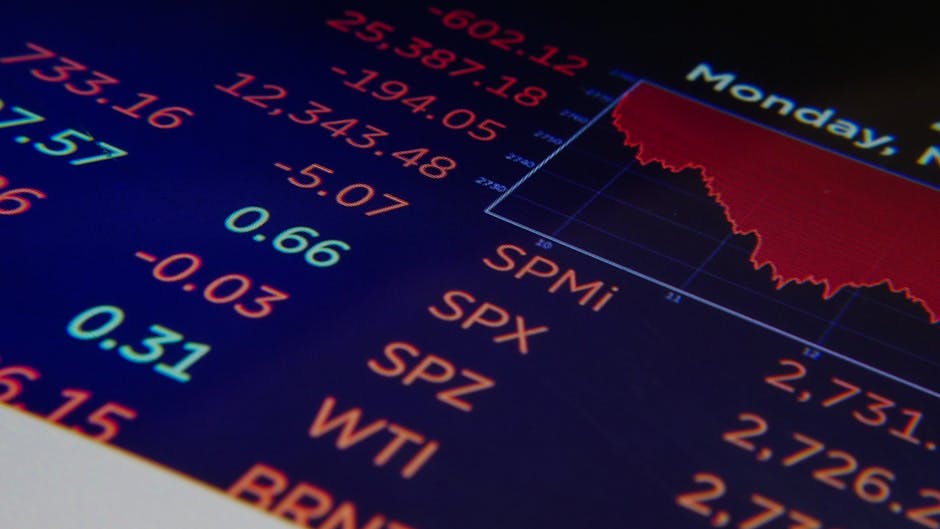
- Iran’s stock market shut down for three days due to escalating regional tensions and potential panic selling amid a drone and missile attack.
- The partial reopening highlights concerns about selective control, economic fragility, and the growing influence of geopolitical conflict on financial stability.
- Iran’s financial system faced a rare three-day closure, indicating a significant intervention by regulators to prevent a freefall in investor confidence.
- Key sectors like energy and steel remained frozen, raising questions about the resilience of Iran’s economy under pressure.
- The shutdown was triggered by a rapid escalation in Middle East tensions after Iran launched a large-scale drone and missile attack.
What happens to a national economy when war looms and the stock market slams shut? After a rare three-day closure of its main bourse, Iran’s financial system faced this question head-on as trading resumed under strained conditions. The shutdown—one of the longest in the country’s recent history—came amid escalating regional tensions following targeted U.S. and Israeli strikes on Iranian-linked facilities in Syria and Iraq. While the broader market reopened, key sectors like energy and steel remained frozen, raising concerns about selective control, economic fragility, and the growing influence of geopolitical conflict on financial stability. How did Iran reach this point, and what does the partial reopening reveal about the state of its economy under pressure?
Why Was Iran’s Stock Market Closed for Three Days?

The Tehran Stock Exchange (TSE) halted trading on Sunday, April 14, 2024, in response to a rapid escalation in Middle East tensions after Iran launched a large-scale drone and missile attack on Israel in retaliation for an earlier strike on its Damascus consulate. Israel, supported by the U.S., intercepted most of the projectiles, but the exchange of fire triggered nationwide uncertainty. Iranian authorities cited “extraordinary market conditions” and potential for panic selling as justification for the suspension. The three-day closure marked a significant intervention by regulators to prevent a freefall in investor confidence. Notably, the shutdown was not economy-wide—only the main equity market was paused, while currency and commodity markets remained active, suggesting a targeted effort to contain financial fallout without freezing the entire financial system.
Which Sectors Remained Excluded From Reopening?

When the TSE resumed operations on Wednesday, several major firms were still barred from trading, particularly those in the energy, petrochemical, and steel sectors—industries directly targeted in recent U.S. and Israeli military actions. Companies like Kharg Petrochemical and Esfahan Steel, both located near strategic industrial zones, were excluded from the reopening, according to a statement by the Securities and Exchange Organization of Iran. Analysts suggest this selective exclusion was designed both to assess damage-related financial impacts and to prevent speculative trading on unverified information. Reuters reported that regulators feared a surge in volatility if shares of damaged or vulnerable firms were allowed to trade prematurely. This tiered reopening underscores the blurred line between national security and financial regulation in Iran, where state-owned enterprises dominate critical sectors and are deeply entwined with political and military interests.
Are There Alternative Views on the Market Shutdown?

While the government defended the closure as a necessary stabilizing measure, some economists and market observers criticized it as an overreach that undermines market integrity. Kaveh Ahmadi, an independent financial analyst based in Tehran, argued that halting trading only delays inevitable corrections and erodes trust in the exchange’s predictability. “Markets hate uncertainty, and a forced shutdown creates more of it,” he told BBC News. Others pointed out that similar tensions in the past—such as the 2020 killing of General Qasem Soleimani—did not result in a multi-day market closure, raising questions about whether the decision this time was as much about controlling narratives as managing risk. There is also speculation that the pause allowed state actors time to coordinate messaging and possibly position assets ahead of renewed trading—a concern echoed by international investors wary of Iran’s opaque financial governance.
What Are the Real-World Economic Impacts?

The shutdown has had tangible ripple effects across Iran’s economy. Retail investors, who have increasingly turned to the stock market as inflation erodes savings, faced anxiety and financial limbo during the closure. Many had planned to liquidate holdings to cover expenses, only to find their assets frozen. Meanwhile, the exclusion of major industrial firms from trading has disrupted supply chain financing and delayed critical capital-raising efforts. Internationally, the incident has reinforced perceptions of Iran’s markets as high-risk and politically driven, potentially deterring foreign investment even further. The Iranian rial, already under pressure, weakened slightly against the U.S. dollar during the trading halt, reflecting diminished confidence. These effects highlight how military conflict, even when not directly involving Iran’s mainland, can trigger domestic economic instability through financial market mechanisms.
What This Means For You
If you’re invested in emerging markets or monitor global financial stability, Iran’s recent stock market closure offers a stark reminder: geopolitical risk isn’t just about borders and battles—it’s embedded in trading floors and balance sheets. When national security and market regulation blur, investor predictability suffers. For ordinary Iranians, the shutdown meant lost access to savings and heightened economic anxiety. Globally, it signals that regional flashpoints can disrupt financial systems in unpredictable ways, especially in countries where state control over markets remains high.
Looking ahead, a critical question remains: Can a stock market truly function as a transparent financial institution when it’s subject to emergency closures based on military developments? As conflicts increasingly intersect with economic infrastructure, the world may need new frameworks to protect market integrity during geopolitical crises—especially in vulnerable economies where the line between war and wallet is growing ever thinner.
Source: Al Jazeera