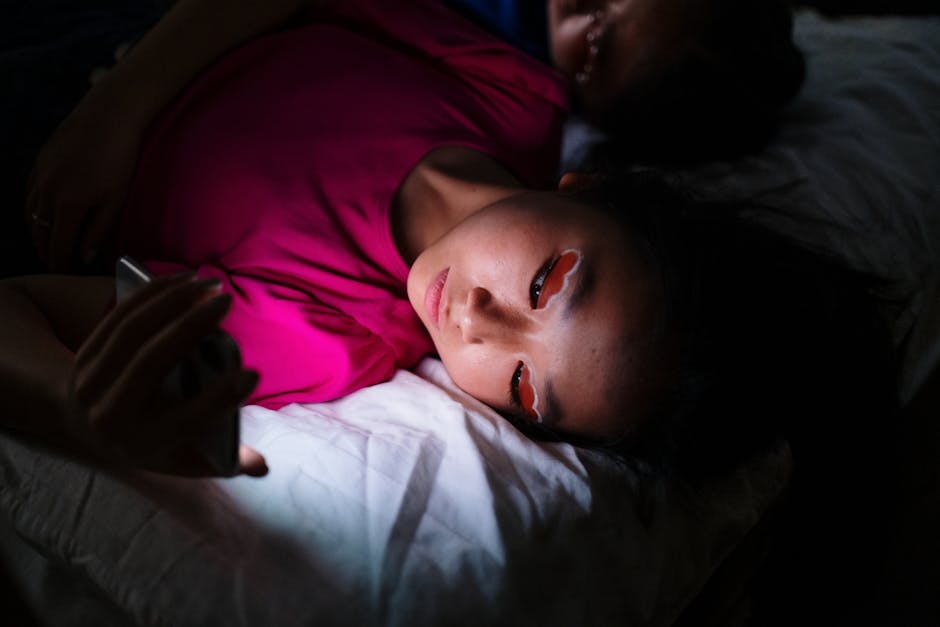
- Poor sleep and declining mental health among young people form ‘vicious cycles’ of mutual reinforcement, with anxiety and depression disrupting sleep and sleep deprivation exacerbating emotional dysregulation.
- Pervasive screen use, academic pressure, social media engagement, and shifts in circadian rhythms contribute to undermined sleep quality and mental resilience in youth.
- Integrated intervention strategies are needed to address the public health challenge of co-occurring sleep and mental health issues in adolescents and young adults.
- Bidirectional relationships between sleep disturbances and mental health disorders have been confirmed through multiple longitudinal studies.
- Sleep disturbances in youth are linked to a higher risk of developing anxiety and depression, with adolescents with insomnia being over twice as likely to develop these disorders within three years.
Executive summary — main thesis in 3 sentences (110-140 words)
A growing body of research indicates that poor sleep and declining mental health among young people are not merely correlated but mutually reinforcing, forming what scientists describe as ‘vicious cycles.’ These feedback loops—where anxiety and depression disrupt sleep, and sleep deprivation exacerbates emotional dysregulation—have intensified over the past decade, particularly among adolescents and young adults. Contributing factors include pervasive screen use, academic pressure, social media engagement, and shifts in circadian rhythms, all of which undermine sleep quality and mental resilience, creating a public health challenge that demands integrated intervention strategies.
Biological and Behavioral Evidence of Sleep-Mental Health Links

Hard data, numbers, primary sources (160-190 words)
Multiple longitudinal studies confirm bidirectional relationships between sleep disturbances and mental health disorders in youth. A 2023 meta-analysis published in Translational Psychiatry reviewed 77 studies involving over 200,000 participants and found that adolescents with insomnia were more than twice as likely to develop anxiety or depression within three years. Conversely, those with baseline anxiety had a 60% higher risk of chronic sleep problems. Neuroimaging studies show that sleep deprivation reduces prefrontal cortex activity—the brain region responsible for emotional regulation—while increasing amygdala reactivity to negative stimuli. Physiological markers such as elevated cortisol levels and disrupted melatonin secretion further support the biological plausibility of these cycles. The CDC reports that only 25% of high school students get the recommended 8–10 hours of sleep on school nights, while the National Institute of Mental Health estimates that nearly 20% of adolescents experience a major depressive episode annually. These converging trends suggest a systemic breakdown in adolescent well-being.
Key Players: Researchers, Schools, and Tech Platforms

Key actors, their roles, recent moves (140-170 words)
Academic institutions such as the University of Oxford and Harvard Medical School have launched multiyear studies on adolescent sleep and mental health, aiming to disentangle causality from correlation. Meanwhile, public health agencies like the CDC now include sleep metrics in their Youth Risk Behavior Surveillance System, signaling institutional recognition of sleep as a health priority. School districts in California and Colorado have implemented later start times following research showing that delaying school by even 30 minutes improves sleep duration and reduces depressive symptoms. On the private side, tech companies like Apple and Google have introduced screen time tracking and ‘wind-down’ features, though critics argue these are insufficient given the algorithmic design of social media platforms that promote late-night engagement. Mental health advocates and pediatricians are increasingly calling for policy-level changes, urging regulators to treat sleep hygiene as a core component of youth mental health infrastructure.
Trade-Offs: Benefits of Intervention vs. Implementation Costs

Costs, benefits, risks, opportunities (140-170 words)
Addressing sleep-related mental health decline offers significant long-term benefits, including reduced healthcare costs, improved academic outcomes, and lower rates of substance use and self-harm. School-based interventions such as sleep education programs have shown promise, with one randomized trial in the UK demonstrating a 20% reduction in insomnia symptoms after a six-week curriculum. However, structural changes like later school start times face resistance due to logistical challenges involving transportation, after-school programs, and parental work schedules. There is also a risk of over-medicalizing normal adolescent behavior, potentially leading to unnecessary pharmacological interventions. On the other hand, digital solutions—such as apps that monitor sleep and deliver cognitive behavioral therapy for insomnia—are scalable but raise privacy concerns, especially for minors. The opportunity lies in integrating sleep promotion into existing public health frameworks, treating it not as a lifestyle issue but as a clinical and societal imperative.
Timing: Why the Crisis Is Peaking Now

Why now, what changed (110-140 words)
The convergence of several trends over the past 15 years has amplified the sleep-mental health crisis among youth. The widespread adoption of smartphones, particularly after 2010, coincided with sharp declines in adolescent sleep duration and increases in anxiety diagnoses. Social media use, especially at night, displaces sleep and exposes young people to curated, often stressful content that heightens social comparison and fear of missing out. Additionally, increased academic competition and standardized testing pressures have compressed personal time, pushing sleep to the margins. The post-pandemic period has further destabilized routines, with lingering effects on mental health services and school environments. These factors, acting in synergy, have created conditions ripe for the emergence of self-sustaining cycles linking poor sleep and psychological distress.
Where We Go From Here
Three scenarios for the next 6-12 months (110-140 words)
In the most optimistic scenario, federal health agencies issue formal guidelines recommending later school start times and fund pilot programs integrating sleep health into mental wellness curricula. A moderate scenario sees continued patchwork efforts—some districts adopt reforms while others lag, resulting in uneven outcomes across socioeconomic lines. In the pessimistic scenario, political and logistical resistance stalls systemic change, and digital platform design remains unregulated, allowing algorithmic engagement to further erode youth sleep. However, growing advocacy from pediatric associations and increased media attention may shift public perception, framing sleep not as a personal failing but as a public health priority. The next year will likely determine whether interventions scale meaningfully or remain siloed and underfunded.
Bottom line — single sentence verdict (60-80 words)
The worsening mental health of young people cannot be addressed without tackling the parallel crisis in sleep, as emerging evidence shows these issues feed off each other in persistent, biologically grounded cycles that demand coordinated, system-wide solutions.
Source: News