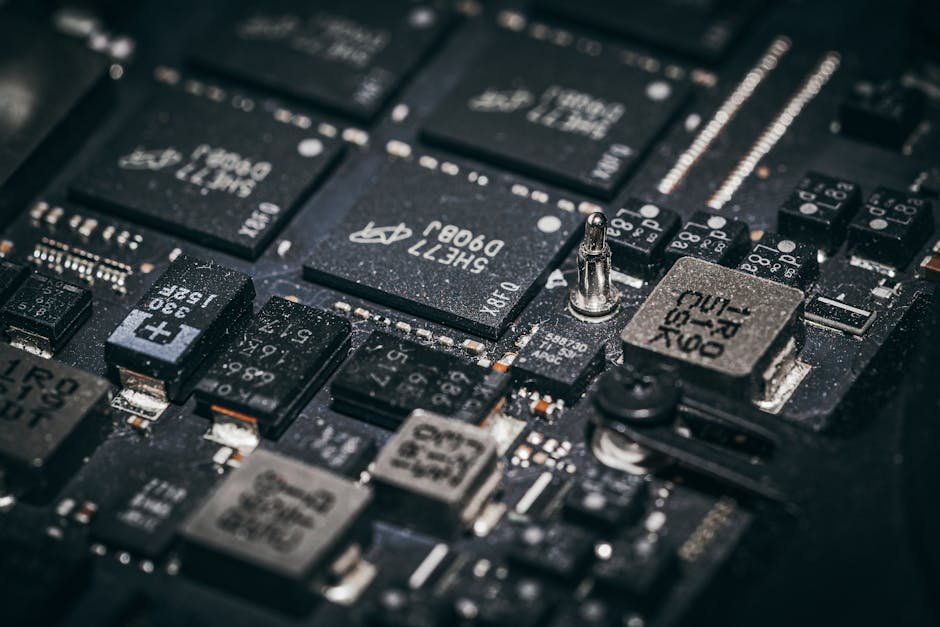
- Semiconductor stocks have surpassed software as tech leaders, driven by the growing demand for AI infrastructure.
- The rise of generative AI has elevated semiconductor companies to central architects of the digital economy.
- AI workloads require massive upfront investment in hardware, shifting capital from legacy software to semiconductor firms.
- Training large language models can cost tens of millions of dollars, demanding thousands of high-performance GPUs.
- Investors are redirecting capital from software companies to semiconductor firms that build the physical backbone of AI.
For over a decade, software companies like Salesforce and Adobe defined the future of tech investing—scalable, asset-light, and endlessly profitable. But that era has ended. According to CNBC’s Jim Cramer, the real power in technology markets has shifted decisively to semiconductor and AI infrastructure firms. In 2023 alone, Nvidia’s market value surged by over $1 trillion, more than the combined gains of the top five enterprise software companies. This isn’t a cyclical bounce—it’s a structural realignment. The companies building the physical backbone of artificial intelligence, from advanced chips to data center infrastructure, are now the new gatekeepers of innovation and return. As AI workloads demand unprecedented computational power, investors are redirecting capital from legacy software plays to the factories and fabs enabling the next technological frontier.
The Rise of the Silicon Backbone

What changed? The explosion of generative AI. Unlike traditional software, which thrives on subscription models and marginal distribution costs, AI requires massive upfront investment in hardware. Training large language models like GPT-4 can cost tens of millions of dollars and demands thousands of high-performance GPUs. This has elevated semiconductor companies—particularly those like Nvidia, AMD, and TSMC—from supporting players to central architects of the digital economy. As Cramer emphasized, ‘You don’t build the future on SaaS alone; you build it on silicon.’ The market has responded accordingly: since 2020, the PHLX Semiconductor Index (SOX) has outperformed the iShares Expanded Tech-Software ETF (IGV) by over 40 percentage points. This shift signals not just a rotation in stock performance, but a fundamental redefinition of technological value creation.
Key Players Reshaping the Landscape

The new hierarchy of tech is being led by a tightly knit ecosystem of chipmakers, equipment suppliers, and AI-first cloud providers. Nvidia, with its dominant CUDA platform and H100 GPUs, has become the de facto standard for AI training. Its data center revenue jumped 427% year-over-year in Q1 2024, underscoring the insatiable demand. Meanwhile, TSMC, the world’s most advanced chip foundry, is investing $100 billion in new fabrication plants across Arizona and Taiwan to meet future capacity needs. Companies like Broadcom and ASML are also seeing record orders—ASML’s extreme ultraviolet (EUV) lithography machines, which cost over $150 million each, are booked years in advance. Even legacy firms like Intel are attempting comebacks with aggressive investments in foundry services and next-gen packaging. On the demand side, Microsoft, Google, and Amazon are pouring billions into AI-optimized data centers, locking in long-term chip supply agreements. The axis of power has clearly moved from software engineers to semiconductor physicists and supply chain strategists.
Why This Shift Is Structural, Not Cyclical

Analysts point to three interlocking forces driving this transformation: the computational intensity of AI, the physical limits of Moore’s Law, and geopolitical supply chain fragility. AI models are growing exponentially in complexity—OpenAI’s GPT-3 had 175 billion parameters; GPT-4 is estimated to have over 1 trillion. Each leap requires orders of magnitude more processing power, making chip efficiency and availability critical. At the same time, the slowing pace of transistor miniaturization means gains can no longer come from density alone—innovation is shifting to chip architecture, packaging, and interconnects. This benefits firms with deep R&D capabilities and manufacturing scale. Additionally, U.S.-China tech decoupling has forced nations to reshore semiconductor production, accelerating public and private investment. The CHIPS and Science Act has allocated $52 billion in subsidies, while the European Union’s Chips Act targets €43 billion. These aren’t temporary stimuli—they’re long-term industrial policies designed to secure technological sovereignty, cementing the sector’s strategic importance.
Who Stands to Gain—and Who’s at Risk

The implications are far-reaching. Investors overweight in legacy software may face prolonged underperformance as valuation multiples compress. Companies unable to integrate AI at scale risk obsolescence. Conversely, semiconductor firms, equipment makers, and energy providers (data centers consume vast amounts of power) stand to benefit. Regions with robust chip ecosystems—Taiwan, South Korea, and the U.S. Sun Belt—are gaining geopolitical leverage. Workers with skills in chip design, materials science, and AI infrastructure are seeing soaring demand, while traditional software roles face automation and consolidation. Even financial markets are adapting: options trading in semiconductor stocks has surged, and ETFs like SOXX are attracting record inflows. The shift also raises concerns about concentration risk—Nvidia alone accounts for over 80% of AI accelerator sales—and potential regulatory scrutiny, as seen in recent antitrust reviews of chip industry mergers.
Expert Perspectives
While Cramer’s view is widely echoed, not all experts agree on the permanence of this shift. MIT economist David Autor warns that ‘hardware booms can be brittle—if AI progress plateaus, demand could collapse.’ Others, like ARK Invest’s Cathie Wood, believe software will regain prominence through AI-native applications that deliver direct user value. Yet, most concede that the current cycle is hardware-led. As Semiconductors Industry Association CEO John Neuffer stated, ‘We’re in a new era where chips are as strategic as oil was in the 20th century.’ The consensus? Software isn’t dead, but it’s no longer the primary engine of tech value creation.
What comes next? Watch for breakthroughs in chiplet technology, sovereign AI initiatives, and the performance of next-gen models like GPT-5. The key question is whether AI can deliver productivity gains that justify the massive capital outlays. If it does, the semiconductor-led paradigm will deepen. If not, a reckoning looms. One thing is certain: as Cramer insists, the world of tech investing has changed—and there’s no going back.
Source: CNBC