In a sleek Shenzhen innovation center, rows of gleaming Huawei Ascend 910B processors hum quietly inside AI training clusters, powering facial recognition algorithms, large language models, and autonomous driving simulations. Just two years ago, these racks would have been filled with Nvidia’s A100 or H100 GPUs — the gold standard in artificial intelligence computing. Today, they are a monument to geopolitical realignment. Inside boardrooms across Beijing and Shenzhen, executives no longer reach for U.S.-made chips. Instead, they turn to Huawei, whose homegrown processors now underpin China’s AI ambitions, marking a quiet but profound shift in the global technology hierarchy. The once-unassailable dominance of American semiconductor firms in China has crumbled — not through market failure, but by design.
Nvidia’s Retreat from China’s AI Market

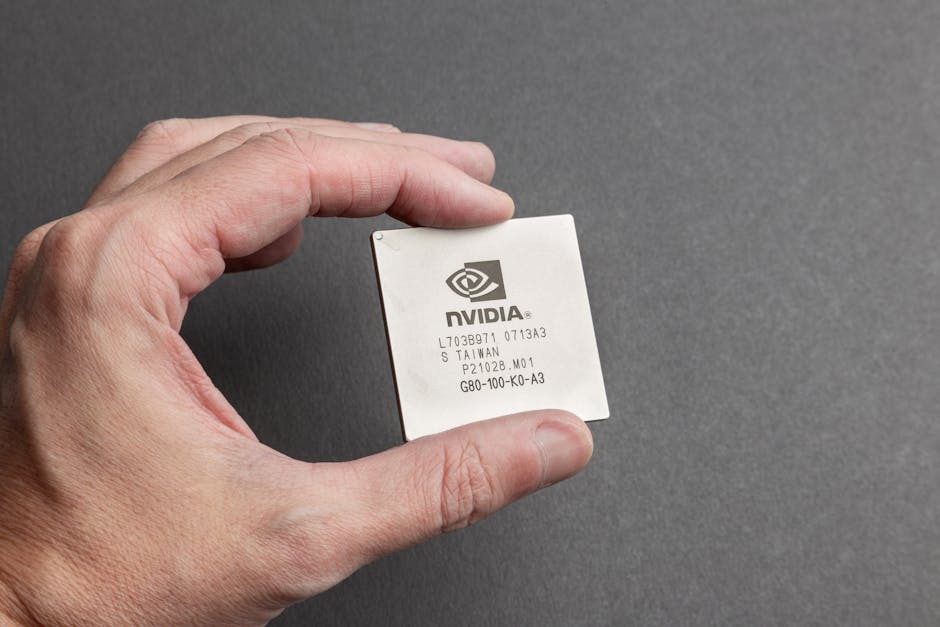
Nvidia CEO Jensen Huang recently acknowledged what industry analysts have long observed: the company has “largely conceded” China’s advanced AI chip market to Huawei. Speaking candidly at a public forum, Huang attributed the shift to stringent U.S. export controls that have barred Nvidia from selling its most powerful AI processors to Chinese customers since 2022. In response, the company introduced downgraded chips like the A800 and H800 — specifically tailored to comply with American regulations — but even these were eventually restricted. By 2024, sales of high-end Nvidia AI chips in China had plummeted by over 90%, according to internal company disclosures. Meanwhile, Huawei, bolstered by massive state-backed investment and a renewed focus on self-reliance, ramped up production of its Ascend series, closing the performance gap. Chinese tech giants including Alibaba, Baidu, and Tencent have now pivoted to Huawei’s chips for large-scale AI model training, signaling a permanent realignment in supply chains.
How U.S. Sanctions Accelerated China’s Chip Independence

The erosion of Nvidia’s position in China did not happen overnight. It was the direct result of a years-long U.S. campaign to restrict China’s access to advanced semiconductor technology, aimed at preserving American leadership in AI and national security. In October 2022, the Biden administration imposed sweeping export controls targeting chips used in AI and supercomputing, effectively cutting off Nvidia’s A100 and H100 from Chinese buyers. The move was intended to slow China’s military and technological advancement, but it had an unintended consequence: it galvanized China’s domestic semiconductor industry. Huawei, once crippled by earlier U.S. sanctions that cut off its access to TSMC’s foundries, rebounded by partnering with SMIC, China’s leading chipmaker, to produce advanced 7-nanometer processors domestically. By 2023, Huawei had reverse-engineered much of the functionality of Nvidia’s high-end chips, allowing it to fill the void left by American withdrawal. What began as a defensive strategy became a strategic leap forward.
The People Reshaping China’s Semiconductor Destiny

At the center of this transformation is Huawei’s rotating CEO system and the leadership of Ren Zhengfei, the company’s reclusive founder, who has framed the semiconductor push as a matter of national survival. Ren, a former engineer in the People’s Liberation Army, has long emphasized self-reliance, famously urging employees to “build a trench and survive independently.” Behind the scenes, teams of engineers at Huawei’s 2012 Lab have worked in near-total secrecy to develop the Da Vinci architecture, the foundation of the Ascend chips. Meanwhile, Chinese state planners at the Ministry of Industry and Information Technology have funneled billions into semiconductor R&D through the “Big Fund” initiative, prioritizing AI chips as a strategic sector. These individuals — from state bureaucrats to underground chip designers — are not just building processors; they are constructing a parallel technological ecosystem, insulated from Western influence and driven by a shared mission of technological sovereignty.
Consequences for Global Tech and Trade

The shift carries profound implications for both Chinese and global technology markets. For Nvidia, the loss of China — once a quarter of its revenue — represents a structural blow, forcing it to diversify into software, data centers, and robotics. For U.S. policymakers, it raises urgent questions about whether export controls are achieving their intended goals or merely accelerating China’s path to self-sufficiency. On the ground, Chinese AI firms now face performance trade-offs — Huawei’s Ascend 910B still lags slightly behind the H100 in raw compute — but the gap is narrowing. More critically, the fragmentation of the global chip market threatens to create two parallel AI ecosystems: one led by the U.S. and its allies, another by China and its partners. This decoupling could undermine interoperability, increase development costs, and stifle innovation worldwide.
The Bigger Picture
What’s unfolding is not just a corporate rivalry, but a redefinition of technological power in the 21st century. The semiconductor has become the new oil — a strategic resource over which nations are willing to wage economic wars. Nvidia’s retreat from China signals that geopolitical forces now outweigh market dynamics in shaping technological trajectories. As countries prioritize national security over global integration, the era of a unified, open tech stack may be ending. Instead, we are entering a multipolar digital world, where innovation is siloed, supply chains are weaponized, and competition is less about efficiency than resilience.
What comes next is uncertain. Nvidia continues to innovate, recently unveiling the Blackwell architecture to maintain its edge outside China. But Huawei is not standing still — rumors suggest a next-generation Ascend chip will close the performance gap entirely by late 2025. The race is no longer just about who builds the best chip, but who can sustain technological independence in an age of fragmentation. As Huang himself noted, “The world has changed.” And in that change, the balance of power in AI may have shifted for good.
Source: CNBC