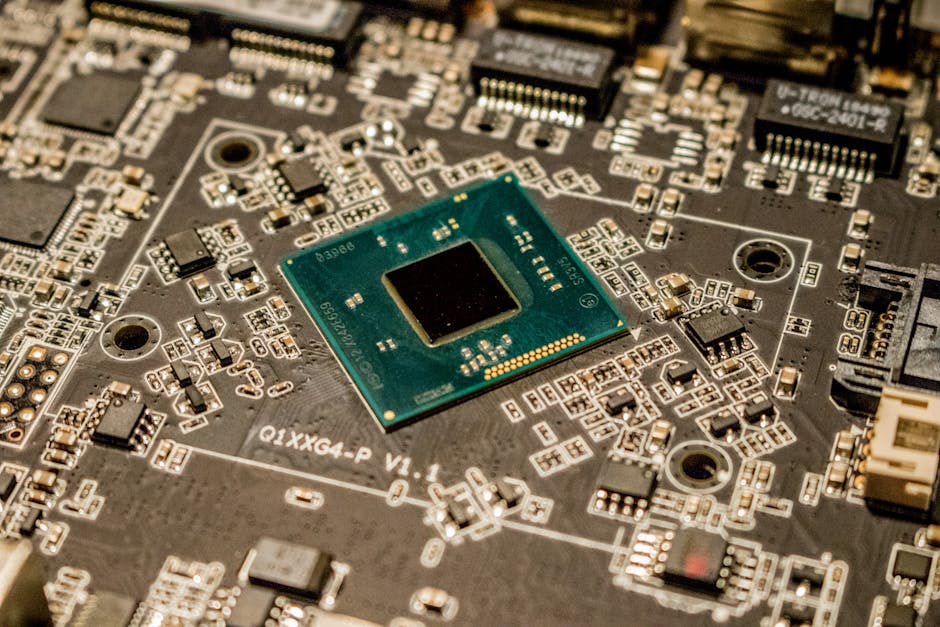
- Nvidia CEO Jensen Huang revealed a $200 billion market opportunity for AI CPUs, expanding the company’s focus beyond graphics processing units.
- AI agent CPUs require dedicated processing brains to enable autonomous decision-making and interaction in dynamic environments.
- Nvidia’s pivot to AI CPUs marks a strategic shift in the industry, driven by the evolution of AI systems from reactive tools to proactive agents.
- AI agents demand processors optimized for continuous reasoning, memory management, and real-time decision-making, unlike traditional workloads.
- The rise of AI agent CPUs signals a new computing era where artificial agents can think, decide, and interact without constant human input.
In a quiet corner of a packed auditorium at the annual Computex conference in Taipei, Jensen Huang stepped onto the stage wearing his signature black leather jacket, a look that has become as much a part of his brand as the chips his company designs. The air hummed with anticipation. Screens behind him flashed schematics of microprocessors, neural networks, and futuristic cityscapes—symbols of a world increasingly run by artificial intelligence. As the crowd settled, Huang leaned into the microphone and delivered a statement that rippled through the tech world: Nvidia has found a new $200 billion market, not in GPUs, but in CPUs designed specifically for AI agents. It was not just a product announcement. It was a declaration of a new computing era—one where artificial agents don’t just assist humans but act autonomously, requiring dedicated processing brains to think, decide, and interact.
The Rise of AI Agent CPUs

Nvidia’s pivot toward CPUs for AI agents marks a strategic expansion beyond its long-standing dominance in graphics processing units. Huang explained that as AI systems evolve from reactive tools to proactive agents—software entities capable of performing tasks without constant human input—they demand a new class of processors optimized for continuous reasoning, memory management, and real-time decision-making. Unlike traditional workloads, AI agents operate in dynamic environments, requiring persistent state, contextual awareness, and low-latency responses. These needs, Huang argued, cannot be fully met by GPUs alone. Enter the CPU: not as a replacement, but as a specialized companion chip designed to orchestrate AI workflows. According to Nvidia’s internal estimates, the global infrastructure for AI agents could generate $200 billion in demand for such processors over the next decade—a market the company is positioning itself to lead.
How We Got Here: From Gaming Chips to AI Brains

The journey to this moment began decades ago, when Nvidia started designing GPUs for video games—highly parallel processors capable of rendering complex visuals in real time. Engineers soon realized these chips were also exceptionally good at handling the matrix computations that underpin deep learning. The breakthrough came in the early 2010s, when researchers began using Nvidia GPUs to train large neural networks, accelerating AI development by orders of magnitude. By 2016, the company had rebranded itself as an AI computing leader. Its CUDA platform became the de facto standard for machine learning, and data centers worldwide installed Nvidia hardware to power everything from language models to self-driving cars. Now, with AI agents emerging as the next frontier—autonomous entities that schedule meetings, manage supply chains, or even conduct scientific research—Huang sees a parallel opportunity: just as GPUs unlocked AI training, purpose-built CPUs can unlock AI agency.
The Architects of Autonomous Intelligence

At the heart of this transformation is Jensen Huang himself, a founder who has steered Nvidia with near-legendary foresight. His background in electrical engineering and computer science, combined with an almost obsessive focus on systems-level design, has enabled the company to anticipate shifts before they become mainstream. Huang is not alone; Nvidia’s architecture team, led by figures like Chief Scientist Bill Dally, has spent years researching how to optimize entire computing stacks for AI workloads. Their insight is that future AI systems won’t just run on isolated chips but on tightly integrated platforms where GPUs handle heavy computation while CPUs manage orchestration, security, and inter-agent communication. This vision requires rethinking the CPU not as a general-purpose workhorse but as a specialized intelligence coordinator—one that can maintain context, execute policies, and interface with external systems reliably and efficiently.
Consequences for Industry and Infrastructure

If Nvidia succeeds in capturing a significant share of this $200 billion market, the implications for the tech industry will be profound. Cloud providers like Amazon Web Services, Microsoft Azure, and Google Cloud may soon adopt hybrid GPU-CPU server designs optimized for AI agents, reshaping data center economics. Software developers will need new tools to build and deploy agent-based applications, potentially accelerating the shift toward autonomous digital employees. Competitors such as AMD and Intel, already struggling to catch up in AI accelerators, now face another front in the silicon arms race. More broadly, the rise of AI agents powered by dedicated hardware could accelerate automation across sectors—from customer service and logistics to healthcare and finance—raising both productivity gains and ethical questions about job displacement and algorithmic accountability.
The Bigger Picture
This shift reflects a deeper transformation in how we conceptualize computing. For decades, computers were tools that followed explicit instructions. Now, they are evolving into entities that act on intentions. Nvidia’s bet on AI agent CPUs signals a move from reactive computing to proactive intelligence—a world where machines don’t just process data but pursue goals. This transition parallels earlier inflection points, like the shift from mainframes to personal computers or from desktops to smartphones. But unlike those changes, this one is not just about access or mobility; it’s about agency. And if history is any guide, the company that builds the foundational hardware often shapes the trajectory of the entire ecosystem.
What comes next is a new era of computing architecture, one where CPUs and GPUs are no longer siloed but unified in purpose: to give artificial agents the cognitive infrastructure they need to operate independently. Nvidia, already a titan of AI acceleration, is now laying the groundwork to become the backbone of autonomous intelligence. Whether competitors can respond in time, and whether society is ready for the wave of automation this enables, remains to be seen. But one thing is clear—Jensen Huang isn’t just predicting the future. He’s building it, one transistor at a time.
Source: TechCrunch