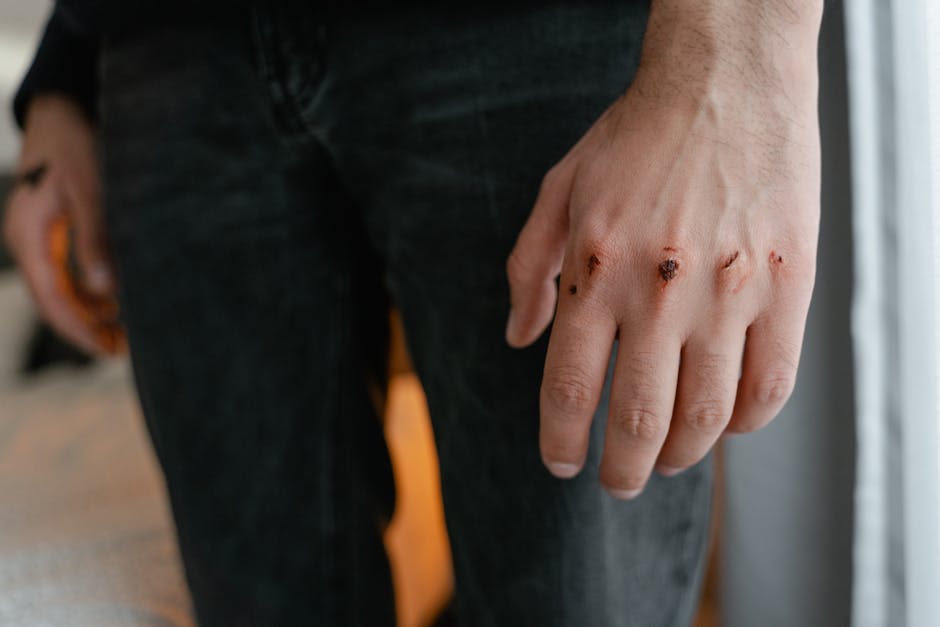
- A new senolytic drug, ABT-263, has been shown to accelerate wound healing in older mice by 50%.
- The treatment targets and eliminates ‘zombie cells’ that accumulate over time, contributing to aging skin.
- ABT-263 appears to reverse age-related decline in skin repair by reducing chronic inflammation and tissue degeneration.
- Researchers observed that wounds in treated older mice healed nearly as fast as those in young mice.
- The breakthrough discovery raises hopes for a future where aging skin heals as quickly as young skin.
Can aging skin truly be reversed? Scientists are now asking this question with renewed urgency after a groundbreaking discovery: a topical drug not only rejuvenates aged skin but also dramatically accelerates wound healing. As people live longer, chronic wounds—such as pressure ulcers and diabetic sores—have become a growing burden on global health systems. These injuries often resist treatment in older adults, largely due to the biological slowdown that comes with age. Now, a new compound called ABT-263 is challenging long-held assumptions about the inevitability of age-related decline in skin repair. By targeting and eliminating so-called ‘zombie cells’ that accumulate over time, the treatment appears to turn back the clock at a cellular level, raising hopes for a future where aging skin heals as quickly as young skin.
What Does ABT-263 Do to Aged Skin?

ABT-263, also known as navitoclax, is a senolytic drug designed to selectively remove senescent cells—damaged cells that stop dividing but refuse to die, instead releasing inflammatory signals that impair tissue function. These ‘zombie cells’ build up with age and are strongly linked to chronic inflammation, tissue degeneration, and delayed healing. When applied topically to aged mice in a recent study, ABT-263 cleared these cells from the skin, leading to a striking improvement in wound closure rates. Researchers observed that wounds in treated older mice healed nearly as fast as those in young mice—sometimes in half the time. Crucially, the drug didn’t harm healthy cells. Instead, it triggered a regenerative response, activating genes involved in collagen synthesis, extracellular matrix formation, and cell migration, all essential for robust skin repair. This suggests ABT-263 doesn’t just remove damage—it actively restores the skin’s innate healing capacity.
What Evidence Supports These Anti-Aging Effects?

The findings come from a peer-reviewed study published in Nature Communications, where researchers at the University of Arkansas and the Mayo Clinic collaborated to test ABT-263 on aged mouse models. After applying the drug to skin wounds, they documented a 30–50% reduction in healing time compared to untreated controls. Microscopic analysis confirmed a significant drop in senescent cell markers like p16 and SA-β-gal, while gene expression profiling revealed upregulation of COL1A1 (a key collagen gene) and MMP9, involved in tissue remodeling. “We were stunned by how rapidly the tissue responded,” said Dr. Xu Zhang, lead author of the study. “Not only did the wounds close faster, but the new skin showed improved structural integrity.” The team also noted increased blood vessel formation and fibroblast activity—both vital for nutrient delivery and scar formation. Importantly, no systemic toxicity was observed, a major concern given ABT-263’s previous use in cancer trials, where oral administration caused side effects like thrombocytopenia.
Are There Reasons to Be Cautious About These Results?

Despite the excitement, experts urge caution before translating these findings to humans. First, mice are not people: their skin biology, wound healing processes, and lifespan differ significantly. Dr. Jamie Thompson, a dermatologist at Johns Hopkins not involved in the study, noted, “Senescent cells play complex roles in wound healing—even in aging. Complete elimination might disrupt necessary inflammatory signals in early repair stages.” Others point out that long-term use of senolytics could have unintended consequences, such as impairing scar formation or increasing cancer risk if immune surveillance is compromised. Additionally, ABT-263 was originally developed as a cancer drug, and its systemic version reduces platelet counts, raising safety concerns. While the topical formulation appears safer, large-scale toxicology studies are still needed. There’s also the question of accessibility: senolytic therapies could become expensive, potentially limiting their use to affluent populations unless health systems prioritize equitable distribution.
What Could This Mean for Human Health?

If proven safe and effective in humans, ABT-263 could revolutionize care for millions suffering from chronic wounds. In the U.S. alone, over 6.5 million people experience non-healing wounds annually, costing the healthcare system an estimated $25 billion. Elderly patients, burn survivors, and those with diabetes—whose impaired circulation and nerve damage make healing difficult—could benefit most. Beyond acute wounds, the drug might also be used preventively in high-risk individuals, such as bedridden seniors prone to pressure ulcers. Cosmetic applications are also conceivable: reducing wrinkles, improving skin elasticity, and reversing sun damage. Companies like Unity Biotechnology are already developing senolytic skincare products, though none have reached market approval. The broader implication is a shift in how we treat aging—not as an immutable process, but as a modifiable biological condition.
What This Means For You
While ABT-263 isn’t available for human use yet, its success in animal models signals a turning point in regenerative medicine. For older adults or caregivers managing slow-healing injuries, this research offers tangible hope. It also underscores the importance of supporting science that targets the root causes of aging, rather than just its symptoms. Future skincare and medical treatments may increasingly rely on cellular ‘cleanup’ strategies to maintain tissue health.
But critical questions remain: Will ABT-263 work the same way in human skin? And could long-term use lead to unforeseen side effects? Clinical trials are the next essential step, and researchers are now working to develop formulations suitable for human testing. The journey from mouse to medicine is long—but for the first time, reversing skin aging isn’t just science fiction.
Source: ScienceDaily