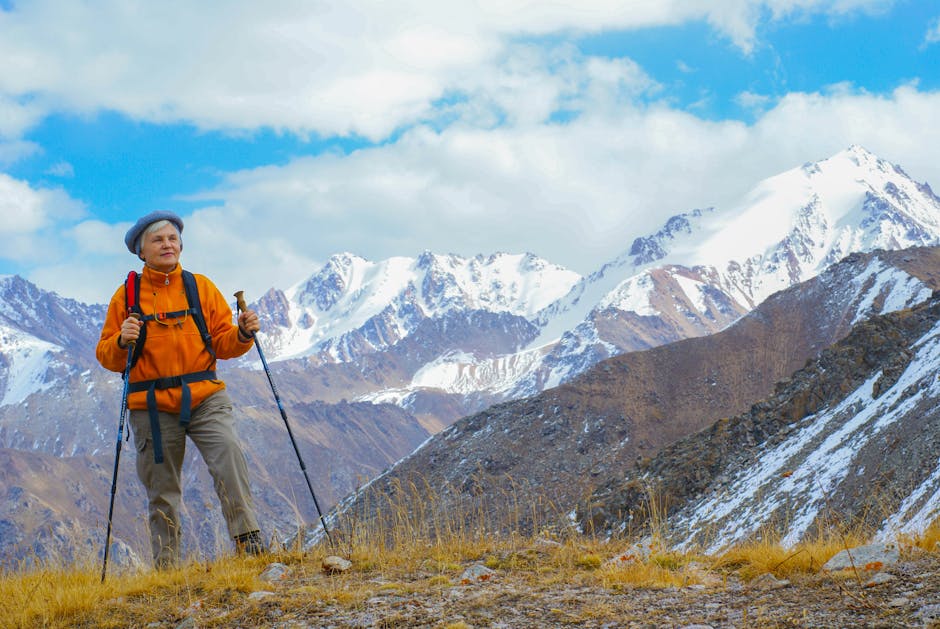
- John Hancock was a doctor, socialist, climber, and adventurer who prioritized service and connection over personal accolades.
- He embarked on the 1987 British Latok 2 Expedition at 54, showcasing his physical stamina and mental toughness.
- Hancock’s medical expertise was crucial to the team, and his calm under pressure made him an invaluable asset.
- The Latok 2 Expedition represented one of the last great unclaimed challenges in Himalayan mountaineering at the time.
- Hancock’s approach to exploration emphasized respect for the people and land he encountered, rather than seeking to conquer them.
High in the Karakoram, where glaciers fracture under the weight of ancient ice and the air thins to a whisper, a lone figure moved through the Hunza Valley in the summer of 1987. Behind him lay the unclimbed summit of Latok 2, a jagged spire of rock and snow that had repelled even the boldest alpinists. Ahead stretched days of rugged descent through high-altitude passes, isolated villages, and stone trails worn by centuries of footfall. That figure was John Hancock—doctor, socialist, climber, and, above all, a man who believed that the measure of a life lay not in accolades but in service and connection. At 54, he was older than most expedition members, yet he carried the same load, endured the same cold, and shared the same dream. When duty called him back to his patients in rural England, he didn’t wait for the team’s retreat. He set off alone, not with urgency, but with curiosity, eager to meet the people of the mountains whose land he crossed with quiet respect.
The Final Ascent That Wasn’t

In 1987, the British Latok 2 Expedition represented one of the last great unclaimed challenges in Himalayan mountaineering. Located in the Gilgit-Baltistan region of what is now Pakistani-administered Kashmir, Latok 2 rises to 7,174 meters and is notorious for its technical difficulty and avalanche risk. The team, composed of elite climbers, selected John Hancock not only for his medical expertise but for his stamina, judgment, and calm under pressure. As expedition doctor, he monitored acclimatization, treated frostnip and altitude sickness, and maintained morale during weeks of isolation. Though the summit was never reached—abandoned due to weather and objective hazards—photos from the expedition show Hancock grinning beside tents buried in snow, helping to ferry supplies, and studying lichens on boulders. His departure was pragmatic: his GP practice in the village of Norton, Suffolk, could not be left indefinitely. Yet rather than fly out from Skardu, he chose to walk, covering nearly 200 kilometers through remote valleys, often sleeping in village homes or under the stars.
From Medicine to the Mountains

John’s affinity for both medicine and mountaineering began early. Born in 1940, he studied at St Thomas’s Hospital Medical School in London, where he also developed a passion for rock climbing in the Peak District and Snowdonia. After qualifying, he rejected urban practice for rural care, settling in Norton in the 1970s. There, he became a beloved figure—known for making house calls in all weather, remembering every patient’s family, and refusing to bill those who couldn’t pay. His political convictions were equally strong. A lifelong socialist, he was active in the Labour Party and championed the NHS as a moral imperative. He saw no contradiction between his ideals and his adventures; to him, climbing was not escapism but a form of engagement—with nature, with risk, with the limits of human endurance. He cycled to work year-round, ran marathons well into his 60s, and led nature walks for schoolchildren, teaching them to identify birdsong and wildflowers.
A Man Among People

John Hancock was shaped by a belief in equality and the dignity of labor. His marriage to my sister deepened his ties to the village, where he was not just a doctor but a neighbor, a mentor, and a friend. Colleagues recall his insistence on treating farmworkers and pensioners with the same attention he gave to council leaders. On the Latok 2 expedition, climbers noted his humility—he never claimed center stage, even when his medical decisions prevented serious injury. Yet his presence was foundational. One teammate later wrote in a mountaineering journal that John “held the soul of the team together.” His solo trek out of the Karakoram was not an afterthought but an extension of this ethos. He relished conversations with Balti villagers, learning phrases in Shina, sketching alpine plants in his notebook, and accepting bowls of apricot soup with gratitude. These encounters, he said, were as meaningful as any summit.
Legacy of a Village Doctor

John’s return to Norton did not mark a retreat from adventure, but a reintegration of it into daily life. He continued to climb in the Alps and the Andes, albeit in smaller groups and with greater emphasis on conservation. In his clinic, he advocated for mental health awareness and environmental health, once leading a campaign against pesticide use near local farms after noticing a spike in neurological complaints. For younger GPs, he became a model of holistic care—someone who viewed illness not in isolation but within the context of community, labor, and ecology. His death in 2023, at the age of 83, prompted an outpouring from patients, climbers, and former colleagues. The village hall hosted a memorial where stories were shared not of dramatic rescues, but of quiet kindnesses: the time he delivered a baby during a snowstorm, the letters he wrote on behalf of disabled patients, the way he always knelt to speak to children at eye level.
The Bigger Picture
In an era when medicine grows increasingly specialized and remote, John Hancock’s life offers a counter-narrative—one of presence, principle, and interdisciplinary curiosity. He embodied the idea that a doctor’s role extends beyond diagnosis, that adventure can be ethical, and that service is most powerful when rooted in place. His journey through the Karakoram was not a bid for fame, but an expression of the same values he brought to his clinic: resilience, empathy, and a deep respect for the people and landscapes he moved through.
What comes next is not a single legacy, but a ripple. Former patients now train as community health workers. Climbers cite his journals when planning low-impact expeditions. And in Norton, a footpath has been named in his honor—a quiet trail through oak woods and meadows, where runners, cyclists, and dog walkers pass without knowing the name’s origin, yet move through the world a little more attentively, as John always did.
Source: The Guardian