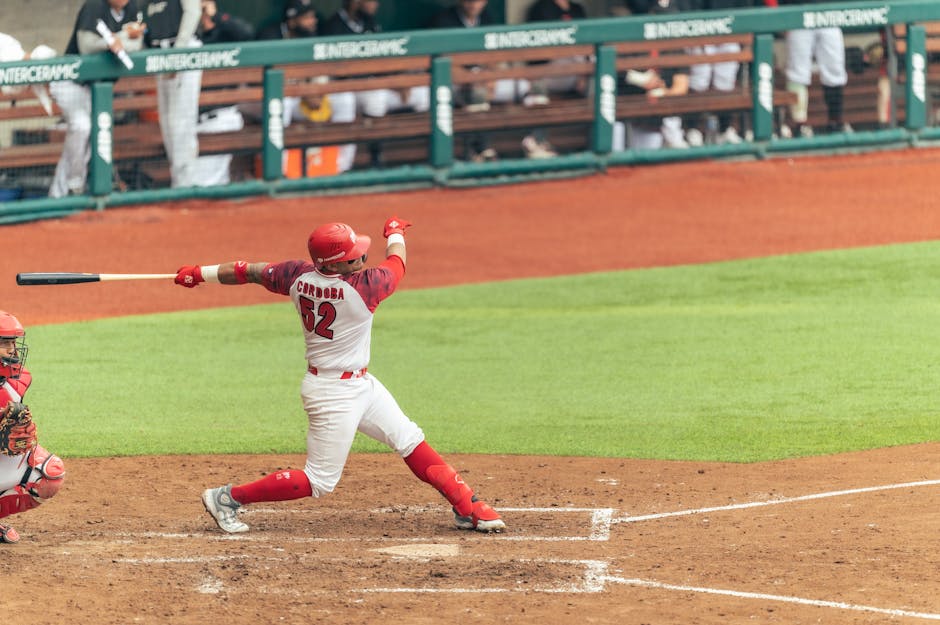
- David Hamilton’s ‘Little League’ home run showcased an exaggerated uppercut motion, defying conventional hitting wisdom.
- Hamilton’s home run traveled 403 feet with a launch angle of 42 degrees, exceeding the MLB average of 10-25 degrees.
- The physics behind Hamilton’s swing indicate a deliberate departure from optimized launch profiles.
- Hamilton’s bat registered a maximum vertical angle of 44.6 degrees with an exit velocity of 102.1 mph.
- This atypical swing has sparked debate about the viability of non-traditional mechanics in elite baseball play.
During a spring training matchup between the Milwaukee Brewers and Chicago Cubs, infielder David Hamilton launched a home run using a swing strikingly reminiscent of youth baseball—dubbed the ‘Little League’ home run due to its exaggerated uppercut motion. The ball, estimated at 403 feet by Statcast, cleared the right-field fence with a launch angle of 42 degrees, far exceeding the MLB average of 10–25 degrees. While the hit drew laughter and surprise from fans and broadcasters, it also raised questions about the viability of non-traditional mechanics in elite play. Hamilton’s swing, characterized by a high leg kick and extreme uppercut, defies conventional wisdom but delivered results—a single that left a lasting impression on analysts and players alike.
Unconventional Mechanics, Measurable Outcomes

The physics behind Hamilton’s swing reveal a deliberate departure from optimized launch profiles promoted by modern hitting coaches. According to Baseball Savant, only 0.7% of home runs hit in the 2023 MLB season had a launch angle above 40 degrees, with most of those resulting from mishits or defensive misplays. Hamilton’s was not. His bat path registered a maximum vertical angle of 44.6 degrees, yet exit velocity was a respectable 102.1 mph—within the ‘hard-hit’ threshold of 95+ mph. Video analysis from the Brewers’ player development team shows Hamilton trains with weighted bats and resistance bands to strengthen wrist flexion, allowing controlled topspin despite the unorthodox path. While traditionalists argue such swings reduce contact consistency, Hamilton posted a .360 on-base percentage in Triple-A Nashville last season, suggesting his approach yields results despite its divergence from orthodoxy.
Key Players and Institutional Reactions

David Hamilton, a 27-year-old utility infielder, has long been known more for his elite speed (98th percentile sprint speed in 2023) than his power, entering the season with just three career MLB home runs. His swing—a blend of raw aggression and youthful flair—owes much to his upbringing in Massachusetts, where he played alongside younger siblings using backyard rules that encouraged high-arcing hits over fences. Brewers manager Pat Murphy defended the technique in a postgame press conference, stating, ‘If it works in the cage and in games, we don’t police aesthetics.’ In contrast, Cubs pitching coach Tommy Hottovy expressed concern, calling it ‘a gimmick that won’t survive premium velocity.’ Meanwhile, hitting influencers on social media have dissected the swing frame-by-frame, with some labeling it ‘the future of player individualization’ and others ‘a viral stunt with no place in serious competition.’ The incident has also drawn attention from equipment manufacturers, with Victus Baseball confirming early-stage talks about designing bats optimized for high-launch, low-contact styles.
Trade-Offs: Innovation Versus Consistency

Hamilton’s swing presents a fundamental trade-off: maximizing spectacle and occasional power at the expense of contact reliability and plate discipline. While the home run thrilled fans and boosted social media engagement—the clip garnered over 2.3 million views on MLB’s X account in 48 hours—scouting reports indicate pitchers can exploit the large swing-and-miss window with low sliders and off-speed pitches. Over a full season, such a profile risks high strikeout rates, which could limit playing time against elite pitching. On the other hand, the psychological impact on opponents—and the morale boost for teammates—should not be underestimated. Furthermore, as MLB embraces analytics and player-specific development, Hamilton’s success may encourage organizations to tolerate or even cultivate ‘outlier’ swings, provided they align with a player’s strengths. The broader risk lies in younger athletes emulating the style without the requisite hand-eye coordination or strength, potentially stunting long-term development.
Why This Moment Matters Now

The timing of Hamilton’s viral moment reflects a larger shift in baseball culture—one increasingly open to stylistic experimentation and player-driven identity. With MLB actively promoting entertainment value through rule changes like the pitch clock and larger bases, unorthodox plays and personalities are gaining visibility. Social media amplifies these moments instantly, turning spring training exhibitions into national conversations. Additionally, the rise of biomechanical analysis has made it possible to validate previously dismissed techniques, allowing teams to assess swings not just by appearance but by data. Hamilton’s swing emerged at a juncture when tolerance for individuality is higher than ever, and the line between ‘gimmick’ and ‘innovation’ is being redrawn by performance data rather than tradition.
Where We Go From Here
In the next 6 to 12 months, three scenarios could unfold. First, Hamilton might refine his swing into a situational weapon—used selectively against fastballs in favorable counts—while maintaining a more conventional approach overall, allowing him to stay in the lineup without compromising contact rates. Second, if he continues to produce, other players may adopt similar mechanics, leading to a niche trend in spring training and minor league camps, particularly among light-hitting, speed-focused athletes seeking added power. Third, if pitchers adjust and Hamilton’s strikeout rate spikes, the Brewers may ask him to rein in the style, relegating the ‘Little League’ swing to a symbolic footnote. Each path reflects the tension between entertainment, analytics, and competitive sustainability in modern baseball.
Bottom line — While David Hamilton’s Little League-style home run may seem like a novelty, it underscores a deeper evolution in how baseball evaluates performance: not just by conformity to norms, but by measurable outcomes in an era increasingly shaped by data, individuality, and viral culture.
Source: V