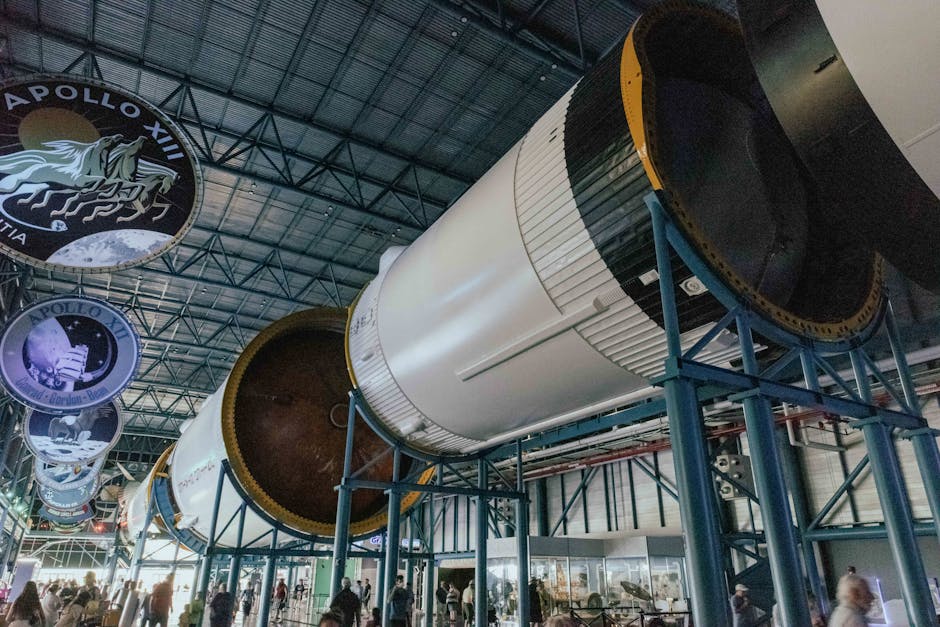
- Bryson DeChambeau expressed skepticism about the authenticity of the Apollo moon landing footage.
- The golfer suggested anomalies in the footage warrant further scrutiny, but stopped short of denying the moon landing.
- DeChambeau’s comments have raised questions about the reconciliation of empirical thinking and speculative beliefs in public figures.
- The athlete’s stance aligns with long-standing fringe skepticism popularized by conspiracy theories.
- DeChambeau’s views on interdimensional beings visiting Earth have sparked controversy and debate.
How does a professional athlete celebrated for applying scientific rigor to sports end up questioning one of humanity’s most well-documented achievements—the moon landing—while simultaneously expressing firm belief in interdimensional beings? Bryson DeChambeau, the two-time major champion known for his methodical, physics-driven approach to golf, has ventured far beyond the fairway with his latest remarks. In a recent appearance on Katie Miller’s podcast, DeChambeau suggested the Apollo moon landing footage might not be entirely authentic and declared he ‘for sure’ believes in interdimensional entities visiting Earth. These comments have drawn sharp reactions, raising questions about how public figures reconcile empirical thinking with speculative beliefs, and what it means when someone who champions ‘the science’ embraces ideas far outside scientific consensus.
Did NASA Really Land on the Moon, According to DeChambeau?

DeChambeau did not outright deny the moon landings but cast doubt on the authenticity of the visual record. He questioned the quality and consistency of the footage captured during the Apollo missions, suggesting anomalies that, in his view, warrant deeper scrutiny. While he acknowledged the technological capabilities of the era, he emphasized the importance of critical thinking—even about widely accepted historical events. His stance stops short of full-blown denial but aligns with a long-standing fringe skepticism popularized by conspiracy theorists since the 1970s. Notably, DeChambeau framed his skepticism not as anti-science but as an extension of it: the need to question evidence and remain open to alternative interpretations. However, this position contrasts sharply with the overwhelming body of evidence—ranging from lunar rock samples to independent tracking data—that confirms the landings occurred.
What Evidence Supports the Moon Landings?

The scientific consensus supporting the Apollo moon landings is robust and multifaceted. NASA has released thousands of hours of mission footage, hundreds of kilograms of moon rocks, and detailed telemetry data—all independently verified by international agencies and researchers. For instance, the Lunar Reconnaissance Orbiter has photographed the Apollo landing sites, showing hardware and tracks left behind by astronauts. NASA’s own images from lunar orbit provide compelling visual proof of human activity on the Moon. Additionally, scientists from countries including China and India have confirmed the presence of Apollo artifacts using their own lunar probes. As astrophysicist Neil deGrasse Tyson has noted, the idea that thousands of engineers, scientists, and astronauts could maintain a decades-long hoax is far less plausible than the accepted narrative. The convergence of physical, photographic, and geopolitical evidence makes the moon landings one of the most thoroughly validated events in modern history.
Why Do Some Smart People Believe in Conspiracies?

DeChambeau’s duality—embracing science while entertaining fringe theories—reflects a cognitive phenomenon increasingly observed in educated, high-achieving individuals. Psychologists describe this as ‘pattern-seeking’ behavior, where intelligent people may over-interpret ambiguous data or apply analytical skills to unverified claims. In DeChambeau’s case, his reputation for using physics, aerodynamics, and data analytics in golf may lend undue credibility to his speculative views. Some experts suggest that success in one domain can create overconfidence in unrelated areas—a concept known as the Dunning-Kruger effect in reverse. Others point to the influence of online echo chambers, where even scientifically literate individuals encounter curated content that validates unconventional beliefs. As research published in ScienceDaily indicates, belief in conspiracies is less about intelligence and more about the need for uniqueness, control, or meaning in a complex world.
What Are the Real-World Impacts of Celebrity Conspiracy Talk?

When public figures like DeChambeau voice skepticism about established facts, the ripple effects can extend beyond entertainment headlines. Such statements may inadvertently legitimize misinformation, particularly among fans who respect their expertise in one area and assume competence in others. In an era already grappling with vaccine hesitancy, climate denial, and election misinformation, the normalization of doubt—especially from those who claim to value science—can erode public trust in institutions. Moreover, comments about interdimensional beings or disputed historical events can distract from meaningful scientific discourse. While free speech protects personal belief, the platform amplification that comes with fame carries responsibility. The risk lies not in DeChambeau’s private views, but in how those views are received by audiences who may lack the tools to distinguish between scientific inquiry and unfounded speculation.
What This Means For You
DeChambeau’s comments serve as a reminder that valuing science isn’t just about citing data when it suits a purpose—it requires consistent adherence to evidence, peer review, and falsifiability. For the public, this means critically evaluating sources, even when they come from admired figures. It’s possible to admire someone’s achievements in one field without accepting their views in another. Developing media literacy and understanding the difference between skepticism and denial is crucial in a world where information spreads faster than verification. Science thrives on questioning, but it also demands humility in the face of overwhelming evidence.
So where should we draw the line between open-minded inquiry and baseless speculation? And how can society encourage critical thinking without opening the door to denialism? As public figures continue to blur these lines, the conversation about science, belief, and influence is far from over.
Source: The Guardian