- At least 8 vehicles in a West Bank village were torched in a settler rampage, leaving residents with skeletal remains.
- The incident is part of an increasing trend of violence against Palestinians in the occupied territories.
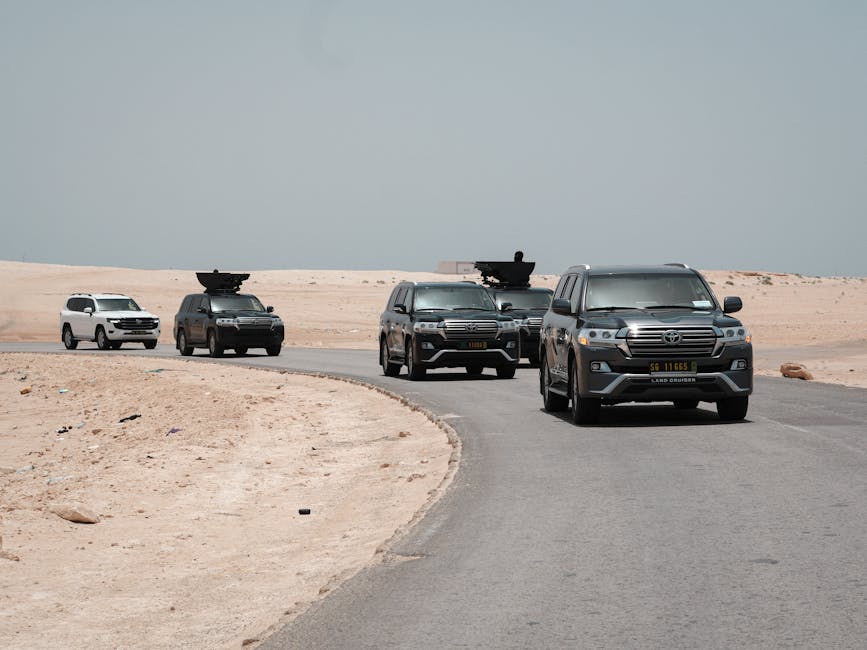
- Residents and human rights groups claim Israeli settlers are using military-grade trucks to establish unauthorized outposts.
- New outposts have sprouted up on private Palestinian land, often under the indirect protection of Israeli military forces.
- The United Nations has confirmed at least three new outposts have been established in the area.
In the predawn hush of a West Bank hillside village, flames flickered against olive groves as tires melted and metal warped under intense heat. Residents of Jalud awoke to acrid smoke and the sight of eight charred vehicles—tractors, a pickup, a family sedan—reduced to skeletal husks. On nearby walls, black spray paint declared “Revenge” and “Death to Arabs” in Hebrew. Within hours, convoys of military-grade trucks arrived, hauling prefabricated caravans onto nearby high ground. No construction permits were shown. No government officials intervened. This was not a spontaneous outburst but a calculated assertion of control—one that residents and human rights groups say follows a familiar, increasingly violent pattern across the occupied territories.
Escalation Under Military Cover

In recent days, Palestinian residents across several northern West Bank villages—including Jalud, Huwara, and Beita—have reported coordinated assaults by Israeli settlers, often under the indirect protection of Israeli military forces. According to testimonies collected by B’Tselem, an Israeli human rights organization, settlers torched agricultural equipment and civilian vehicles, cut irrigation lines, and defaced homes with racist slogans. Simultaneously, new outposts—unauthorized even by Israeli standards—sprang up on private Palestinian land. The United Nations Office for the Coordination of Humanitarian Affairs (OCHA) confirmed that at least three new outposts have been established since the beginning of the year, with Jalud’s being the most recent. Israeli military forces, while present during some incidents, have largely refrained from intervention, instead dispersing Palestinian demonstrators who attempted to resist the encroachments. UN human rights experts have condemned the inaction as tacit endorsement.
The Roots of Settlement Expansion

The current surge did not emerge in isolation. Since Israel occupied the West Bank in 1967, successive governments have tolerated—and often quietly supported—the growth of settlements, despite their illegality under international law. While major settlements are state-planned and funded, outposts like those recently erected near Jalud are typically initiated by extremist settler factions, such as the so-called “hilltop youth.” These groups operate with a mix of ideological fervor and strategic calculation, aiming to create facts on the ground that preclude a viable Palestinian state. Over the past two decades, hundreds of such outposts have been built, with many later retroactively legalized by Israeli authorities. A 2023 report by Peace Now documented that over 70 outposts have received funding or infrastructure support from state ministries, blurring the line between rogue action and government policy. This incremental annexation has steadily eroded the territorial contiguity essential for any future two-state solution.
Actors Behind the Advance

The settlers behind these actions are not a monolithic bloc, but their motivations often converge around a messianic interpretation of Jewish territorial rights. Groups like Regavim and Bezalel Smotrich’s political network—now part of Israel’s governing coalition—frame land acquisition as both a religious imperative and a national security strategy. Smotrich, who holds a ministerial portfolio overseeing West Bank civilian affairs, has openly advocated for annexation and praised settler initiatives. At the grassroots level, young extremists view outpost construction as a form of patriotic resistance, often operating with impunity. Meanwhile, Palestinian landowners remain vulnerable, with Israeli courts routinely dismissing property claims due to stringent documentation requirements—a legacy of fragmented land registries under Ottoman, British, and Jordanian rule. This asymmetry of power and legal recourse enables ongoing dispossession.
Ripples Across Communities and Policy

The immediate consequences are felt most acutely by Palestinian farmers and families who lose livelihoods, mobility, and security. In Jalud, the destruction of tractors and water systems threatens the upcoming harvest, compounding economic precarity. Psychologically, the attacks deepen a sense of siege and abandonment. For Israeli society, the normalization of settler violence risks further militarization and moral erosion. Internationally, the actions undermine already fragile diplomatic efforts. The United States, while occasionally criticizing outpost expansions, has seen its influence wane amid Israel’s rightward political shift. The European Union has reiterated its stance that settlements violate international law, but enforcement mechanisms remain weak. Most critically, the pattern entrenches a one-state reality marked by inequality, where civil rights are determined by ethnicity and residency.
The Bigger Picture
What unfolds in the West Bank is not merely a series of isolated incidents but a deliberate strategy of territorial fragmentation. Each burned vehicle, each caravan planted on contested land, chips away at the possibility of negotiated coexistence. The international community’s repeated condemnations, while morally significant, have failed to alter the trajectory. As settlement infrastructure spreads and settler violence becomes more brazen, the window for a two-state solution narrows. The silence—or complicity—of state institutions signals that these actions are not anomalies, but features of a broader political project. Without sustained pressure and accountability, the landscape will continue to be reshaped, not by diplomacy, but by fire and concrete.
What comes next may depend less on peace talks than on whether global actors are willing to treat settlement expansion as a violation of law, not just a policy dispute. For now, the hills of the West Bank grow quieter after the flames die down—save for the hum of generators powering new caravans, and the distant sound of bulldozers clearing land for tomorrow’s outpost.
Source: Al Jazeera