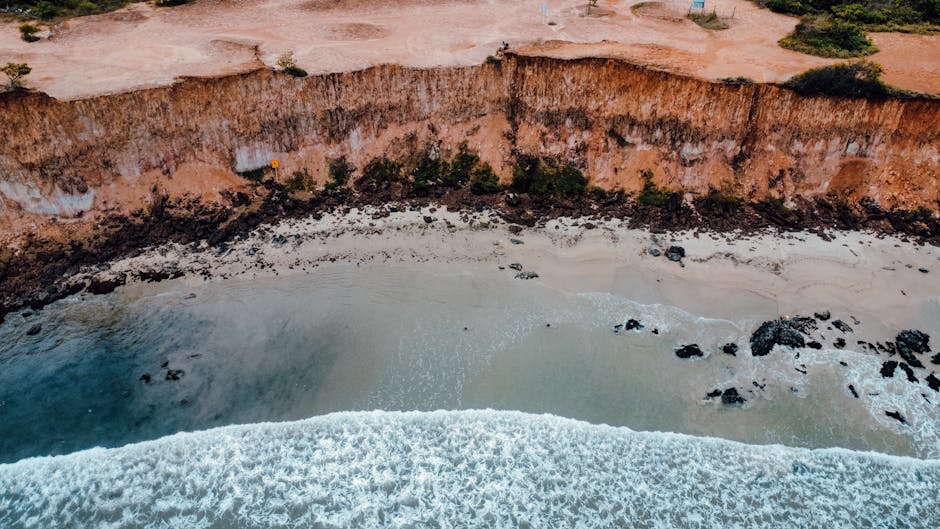
- The island of Barbuda has seen 70% of its 90-mile coastline fenced off, privatized, or under development.
- Foreign real estate investment is driving the erosion of public beach access in the Caribbean, threatening local livelihoods and cultural identity.
- The Barbuda Land Acts, which held land in common, was altered after Hurricane Irma in 2017, allowing individual property ownership.
- Communal land use systems, prevalent in many Caribbean islands, are being eroded due to foreign investment and government policies.
- The shift away from communal land use is not only affecting local access to beaches but also environmental stewardship.
On the island of Barbuda, 90% of the population once had unrestricted access to its 90 miles of pristine coastline—a birthright enshrined in communal land ownership. Today, more than two-thirds of that shoreline is fenced off, privatized, or under development by foreign investors. In Grenada, fishing families report being turned away from coves where their ancestors have launched boats for generations. In Jamaica, luxury resorts stretch along the coast, their gates barring entry to all but paying guests. A quiet but profound transformation is underway across the Caribbean: the steady erosion of public beach access due to a surge in foreign real estate investment, threatening not only local livelihoods but cultural identity and environmental stewardship.
A Legacy of Communal Land at Risk

For centuries, many Caribbean islands operated under systems of communal or customary land use, particularly in nations with strong indigenous or Afro-Caribbean heritage. Barbuda, part of the twin-island nation of Antigua and Barbuda, was unique in the region: until 2016, all land was held in common under the Barbuda Land Acts, meaning no individual could own property, and all residents had equal rights to use the island’s natural resources. This changed dramatically after Hurricane Irma devastated the island in 2017. The national government, citing reconstruction needs, fast-tracked the Barbuda Land Act of 2017, which allowed private ownership for the first time. Critics say the move opened the floodgates to foreign developers, with little consultation or safeguards for locals. The shift mirrors broader regional trends, where economic vulnerability and debt pressures push governments to incentivize foreign investment, often at the expense of public access and local autonomy.
Development Deals and Disappearing Access

In Jamaica, sprawling all-inclusive resorts along the north coast—from Montego Bay to Ocho Rios—have transformed once-open beaches into private amenities. A 2023 report by the Caribbean Natural Resources Institute (CANARI) found that over 40% of Jamaica’s prime coastal land is now controlled by international hotel chains or offshore real estate companies. In Grenada, a proposed $500 million resort development on the island’s west coast has ignited protests, with locals accusing the government of bypassing environmental assessments and community consultations. These deals are often justified as economic lifelines, promising jobs and infrastructure. Yet, researchers at the University of the West Indies note that most tourism-related employment remains low-wage and seasonal, while land ownership concentrates wealth abroad. The physical barriers—fences, security guards, private docks—are symbolic of a deeper exclusion: coastal spaces once central to fishing, cultural rituals, and daily life are being erased from public memory.
The Economic and Environmental Cost of Exclusion

Beyond the social injustice, the privatization of Caribbean shorelines carries significant environmental risks. When beaches are fenced off, traditional monitoring by local fishers and residents diminishes, weakening early detection of coral bleaching, erosion, or illegal dumping. A 2022 study published in Nature Humanities & Social Sciences linked coastal privatization to increased marine degradation, as private developers prioritize aesthetics over ecological sustainability. Economically, the model is also questionable. While tourism contributes up to 30% of GDP in some Caribbean nations, much of the revenue leaks out through foreign-owned operations and imported goods. Moreover, as climate change accelerates sea-level rise and storm intensity, the loss of community-based coastal management undermines resilience. Locals who once maintained mangroves or relocated structures in response to erosion are now locked out of decision-making—and the land itself.
Legal Battles and Grassroots Resistance

In response, civil society groups are mobilizing. In Barbuda, the Barbuda Landowners and Residents Association (BLRA) has filed multiple legal challenges against land grants, arguing they violate constitutional rights to equality and property. In Jamaica, the group Take Back Our Beaches has launched public awareness campaigns and lobbied for a national coastal access law. Some governments are responding: Grenada’s environmental minister recently announced a temporary moratorium on new coastal developments pending a review. Regional bodies like the Caribbean Community (CARICOM) are also under pressure to establish uniform guidelines on public shoreline access. The core demand is simple: that a percentage of all coastal developments—especially those receiving tax breaks or public infrastructure—must guarantee permanent public access zones, similar to models in Hawaii and parts of the Mediterranean.
Expert Perspectives
“This isn’t just about tourism economics—it’s about sovereignty,” says Dr. Linda Johnson, a political ecologist at the University of Guyana. “When foreign entities control the shoreline, they control the narrative of who belongs.” Conversely, some economists argue that without foreign capital, Caribbean nations cannot compete in the global tourism market. “The alternative to development isn’t preservation—it’s poverty,” contends Michael Chen, a development consultant with the Inter-American Development Bank. Yet even he acknowledges that current models are unsustainable without stronger local inclusion and benefit-sharing mechanisms.
Looking ahead, the struggle for beach access may redefine Caribbean governance. As climate change intensifies, the need for adaptive, community-led coastal management grows. The region stands at a crossroads: continue down a path of privatized tourism enclaves, or reclaim the shoreline as a shared public trust. Legal victories in Barbuda and policy shifts in Grenada could set precedents. One thing is certain—the fight for the beach is no longer just about sand and sea, but about identity, equity, and the right to belong.
Source: BBC