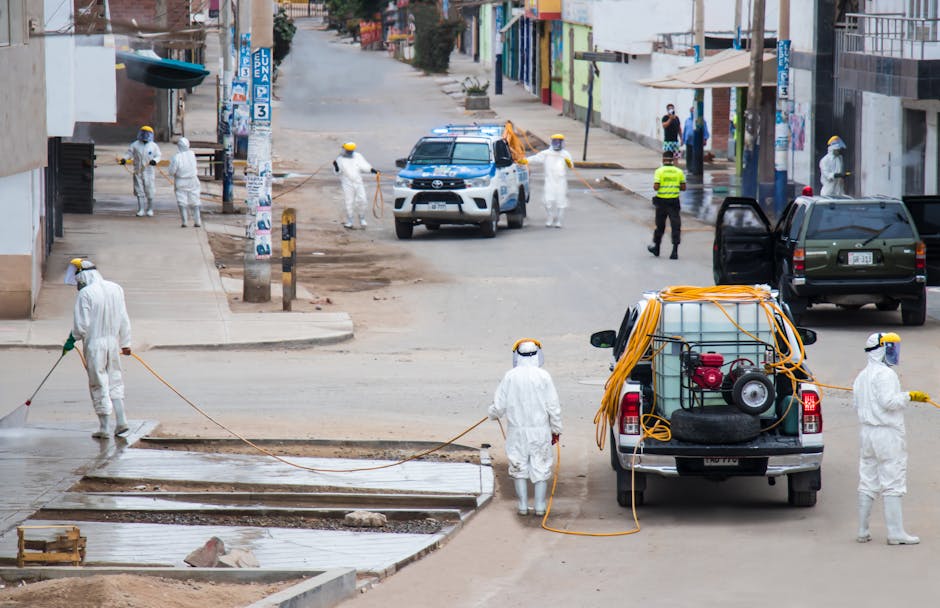
- The Ebola virus has emerged in 12 African nations, including the Democratic Republic of the Congo, the Republic of the Congo, and the Central African Republic.
- The World Health Organization declared a regional emergency due to hundreds of Ebola infections and dozens of deaths.
- The international community’s delayed reaction to the outbreak has sparked concerns about decades of neglect and inadequate response.
- The Zaire strain of the virus, one of the deadliest variants, was confirmed in May 2025 in Équateur Province.
- Logistical delays, vaccine shortages, and fragmented coordination have hindered early containment of the outbreak.
In the humid villages along the Congo River, where electricity flickers and clinics run on kerosene lamps, the arrival of Ebola is met not with panic, but with grim familiarity. Children are pulled from school. Markets empty. Families bury their dead in hurried, unmarked graves, whispering prayers through cloth masks soaked in chlorine. This time, the virus emerged near Mbandaka, a river port city in the Democratic Republic of the Congo, swiftly crossing borders into neighboring Republic of the Congo and the Central African Republic. By the time the World Health Organization declared a regional emergency, hundreds were infected, dozens dead. Yet, for many residents, the real crisis wasn’t just the virus—it was the world’s delayed reaction. To them, the international silence until cases threatened Europe or North America echoed decades of neglect, a pattern as predictable as the disease’s cyclical return.
Outbreak Expands Amid Slow Response

The current Ebola flare-up, caused by the Zaire strain—one of the deadliest variants—was confirmed in May 2025 after a cluster of hemorrhagic fever cases appeared in Équateur Province. Within weeks, cases emerged in Cameroon and Chad, linked through cross-border travel along informal trade routes. The Africa Centres for Disease Control and Prevention (Africa CDC) issued alerts, but logistical delays, vaccine shortages, and fragmented coordination hampered early containment. Unlike the 2014–2016 West Africa epidemic, which killed over 11,000 and prompted a global mobilization, this outbreak has seen a more restrained international response. As of June, fewer than 400 cases have been reported, but health workers warn the true number may be higher due to limited surveillance. The WHO has stopped short of declaring a Public Health Emergency of International Concern, a decision that has drawn criticism from frontline epidemiologists who argue that hesitation risks a repeat of past failures. According to WHO updates, limited access to experimental vaccines like Ervebo has further slowed progress.
A Legacy of Neglect and Mistrust

The roots of today’s crisis stretch back to colonial-era health infrastructures that prioritized resource extraction over community well-being. Even after independence, many African nations inherited medical systems designed to serve expatriates, not local populations. The 2014 Ebola epidemic in Guinea, Liberia, and Sierra Leone exposed these fragilities, yet promised reforms were underfunded or abandoned once the global spotlight faded. The Africa CDC, established in 2017 with support from the African Union, was meant to centralize disease surveillance and rapid response, but it operates with a fraction of the budget of the U.S. CDC and lacks enforcement power. When the agency warned of rising transmission in early 2025, its alerts were treated as advisory, not urgent. This dynamic reinforces a troubling narrative: African institutions are seen as incapable until Western agencies step in. As Dr. Amina Jalloh, a Sierra Leonean epidemiologist, noted in a BBC interview, “We detect, we report, we beg. Then the world decides if it’s worth acting.”
Frontline Workers Bear the Burden

On the ground, it is local health workers—nurses, community scouts, burial teams—who shoulder the highest risk. In DRC’s remote health posts, staff often lack personal protective equipment, relying on improvised gowns and reused gloves. Many have lost colleagues to the virus; others face hostility from communities wary of outsiders spreading misinformation. Yet, these same workers are rarely included in high-level decision-making. International aid convoys arrive with foreign medics and protocols that sometimes override local knowledge. While organizations like Médecins Sans Frontières (MSF) have praised the dedication of Congolese staff, they also acknowledge systemic imbalances. “We train them, deploy them, and then don’t fund their institutions,” said MSF’s regional director in a recent briefing. African scientists and doctors have developed effective contact-tracing models and culturally sensitive outreach, but securing sustained funding remains a battle fought on Twitter threads and donor pleas, not in policy rooms.
Consequences Beyond the Outbreak

The delayed response has ripple effects. Routine immunizations have been disrupted, increasing risks of measles and polio resurgence. Cross-border trade has stalled, deepening food insecurity in already fragile regions. Most critically, each slow reaction erodes public trust in both local and global health systems. When vaccines finally arrive, communities may refuse them, remembering past betrayals—from the Tuskegee syphilis study to recent accusations of experimental treatments during the 2018–2020 DRC outbreak. Furthermore, the economic toll is immense; the 2014 epidemic cost West Africa an estimated $2.2 billion in lost GDP. With global attention diverted by other crises, from climate disasters to war, there is fear that this outbreak will follow the same trajectory: ignored until it can no longer be contained, then met with emergency measures that come too late.
The Bigger Picture
This Ebola surge is not just a public health emergency—it’s a mirror held up to a global system that values lives unequally. Pandemic preparedness, as demonstrated during COVID-19, remains skewed toward high-income nations. Vaccines and antivirals are developed in the Global North, stockpiled for domestic use, and distributed abroad on delayed timelines. Meanwhile, African nations are expected to build resilient health infrastructures with minimal resources. True equity would mean investing in African-led research, manufacturing, and decision-making—not only during outbreaks, but continuously. Until then, the cycle will repeat: detection in the margins, silence from the center, and tragedy amplified by indifference.
What comes next depends on whether the world treats this as another isolated disaster or a symptom of a deeper illness. The tools to prevent large-scale outbreaks exist—vaccines, surveillance networks, mobile labs—but they must be decentralized and democratized. African health agencies are calling for permanent emergency funds, regional vaccine production, and binding commitments to early intervention. The question is not whether we can stop Ebola, but whether we will act before it stops being someone else’s problem.
Source: The New York Times