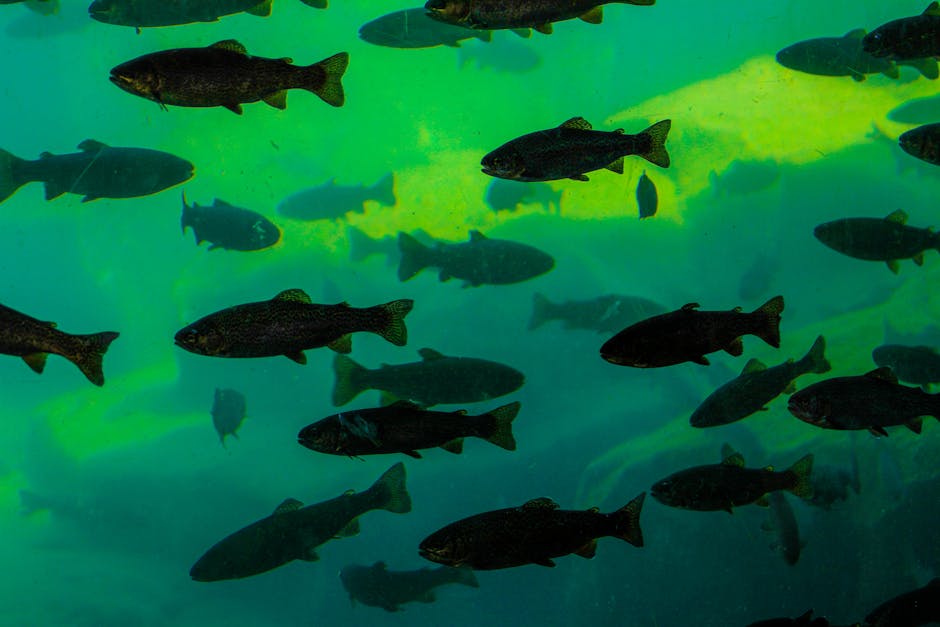
- The US Fish and Wildlife Service has concluded that atrazine does not pose a threat to endangered species, allowing its continued use.
- Atrazine, a widely used herbicide, has been linked to cancer, birth defects, and hormonal disruptions in humans and wildlife.
- The decision removes a major legal barrier to atrazine’s use across millions of acres of farmland in the US.
- Critics argue that the decision overlooks extensive scientific evidence of ecological and public health harm.
- The debate intensifies over whether current regulatory frameworks can protect both biodiversity and human well-being.
Is it safe to continue using a herbicide linked to cancer, birth defects, and hormonal disruptions in wildlife and humans? That’s the urgent question millions are asking after the U.S. Fish and Wildlife Service (USFWS) recently concluded that atrazine, one of the most widely used weedkillers in American agriculture, does not pose a threat of extinction to endangered species. This determination effectively removes a major legal barrier to its ongoing use across millions of acres of farmland. While regulators emphasize compliance with the Endangered Species Act, critics argue the decision overlooks extensive scientific evidence of ecological and public health harm. As atrazine remains in widespread use, particularly in corn, sorghum, and sugarcane fields, the debate intensifies over whether current regulatory frameworks are equipped to protect both biodiversity and human well-being.
What Did the Fish and Wildlife Service Decide?

The U.S. Fish and Wildlife Service determined that atrazine is unlikely to jeopardize the continued existence of federally listed endangered or threatened species or result in the destruction of their designated critical habitats. This conclusion, issued after a multi-year biological assessment, clears the Environmental Protection Agency (EPA) to proceed with re-registering the chemical for agricultural use without imposing species-specific restrictions under the Endangered Species Act. The agency’s decision hinges on modeling and exposure scenarios that suggest atrazine concentrations in waterways—where most ecological damage occurs—remain below levels expected to cause population-level harm to protected species. Importantly, the ruling does not assess human health impacts, which fall under the EPA’s jurisdiction. However, by removing the extinction-risk barrier, the decision solidifies the chemical’s status in U.S. agriculture for the foreseeable future.
What Scientific Evidence Supports This Finding?

The Fish and Wildlife Service based its conclusion on a comprehensive ecological risk assessment that included water monitoring data, species sensitivity analyses, and exposure modeling across more than 1,500 listed species. Agency scientists argue that while atrazine is frequently detected in surface waters—especially during spring runoff—predicted environmental concentrations (PECs) generally remain below thresholds associated with lethal or reproductive effects in sensitive species. For instance, in a 2023 draft assessment cited by USFWS, atrazine levels in 90% of sampled waterways were below 20 parts per billion, a concentration deemed protective for aquatic life by some regulatory benchmarks. The agency also noted mitigation measures, such as buffer zones and application timing restrictions, which manufacturers and farmers have adopted under EPA guidance. The full biological opinion emphasizes that while sublethal effects on amphibians and fish have been documented in laboratory settings, field data do not consistently support population-level declines directly attributable to atrazine.
What Do Critics and Scientists Say?

Many independent scientists and environmental groups strongly dispute the Fish and Wildlife Service’s conclusions, arguing that the assessment underestimates atrazine’s real-world harm. Dr. Tyrone Hayes, a biologist at the University of California, Berkeley, whose research has shown that atrazine causes sex reversal in frogs at concentrations as low as 2.5 parts per billion, called the decision “scientifically indefensible.” Critics point out that regulatory models often fail to account for long-term, low-dose exposure and synergistic effects with other pesticides. Moreover, studies published in journals like Environmental Health Perspectives have linked atrazine exposure in humans to increased risks of ovarian cancer, low birth weight, and reproductive disorders. Environmental advocates also note that the USFWS decision does not consider cumulative impacts across ecosystems or the chemical’s persistence in groundwater. A 2022 meta-analysis in Nature Sustainability concluded that atrazine contributes to pollinator decline and amphibian biodiversity loss, even at sub-regulatory concentrations.
What Are the Real-World Consequences?

The continued use of atrazine has tangible implications for farming communities, drinking water safety, and ecosystem resilience. In the Midwest, where atrazine use is heaviest, rural water systems frequently detect the herbicide during growing seasons, sometimes exceeding EPA’s maximum contaminant level. While the EPA maintains that current levels are safe, public health advocates argue that vulnerable populations—including pregnant women and children—may face disproportionate risks. Ecologically, atrazine’s endocrine-disrupting effects have been tied to declining frog populations and altered fish behavior in streams and wetlands. Furthermore, the chemical’s persistence contributes to herbicide resistance in weeds, prompting farmers to use even more chemicals. Countries like the European Union banned atrazine in 2004 due to groundwater contamination concerns, highlighting the divergence in global regulatory approaches. In the U.S., however, economic reliance on high-yield corn production—much of it destined for ethanol and animal feed—makes a phaseout politically and agriculturally challenging.
What This Means For You
If you live in an agricultural region or rely on surface water sources, atrazine may already be present in your environment. While federal regulators deem current levels safe, emerging science suggests potential risks from chronic exposure, especially for reproductive and developmental health. Homeowners can use activated carbon filters to reduce atrazine in drinking water, and consumers may opt for organic produce to minimize pesticide exposure. More broadly, this decision underscores the tension between industrial agriculture and environmental protection—a debate likely to intensify as climate change and biodiversity loss accelerate. Regulatory decisions like this one shape not only ecosystem health but also long-term public health outcomes.
Given the conflicting interpretations of scientific data, how should regulators balance agricultural productivity with the precautionary principle when evidence of harm is contested but persistent? And as new studies emerge on low-dose endocrine disruption, will the U.S. eventually follow the EU’s lead in restricting atrazine, or will economic interests continue to outweigh ecological concerns?
Source: The New York Times